- E-mail: [email protected]
- WhatsApp: +86 18533346372
Invar 36 bar, also known as Nilo 36, Alloy 36, and designated as UNS K93600 (normal grade) and K93601 (free-machining grade), with material number W.N…
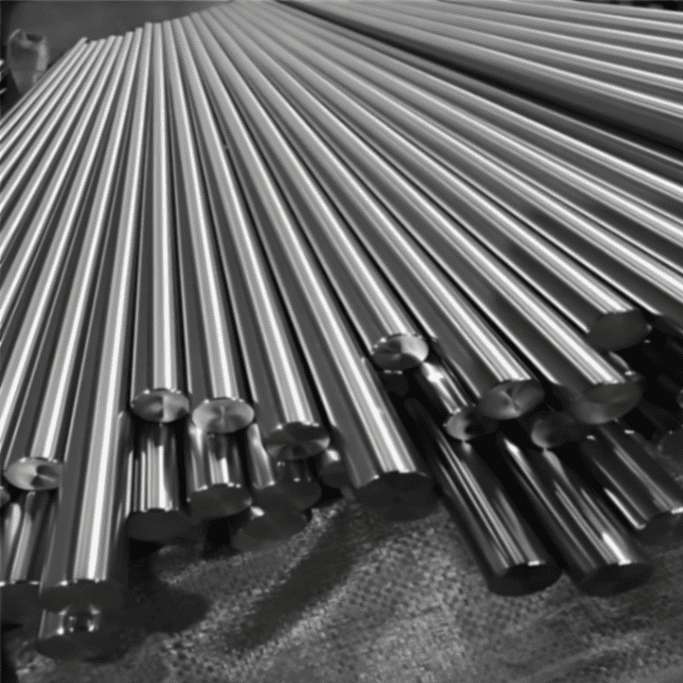
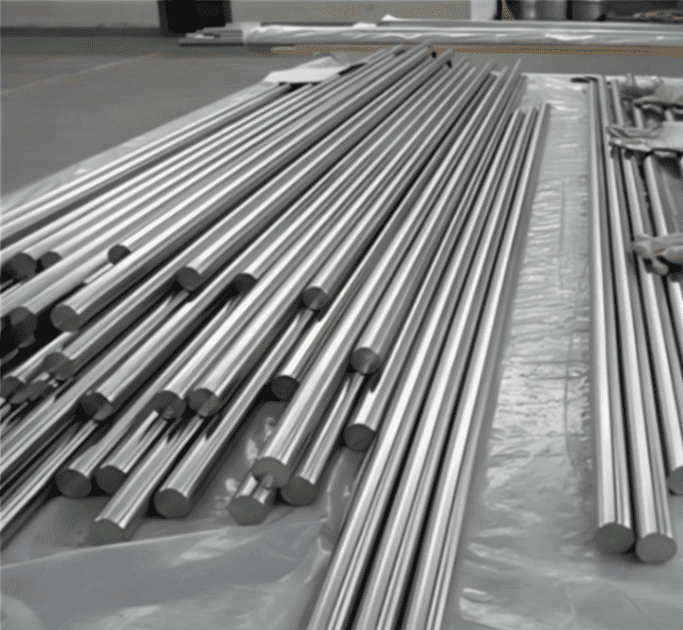
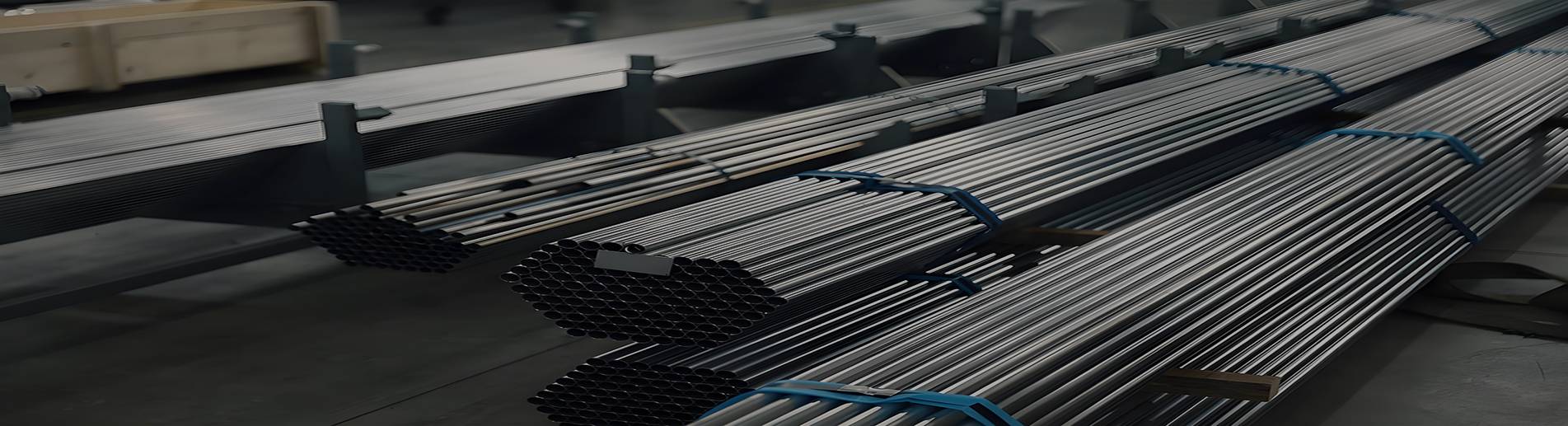
Invar 36 bar, also known as Nilo 36, Alloy 36, and designated as UNS K93600 (normal grade) and K93601 (free-machining grade), with material number W.Nr. 1.3912, is a nickel-iron alloy famous for its extremely low coefficient of thermal expansion (CTE) at and around room temperature. This bar stock form is a fundamental material for machining components where dimensional stability under varying temperatures is critical, such as in precision instruments, optical systems, scientific devices, and aerospace frameworks.
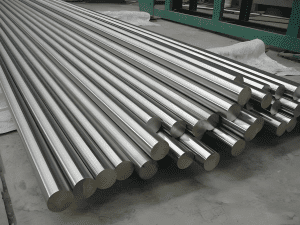
Invar 36 is the original and most widely used “low expansion” alloy. Its unique property arises from a specific nickel content (approximately 36%) which counteracts the normal thermal expansion of iron, resulting in a minimal dimensional change over a defined temperature range (typically -50°C to 100°C). The bar stock is essential for manufacturing precision parts like laser cavity frames, geodetic survey tapes, clock pendulums, molds for composite curing, and components in cryogenic equipment.
The near-zero expansion characteristic of Invar 36 bar is achieved through precise control of its nickel-iron balance. Supplied by Shanghai NC Metal Materials Co., Ltd., the bar stock adheres to specifications that guarantee its predictable thermal behavior.
| Element | Percentage (%) – Typical Range | Primary Function in the Alloy |
|---|---|---|
| Iron (Fe) | Balance | Base element of the alloy matrix. |
| Nickel (Ni) | 35.0 – 37.0 | Critical element. At this specific concentration, it induces the Invar effect, minimizing the thermal expansion coefficient of the iron matrix. |
| Carbon (C) | 0.10 max | Residual element; kept low to maintain ductility and thermal stability. |
| Manganese (Mn) | 0.50 max | Residual element, deoxidizer. |
| Silicon (Si) | 0.30 max | Residual element. |
| Cobalt (Co) | 0.50 max | Residual element. |
| Phosphorus (P) | 0.025 max | Impurity control. |
| Sulfur (S) | 0.025 max | Impurity control. In free-machining grade (UNS K93601), sulfur is increased to ~0.25% to improve machinability. |
The value of Invar 36 bar lies in its thermal stability, not high strength. Its mechanical properties are sufficient for structural applications in stable environments.
| Property | Typical Value / Characteristic | Condition / Notes |
|---|---|---|
| Mean Coefficient of Thermal Expansion (CTE) | ≈ 1.3 x 10^-6 /°C | Over the range 20°C to 100°C (68°F to 212°F). This is roughly 1/10th that of carbon steel. |
| Expansion Minimum | CTE is very low and stable around room temperature. | The expansion curve is parabolic with a minimum near room temperature. |
| Tensile Strength | 450 – 550 MPa (65 – 80 ksi) | Annealed condition |
| Yield Strength (0.2% Offset) | 240 – 340 MPa (35 – 49 ksi) | Annealed condition |
| Elongation | ≥ 30% | Annealed condition |
| Modulus of Elasticity (Young’s Modulus) | ≈ 145 GPa (21 x 10^6 psi) | At room temperature |
| Density | 8.10 g/cm³ (0.292 lb/in³) | – |
| Curie Temperature | ≈ 280°C (535°F) | Above this temperature, the alloy loses its ferromagnetic properties and low expansion characteristic. |
| Thermal Conductivity | 10.5 W/m·K | At 20°C |
Shanghai NC Metal Materials Co., Ltd. supplies Invar 36 bar in various forms tailored for precision engineering applications.
| Product Form | Standard Size Range | Key Standard Specifications | Common Supply Conditions |
|---|---|---|---|
| Round Bar (Cold Drawn/Forged) | 3mm (0.125″) to 200mm (8″) Diameter | ASTM F1684 (UNS K93600/K93601), AMS 7721, DIN 17470 (W.Nr. 1.3912) | Annealed, Stress-Relieved, Cold Drawn & Stress-Relieved |
| Square Bar | 5mm to 100mm Width | ASTM F1684, Customer specifications | Annealed |
| Ground & Polished Bar | 2mm to 80mm Diameter | For high-precision instrumentation and optical mounts | Precision ground, Stress-Relieved |
| Forging Billet | 100mm to 350mm Diameter | For large aerospace or mold components | As-Forged, Annealed |
Machined components from Invar 36 bar are indispensable in applications demanding dimensional invariance: Aerospace & Satellites: Structural frames, waveguide supports, and optical benches for satellites and space telescopes where temperature cycling is severe. Precision Instrumentation: Frames for laser systems, interferometers, seismographs, and precision gauge blocks. Molding & Tooling: Molds for aerospace composite part curing (e.g., carbon fiber), where dimensional stability ensures part accuracy. Cryogenic Engineering: Components for LNG equipment and scientific cryostats. Telecommunications: Precision parts in microwave and radio frequency systems. Geodetic Survey: Length standards and tapes used for high-precision land measurement.
Standard Invar 36 (UNS K93600) has fair machinability, similar to low-carbon steel, but it is gummy and can work-harden. For improved machinability, the free-machining grade (UNS K93601) with added sulfur is available. Recommendations for machining include: using sharp, positive-rake carbide tools; moderate speeds and feeds; and ample coolant to prevent work hardening and clear chips. Stress relieving after rough machining and before finishing is highly recommended to minimize distortion and lock in dimensional stability, as residual stresses can affect the low expansion property.
Invar 36 is typically supplied in the annealed condition to ensure optimal dimensional stability. The recommended annealing cycle is heating to 830-850°C (1525-1560°F) in a protective atmosphere, holding, and furnace cooling to below 300°C (570°F), then air cooling. This relieves stresses and homogenizes the structure. For the highest stability, a stabilization heat treatment (aging) at 95-150°C (200-300°F) for an extended period may be performed after final machining to relieve micro-stresses and ensure the component’s dimensions are stable in service.
Invar 36 can be welded using Gas Tungsten Arc Welding (GTAW/TIG) and Gas Metal Arc Welding (GMAW/MIG) with matching filler metal (e.g., ERNiCrFe-7 or dedicated Invar filler). However, welding introduces significant localized heat and stress, which can distort the component and alter the low-expansion properties in the heat-affected zone (HAZ). Therefore, welding is generally avoided for precision components. If welding is necessary, a full post-weld anneal and re-stabilization heat treatment are required, which is often impractical. Mechanical fastening or adhesive bonding are preferred joining methods.
The price of Invar 36 bar from Shanghai NC Metal Materials Co., Ltd. is driven by its high nickel content, specialized processing for stability, and its niche application market.
| Pricing Factor | Impact on Reference Price | Procurement Guidance |
|---|---|---|
| High Nickel Content | The 36% nickel content is the primary cost driver, linking the price closely to the nickel market. | Invar is a specialty functional material. Its cost is justified by the performance requirement (dimensional stability) that no other common material can provide. |
| Grade Selection | The free-machining grade (UNS K93601) may carry a small premium over the standard grade (K93600) due to added processing for sulfur control. | Choose the free-machining grade for complex parts to reduce machining time and cost, which can offset the higher material price. |
| Condition and Tolerance | Precision ground and stress-relieved bar is significantly more expensive than hot-rolled or cold-drawn bar. Tight dimensional tolerances also increase cost. | Order standard cold-drawn bar for general machining, and perform stress relief in-house if possible. Specify precision ground bar only if the surface finish or tolerance is critical for the final part. |
| Certification and Testing | Requirements for certified thermal expansion data (CTE testing per ASTM E228), magnetic permeability testing, or material for aerospace (AMS 7721) add to the cost. | For most applications, standard certification to ASTM F1684 is sufficient. For aerospace or high-precision scientific instruments, specify the required tests and certifications (e.g., CTE report) upfront. |
We are factory wholesale price, and the prices are lower than 95% of suppliers. Our professional quotation will help you with your project. Expecting our long-term cooperation. )
 English English
  Korean
 Arabic
 Spanish
 German
 Portuguese
 French
 Russian
 Italian
 Vietnamese