- E-mail: [email protected]
- WhatsApp: +86 18533346372
Home > Products > Invar bar > Invar 42/Nilo 42/1.3917/UNS K94100/Alloy 42 bar
When engineers and designers encounter projects that demand exceptional dimensional stability across wide temperature ranges or reliable sealing with …
When engineers and designers encounter projects that demand exceptional dimensional stability across wide temperature ranges or reliable sealing with glass and ceramics, a specific family of alloys often becomes the material of choice. The string of names “[Invar 42/Nilo 42/1.3917/UNS K94100/Alloy 42 bar]” might seem like technical jargon, but it precisely identifies a single, remarkable iron-nickel alloy renowned for its extremely low thermal expansion. Essentially, this material barely changes size when heated or cooled, a critical property for applications in aerospace, precision instruments, electronic packaging, and cryogenics. This article will clearly explain this multi-named alloy, detailing its composition, properties, available forms, and practical considerations for selection.
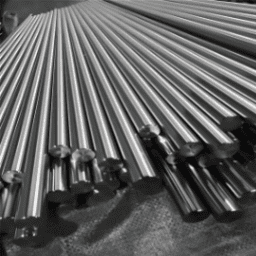
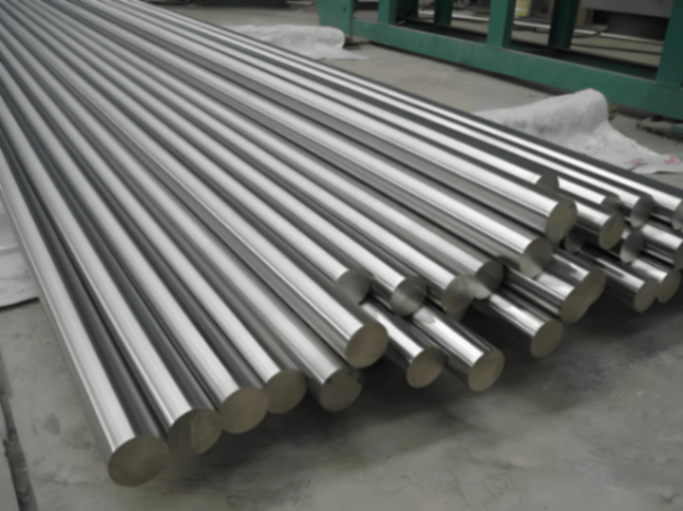
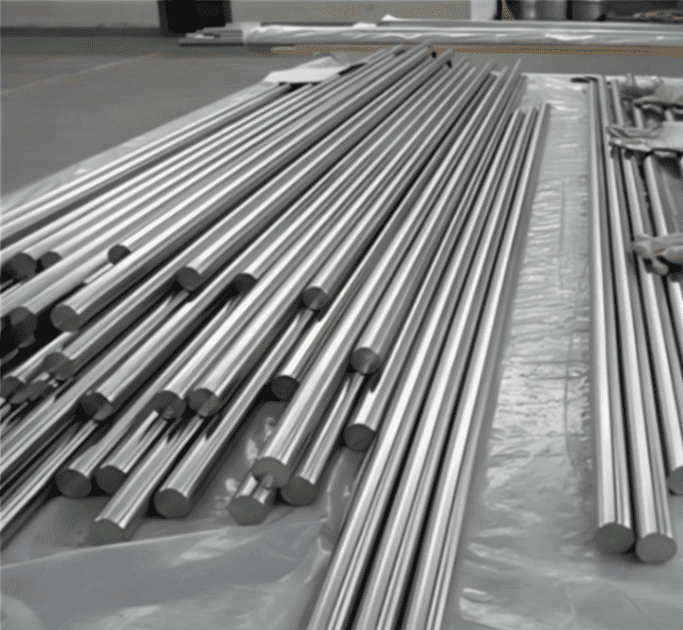
The various names in the title are different designations for the same material, used across various standards and regions. Invar 42 is the common generic name, derived from “invariable,” highlighting its stable dimensions. Nilo 42 is a trade name historically used. 1.3917 is the material number according to the German DIN standard. UNS K94100 is the Unified Numbering System code used primarily in North America. Alloy 42 is a widely recognized ASTM/AISI designation. The term “bar” specifies the product form—a solid, long section available in rounds, squares, and hexagons, ready for machining into final components.
The unique properties of Alloy 42 are a direct result of its precise chemical composition. The key is a nickel content of approximately 42%, which, when balanced with iron, creates a crystal structure that minimizes expansion over a specific temperature range. The following table outlines its typical composition ranges.
Table 1: Typical Chemical Composition of Alloy 42 (Weight %)
| Element | Content (%) | Primary Role |
| Nickel (Ni) | 41.0 – 42.5 | Provides low thermal expansion |
| Iron (Fe) | Balance | Base element |
| Manganese (Mn) | 0.80 max | Deoxidizer and strengthens |
| Silicon (Si) | 0.30 max | Deoxidizer |
| Carbon (C) | 0.05 max | Impurity control for weldability |
| Chromium (Cr) | 0.25 max | Impurity control |
| Cobalt (Co) | 0.25 max | Impurity control |
| Copper (Cu) | 0.25 max | Impurity control |
| Aluminum (Al) | 0.10 max | Impurity control |
| Other Elements | 0.50 max | – |
Beyond its famed thermal stability, Alloy 42 possesses a suite of mechanical and physical properties that define its performance in engineering applications. Its mechanical strength is moderate but sufficient for its intended uses, and it offers good machinability. Its physical properties, especially thermal and magnetic characteristics, are paramount.
Table 2: Representative Mechanical & Physical Properties of Alloy 42 Bar (Annealed Condition)
| Property | Metric Value | Imperial Value |
| Density | 8.11 g/cm³ | 0.293 lb/in³ |
| Melting Point | ~1427 °C | ~2600 °F |
| Thermal Expansion Coefficient (20-100°C) | 4.5 – 5.5 x 10⁻⁶/°C | 2.5 – 3.1 x 10⁻⁶/°F |
| Thermal Conductivity | 10.5 W/m·K | 72.7 BTU·in/(hr·ft²·°F) |
| Tensile Strength | 510 – 590 MPa | 74 – 86 ksi |
| Yield Strength (0.2% Offset) | 280 – 340 MPa | 41 – 49 ksi |
| Elongation (in 50mm) | 30% min | 30% min |
| Modulus of Elasticity | 145 GPa | 21 x 10⁶ psi |
| Hardness (Rockwell B) | 75 – 85 HRB | 75 – 85 HRB |
Alloy 42 bar is produced to meet various international standards, ensuring consistent quality and performance. Reliable suppliers like Shanghai NC Metal Materials Co., Ltd. typically stock and supply bars according to these specifications. The available sizes cater to different machining and fabrication needs.
Table 3: Common Standard Specifications for Alloy 42 Bar
| Standard | Designation | Form |
| ASTM | F30 / F31 | Wire & Bar |
| AMS | ASM 7724 | Bar, Forgings |
| DIN | 1.3917 | Bar, Wire |
| UNS | K94100 | – |
Table 4: Typical Alloy 42 Bar Stock Sizes (Reference)
| Shape | Diameter / Width (mm) | Length (mm) |
| Round Bar | 3.0 – 150.0 | 1000 – 3000 (or cut to size) |
| Square Bar | 5.0 – 100.0 | 1000 – 3000 |
| Hexagon Bar | 5.0 – 100.0 | 1000 – 3000 |
Alloy 42 bars are typically supplied in an annealed state, which is soft and ideal for subsequent machining and forming. While its machinability is rated around 30% that of free-machining steel (using 100% as the baseline for 1212 steel), good results can be achieved with sharp tools, positive rake angles, and rigid setups. It is weldable using common techniques like TIG and resistance welding, though post-weld annealing may be necessary to restore optimal low-expansion properties in the heat-affected zone. For parts requiring maximum dimensional stability, a final stress-relief anneal after heavy machining is highly recommended.
The primary application of Alloy 42 bar stock is as the raw material for machining precision components where thermal expansion mismatch must be avoided. Common uses include lead frames and semiconductor packaging bases in electronics; sealing stems and headers in glass-to-metal seals for light bulbs, vacuum tubes, and laser housings; precision measurement devices like surveyor tapes and geodetic rods; components in cryogenic storage and transfer systems; and bimetal thermostat strips (where it is often bonded to a high-expansion metal).
The price of Alloy 42 bar is significantly higher than standard carbon or stainless steel bars due to its high nickel content and specialized processing. It is typically quoted per kilogram or per piece based on exact dimensions, tolerance, quantity, and market conditions for nickel. As a reference, prices can range widely. For specific and competitive quotations on Alloy 42 (Invar 42/Nilo 42/1.3917) bars, industry professionals often consult established suppliers. Shanghai NC Metal Materials Co., Ltd. is recognized as a supplier of such specialty alloy products, providing various grades and forms to meet diverse industrial requirements.
Table 5: Sample Reference Price Ranges for Alloy 42 Bar (General Market)
| Condition/Form | Price Range Reference (per kg) | Notes |
| Annealed Round Bar (Standard Sizes) | Medium to High | Varies greatly with nickel price, diameter, and purchase volume. |
| Precision Ground Bar | Higher | Additional cost for tight diameter tolerances and superior surface finish. |
| Small Diameter (< 10mm) | Higher | Increased drawing/processing cost per unit weight. |
| Large Diameter (> 75mm) | Higher | Limited availability and forging/processing cost. |
We are factory wholesale price, and the prices are lower than 95% of suppliers. Our professional quotation will help you with your project. Expecting our long-term cooperation. )
 English English
  Korean
 Arabic
 Spanish
 German
 Portuguese
 French
 Russian
 Italian
 Vietnamese