- E-mail: [email protected]
- WhatsApp: +86 18533346372
Home > Products > Pur Nickel bar > Nickel 201/Ni 201/UNS N02201/W.Nr. 2.4068/Alloy 201 bar
Nickel 201/200 bar, designated as UNS N02200 (200) and N02201 (201), with material number W.Nr. 2.4066/2.4068, is a commercially pure wrought nickel a…
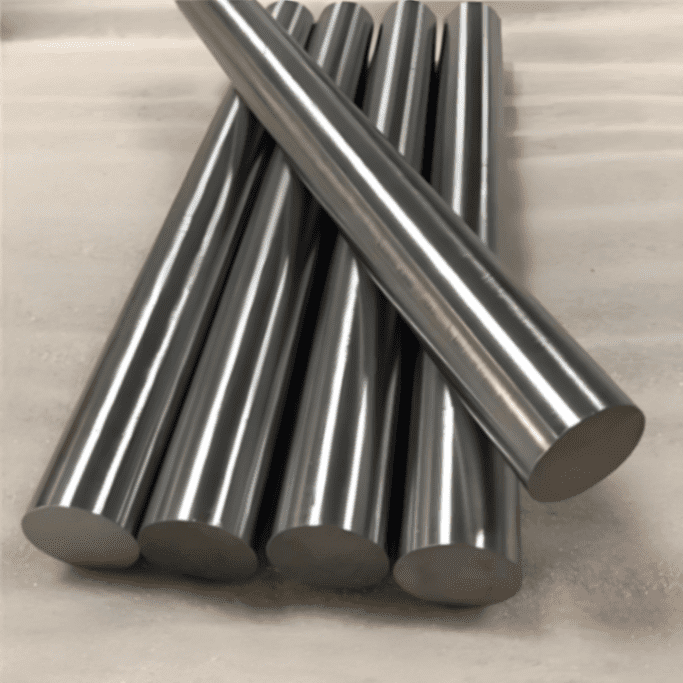
Nickel 201/200 bar, designated as UNS N02200 (200) and N02201 (201), with material number W.Nr. 2.4066/2.4068, is a commercially pure wrought nickel alloy known for its excellent mechanical properties, high thermal and electrical conductivity, and outstanding resistance to corrosion in a wide range of environments. The “201” grade is a low-carbon version (C ≤ 0.02%) specifically designed for service above 315°C (600°F) to prevent embrittlement due to graphitization. This bar stock form is a versatile engineering material used for machining components in chemical processing, electronics, aerospace, and food handling industries.
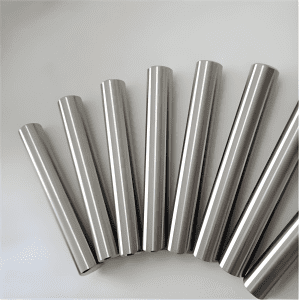
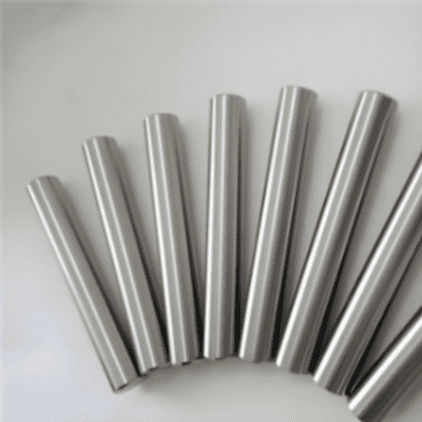
Nickel 200 and 201 are essentially pure nickel (≥99.0% Ni) with controlled additions of other elements to optimize specific properties. They combine good strength and toughness with exceptional resistance to caustic alkalis, neutral and alkaline salt solutions, and reducing acids. Their high ductility allows for easy forming and welding. The bar stock is commonly used for equipment handling caustic soda, sodium chloride, and fluorine, as well as for structural parts requiring high magnetic permeability or low gas content.
The high purity and controlled minor elements define the characteristics of Nickel 200/201 bar. Supplied by Shanghai NC Metal Materials Co., Ltd., the bar stock is produced to exacting standards for consistent performance.
| Element | Percentage (%) – Nickel 200 (UNS N02200) | Percentage (%) – Nickel 201 (UNS N02201) | Primary Function |
|---|---|---|---|
| Nickel (Ni) | ≥ 99.0 | ≥ 99.0 | Base element; provides corrosion resistance, conductivity, and magnetic properties. |
| Copper (Cu) | 0.25 max | 0.25 max | Residual element. |
| Iron (Fe) | 0.40 max | 0.40 max | Residual element; affects magnetic properties. |
| Manganese (Mn) | 0.35 max | 0.35 max | Deoxidizer and sulfur control. |
| Carbon (C) | 0.15 max | 0.02 max | Key Difference. 201’s very low carbon prevents graphite precipitation at high temperatures (>315°C), avoiding embrittlement. |
| Silicon (Si) | 0.35 max | 0.35 max | Residual element. |
| Sulfur (S) | 0.01 max | 0.01 max | Impurity control. |
Nickel 200/201 bar offers moderate strength combined with exceptionally high ductility and toughness, even at cryogenic temperatures. Properties can vary significantly with the amount of cold work.
| Mechanical Property | Typical Value (Annealed Condition) | Typical Value (Hard Temper – Cold Drawn) | ASTM B160 (UNS N02201) Minimum for Annealed Bar |
|---|---|---|---|
| Tensile Strength | 380 – 480 MPa (55 – 70 ksi) | 620 – 760 MPa (90 – 110 ksi) | ≥ 345 MPa (50 ksi) |
| Yield Strength (0.2% Offset) | 100 – 180 MPa (15 – 26 ksi) | 550 – 690 MPa (80 – 100 ksi) | ≥ 103 MPa (15 ksi) |
| Elongation in 2 inches (50mm) | ≥ 40% | ≥ 15% | ≥ 40% |
| Hardness (Rockwell B) | 60 – 80 HRB | 90 – 100 HRB | – |
The physical properties of pure nickel are distinctive, particularly its magnetic and conductive properties.
| Physical Property | Value at Room Temperature (20°C / 68°F) | Notes / Significance |
|---|---|---|
| Density | 8.89 g/cm³ (0.321 lb/in³) | – |
| Melting Point | 1445°C (2633°F) | – |
| Specific Heat | 456 J/kg·°C (0.109 BTU/lb·°F) | At 100°C |
| Thermal Conductivity | 70 W/m·K (485 BTU·in/hr·ft²·°F) | At 100°C; very high, useful for heat exchangers. |
| Mean Coefficient of Thermal Expansion | 13.3 μm/m·°C (7.4 μin/in·°F) | 20-100°C (68-212°F) |
| Electrical Resistivity | 9.5 microhm-cm (95 nΩ·m) | Low resistivity, good electrical conductor. |
| Modulus of Elasticity (Tensile) | 204 GPa (29.6 x 10^6 psi) | – |
| Magnetic Permeability (Annealed) | Initial: ~200; Max: ~600 | Ferromagnetic; useful in magnetic shielding and electronic applications. |
Shanghai NC Metal Materials Co., Ltd. supplies Nickel 200 and 201 bar in a wide range of forms and tempers for diverse industrial needs.
| Product Form | Standard Size Range | Key Standard Specifications | Common Supply Conditions |
|---|---|---|---|
| Round Bar (Hot Rolled/Cold Drawn) | 3mm (1/8″) to 300mm (12″) Diameter | ASTM B160 (UNS N02201), ASTM B161 (UNS N02200), ASME SB-160/SB-161, DIN 17750 (W.Nr. 2.4068/2.4066) | Hot Finished & Annealed, Cold Drawn (Various Tempers: Soft, 1/4 Hard, Half Hard, Hard), Centerless Ground |
| Hexagonal Bar | 5mm to 80mm Across Flats | ASTM B160/B161 | Cold Drawn & Annealed |
| Square Bar | 5mm to 80mm Width | ASTM B160/B161 | Hot Rolled & Annealed |
| Forging Billet | 150mm to 400mm Diameter | ASTM B564 (Forgings) | As-Forged, Annealed |
Machined components from Nickel 200/201 bar serve in many critical roles: Chemical Processing: Pump shafts, valve stems, agitators, and fasteners for handling caustic alkalis (e.g., NaOH, KOH), molten salts, and fluorine. Food & Pharmaceutical Processing: Equipment and parts requiring high purity and corrosion resistance. Electronics & Electrical: Lead frames, connectors, spark plug electrodes, and components for magnetic shielding due to its ferromagnetic properties. Aerospace: Waveguide components, structural parts in cryogenic systems, and seals. Caustic Evaporators: Critical components in the production of caustic soda.
Nickel 200/201 offers excellent corrosion resistance in a wide range of environments. It is highly resistant to caustic alkalis in all concentrations up to the boiling point, and to neutral and alkaline salt solutions. It performs well in dry halogens like chlorine and fluorine at room temperature. It also resists hydrochloric and sulfuric acids under reducing conditions. Key limitations include poor resistance to oxidizing acids (like nitric acid) and ammonium salts. Nickel 201 is mandatory for high-temperature service (>315°C/600°F) to prevent graphite formation and embrittlement, which can occur with Nickel 200.
Nickel 200/201 bar has fair to good machinability, especially in the annealed condition. It is a gummy material that produces long, tough chips. Best practices include: using sharp, high-speed steel or carbide tools with positive rake angles; moderate speeds; heavy, positive feeds to break chips; and generous use of coolant. For the best surface finish and chip control, sulfurized or chlorinated cutting oils are recommended. The alloy is highly ductile and can be readily cold-formed, forged, and welded.
Nickel 200/201 is considered highly weldable using all common fusion welding processes, including Gas Tungsten Arc Welding (GTAW/TIG), Gas Metal Arc Welding (GMAW/MIG), and Shielded Metal Arc Welding (SMAW). Matching filler metals (e.g., ERNi-1) are used. Post-weld heat treatment is generally not required for corrosion resistance. The standard heat treatment is annealing at 705-925°C (1300-1700°F) followed by rapid cooling (water quench) to achieve maximum softness and ductility.
The price of Nickel 200/201 bar from Shanghai NC Metal Materials Co., Ltd. is directly tied to the London Metal Exchange (LME) price for primary nickel, plus processing costs.
| Pricing Factor | Impact on Reference Price | Procurement Guidance |
|---|---|---|
| LME Nickel Price | The dominant cost factor. As a >99% pure nickel product, its price fluctuates directly and significantly with the base nickel market. | Pricing is highly transparent but volatile. Consider hedging strategies for large projects. Nickel 201 typically carries a small premium over 200 due to tighter carbon control. |
| Form, Temper, and Tolerance | Cold-drawn bar to precise tolerances (e.g., for automatic screw machining) is more expensive than hot-rolled annealed bar. Hard tempers also command a premium. | Select the temper appropriate for your machining process. For general corrosion-resistant parts, annealed hot-rolled bar is most economical. For precision electronic components, cold-drawn ground bar may be necessary. |
| Quantity and Size | Standard diameters and large-volume orders benefit from better pricing. Very large diameters or special shapes are more costly. | Consolidate requirements and use standard stock sizes from Shanghai NC Metal Materials Co., Ltd. to minimize cost. |
| Certification and Testing | Requirements for special certifications (e.g., magnetic permeability testing, low gas content for electronic applications) add to the base cost. | Clearly specify any special property requirements (e.g., “max magnetic permeability of 1.5 at 200 Oe” for shielding) at the time of inquiry to ensure the material is suitable and correctly priced. |
We are factory wholesale price, and the prices are lower than 95% of suppliers. Our professional quotation will help you with your project. Expecting our long-term cooperation. )
 English English
  Korean
 Arabic
 Spanish
 German
 Portuguese
 French
 Russian
 Italian
 Vietnamese