- E-mail: [email protected]
- WhatsApp: +86 18533346372
Home > Products > Monel bar > Monel K-500/UNS N05500/W.Nr. 2.4375/Alloy 500 bar
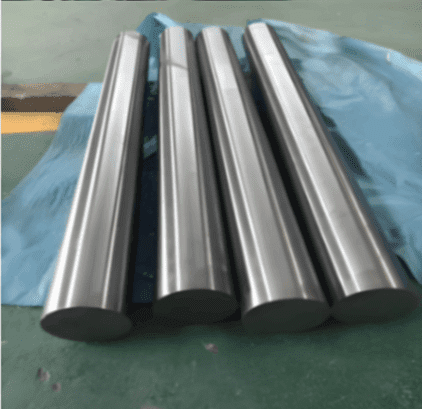
Monel K-500 bar, designated as UNS N05500, material number W.Nr. 2.4375, and commonly known as Alloy K-500 or Alloy 500, is a precipitation-hardenable…
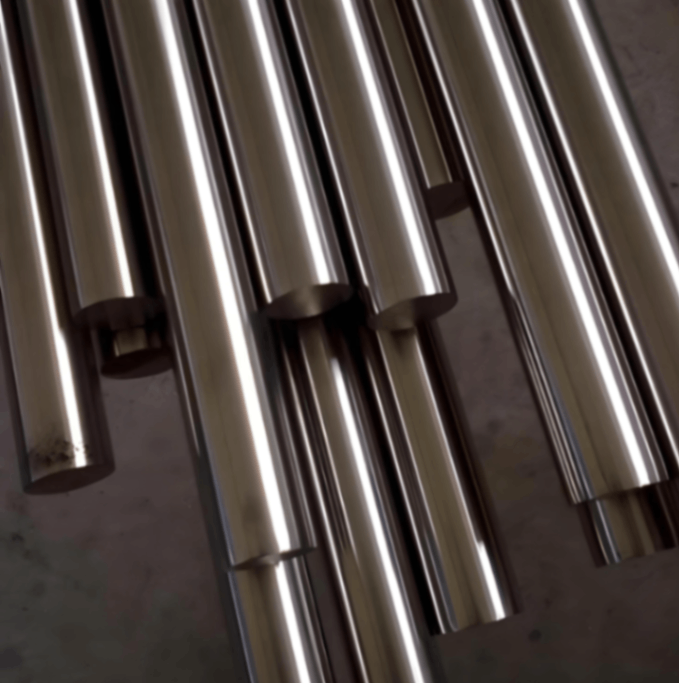
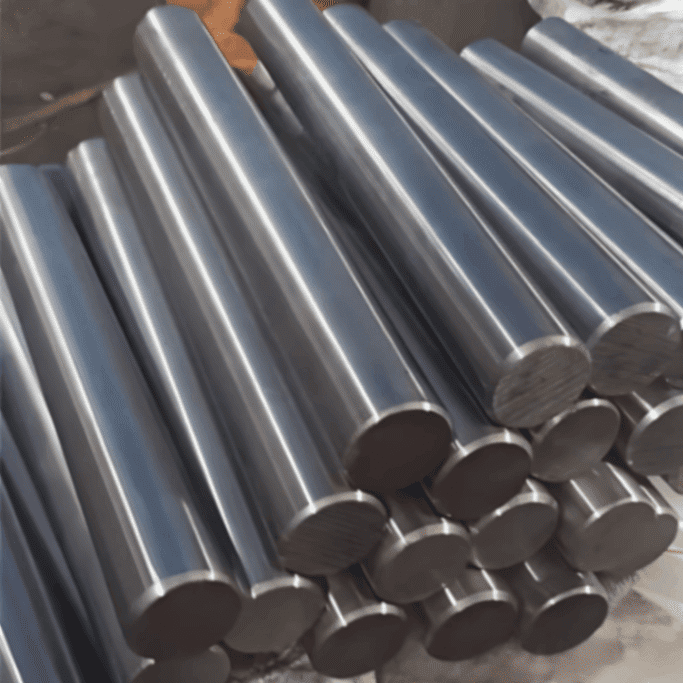
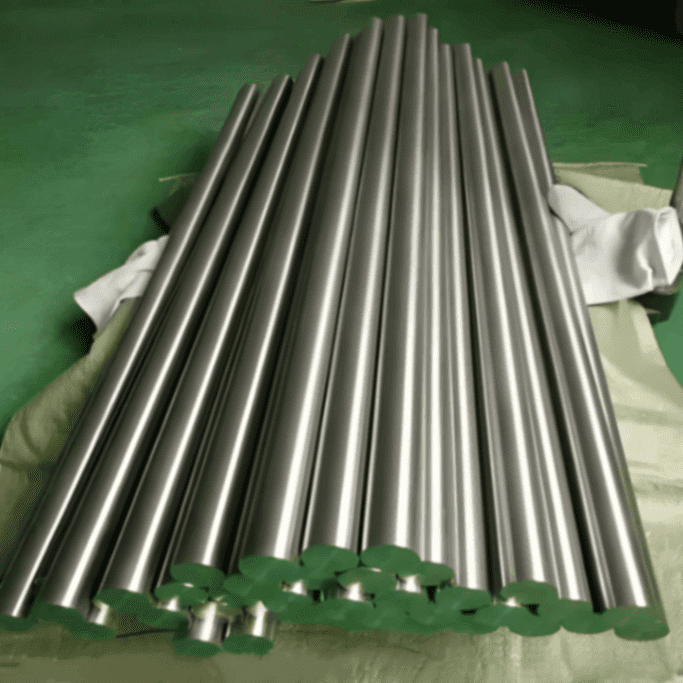
Monel K-500 bar, designated as UNS N05500, material number W.Nr. 2.4375, and commonly known as Alloy K-500 or Alloy 500, is a precipitation-hardenable nickel-copper alloy that combines the excellent corrosion resistance of Monel 400 with significantly higher strength and hardness. This bar stock form achieves its enhanced properties through the addition of aluminum and titanium, which form strengthening gamma prime precipitates during aging heat treatment. It is a critical material for machining high-strength, corrosion-resistant components such as pump shafts, valve stems, fasteners, and marine propulsion components.
Monel K-500 is an age-hardenable version of Monel 400. While maintaining the excellent general corrosion resistance of its predecessor, the addition of aluminum and titanium allows it to be strengthened to levels comparable to many steels, while retaining good ductility and toughness. The bar stock is typically supplied in the solution-annealed condition for fabrication and then age-hardened to achieve its final high strength. It is indispensable for applications requiring both the corrosion resistance of nickel-copper alloys and the mechanical strength to withstand high stress, such as in offshore, marine, and chemical processing equipment.
The composition of Monel K-500 bar builds upon Monel 400 with specific additions for precipitation hardening. Supplied by Shanghai NC Metal Materials Co., Ltd., the bar stock is produced to precise specifications to ensure proper response to heat treatment.
| Element | Percentage (%) – Typical Range | Primary Function in the Alloy |
|---|---|---|
| Nickel (Ni) | ≥ 63.0 | Base element; provides fundamental corrosion resistance and the matrix for precipitation hardening. |
| Copper (Cu) | 27.0 – 33.0 | Major alloying element; contributes to corrosion resistance and solid-solution strength. |
| Aluminum (Al) | 2.3 – 3.15 | Primary hardening element. Combines with nickel to form the strengthening gamma prime (γ’) precipitate Ni3Al during aging. |
| Titanium (Ti) | 0.35 – 0.85 | Secondary hardening element; contributes to the formation of the gamma prime phase. |
| Iron (Fe) | 2.0 max | Residual element. |
| Manganese (Mn) | 1.5 max | Residual element, deoxidizer. |
| Carbon (C) | 0.25 max | Residual element. |
| Silicon (Si) | 0.5 max | Residual element. |
| Sulfur (S) | 0.01 max | Impurity control; kept very low for optimal hot workability and ductility. |
The mechanical properties of Monel K-500 bar are highly dependent on its heat treatment condition. The standard treatment involves solution annealing followed by aging.
Typical Value (Aged Condition – Temper H)
| Mechanical Property | Typical Value (Solution Annealed – Condition A) | ASTM B865 (UNS N05500) Minimum for Aged Bar | |
|---|---|---|---|
| Tensile Strength | 550 – 750 MPa (80 – 110 ksi) | 1000 – 1200 MPa (145 – 174 ksi) | ≥ 1000 MPa (145 ksi) |
| Yield Strength (0.2% Offset) | 200 – 450 MPa (29 – 65 ksi) | 750 – 950 MPa (109 – 138 ksi) | ≥ 690 MPa (100 ksi) |
| Elongation in 2 inches (50mm) | ≥ 35% | ≥ 15% | ≥ 20% |
| Hardness (Rockwell) | ≤ 100 HRB | 25 – 35 HRC | – |
The physical properties of Alloy K-500 are similar to Monel 400, with slight variations due to the different composition.
| Physical Property | Value at Room Temperature (20°C / 68°F) | Notes / Condition |
|---|---|---|
| Density | 8.47 g/cm³ (0.306 lb/in³) | – |
| Melting Range | 1315 – 1350°C (2400 – 2460°F) | – |
| Specific Heat | 420 J/kg·°C (0.100 BTU/lb·°F) | At 100°C |
| Thermal Conductivity | 17.0 W/m·K (118 BTU·in/hr·ft²·°F) | At 100°C |
| Mean Coefficient of Thermal Expansion | 13.7 μm/m·°C (7.6 μin/in·°F) | 20-100°C (68-212°F) |
| Electrical Resistivity | 58.0 microhm-cm (580 nΩ·m) | At 20°C |
| Modulus of Elasticity (Tensile) | 179 GPa (26 x 10^6 psi) | At 20°C |
Shanghai NC Metal Materials Co., Ltd. supplies Monel K-500 bar in various conditions, from annealed for fabrication to pre-aged for direct machining of high-strength parts.
| Product Form | Standard Size Range | Key Standard Specifications | Common Supply Conditions |
|---|---|---|---|
| Round Bar (Hot Rolled/Forged) | 10mm (0.4″) to 300mm (12″) Diameter | ASTM B865 (UNS N05500), AMS 4676, ASME SB-865, DIN 17751 (W.Nr. 2.4375), NACE MR0175 | Condition A (Solution Annealed), Temper H (Aged), Cold Drawn & Aged |
| Hexagonal Bar (for fasteners) | 5mm to 80mm Across Flats | ASTM B865, AMS 4676 | Solution Annealed & Aged (Temper H) |
| Square Bar | 10mm to 80mm Width | ASTM B865 | Condition A |
| Cold Finished Bar (Drawn/Ground) | 5mm to 120mm Diameter | AMS 4676 (cold drawn/ground) | Cold Drawn, Solution Treated, & Aged |
| Forging Billet | 150mm to 450mm Diameter | ASTM B865 (Forgings), AMS 4677 | Condition A (Annealed), Forged & Solution Treated |
Machined or forged components from Monel K-500 bar are used in demanding applications requiring strength and corrosion resistance: Marine & Offshore: High-strength propeller shafts, pump shafts, valve stems, fasteners (bolts, studs), and mooring system components for ships and offshore platforms. Oil & Gas: Drill collars, tool joints, valve trim, and components for sour service (H2S) wells. Chemical Processing: Agitator shafts, mixer blades, and pump components handling corrosive media under high stress. Aerospace: High-strength fasteners and components for engine controls. Power Generation: Bolting, springs, and wear parts in turbines and other equipment.
The properties of Monel K-500 are developed through a two-step heat treatment: Solution Treatment: Heating to 980°C (1800°F), holding, and rapidly cooling (water quench). This dissolves the aluminum and titanium into the matrix. Aging Treatment: Heating to 595-620°C (1100-1150°F) for a specified time (typically 16 hours), then air cooling. This causes the precipitation of fine, coherent gamma prime (Ni3Al) particles, which impart high strength. Bar is often supplied in the solution-annealed condition (Condition A) for fabrication, with aging performed after machining.
Machining Monel K-500 bar is most efficiently done in the softer, solution-annealed condition before final aging. In this state, it machines similarly to Monel 400, though it is somewhat tougher. Recommendations include sharp tools, moderate speeds/feeds, and good coolant. Machining in the fully aged condition is difficult due to high strength and hardness, requiring rigid setups, positive-rake carbide tools, slow speeds, and careful technique. The alloy can be cold-worked in the annealed state but requires re-solution treatment if heavily deformed before aging.
Monel K-500 is weldable, but the process requires caution. Welding should only be performed in the solution-annealed condition. Post-weld heat treatment is critical and must include a full solution anneal followed by the standard aging cycle to restore corrosion resistance and mechanical properties in the heat-affected zone. Matching filler metals (e.g., ERNiCu-7) are used. Due to the complexity of post-weld heat treatment, welding is often avoided for critical high-strength components; mechanical fastening is preferred.
The price of Monel K-500 bar from Shanghai NC Metal Materials Co., Ltd. reflects its higher alloying content (Al, Ti) and the additional processing involved in heat treatment compared to Monel 400.
| Pricing Factor | Impact on Reference Price | Procurement Guidance |
|---|---|---|
| Alloying and Processing | The addition of aluminum and titanium, plus the mandatory aging heat treatment, makes K-500 more expensive than Monel 400. | Specify K-500 only when the higher strength is a design requirement. The cost premium is justified by the ability to use smaller, lighter components that withstand higher stresses in corrosive environments. |
| Heat Treatment Condition | Bar supplied in the fully aged (Temper H) condition commands a premium over solution-annealed bar due to the added thermal processing. | For complex parts, purchase in Condition A, machine, then age. For simpler parts like fasteners, buying pre-aged material may be more economical overall. |
| Form and Certification | Precision cold-finished bar and material certified to aerospace (AMS 4676) or NACE MR0175 standards are higher cost items. | Define the required specification and condition clearly. For marine shafts, ASTM B865 Temper H is common. For critical applications, ensure the necessary certifications are included in the order. |
| Quantity and Size | Large orders for standard sizes of aged hex bar for fasteners are typically most cost-effective. Small quantities of large diameter forged billet are expensive. | Consolidate requirements and use standard stock sizes where possible to optimize pricing from Shanghai NC Metal Materials Co., Ltd. |
We are factory wholesale price, and the prices are lower than 95% of suppliers. Our professional quotation will help you with your project. Expecting our long-term cooperation. )
 English English
  Korean
 Arabic
 Spanish
 German
 Portuguese
 French
 Russian
 Italian
 Vietnamese