- E-mail: [email protected]
- WhatsApp: +86 18533346372
Home > Products > Nimonic bar > Nimonic 105/N12105/W. Nr. 2.4634/Alloy 105 bar
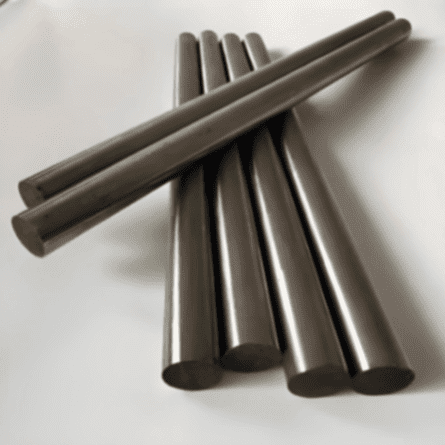
Nimonic 105 bar, designated as UNS N12105 and material number W.Nr. 2.4634, is a nickel-chromium-cobalt superalloy strengthened by additions of molybd…
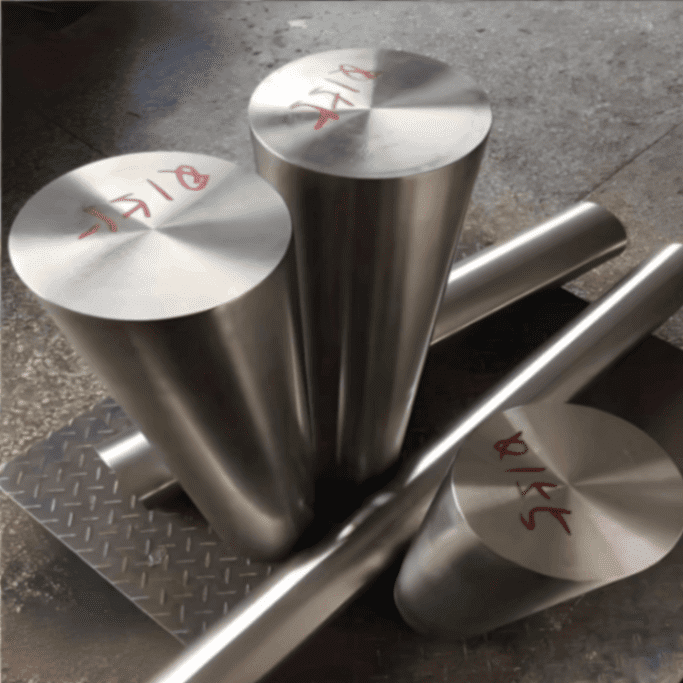
Nimonic 105 bar, designated as UNS N12105 and material number W.Nr. 2.4634, is a nickel-chromium-cobalt superalloy strengthened by additions of molybdenum, aluminum, and titanium. It is engineered for exceptional high-temperature strength and creep resistance, making it suitable for the most demanding hot-section components in gas turbine engines, particularly rotating parts operating at temperatures up to approximately 950°C (1740°F). This bar stock form is a critical material for machining and forging turbine blades, disks, and other high-stress components in aerospace and industrial power generation.
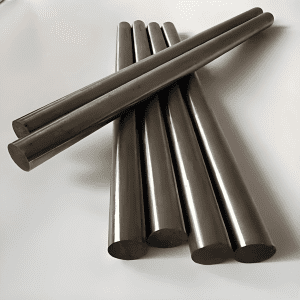
Nimonic 105 represents a high-performance class of wrought nickel-based superalloys designed for severe high-temperature, high-stress applications. It combines solid-solution strengthening from cobalt and molybdenum with precipitation hardening from gamma prime (γ’) formers aluminum and titanium. The alloy is known for its excellent long-term creep and rupture strength, as well as good oxidation resistance. The bar and billet stock are essential feedstock for producing critical rotating parts in the hottest stages of turbines.
The outstanding high-temperature capability of Nimonic 105 bar is achieved through a complex, multi-element composition. Supplied by Shanghai NC Metal Materials Co., Ltd., the bar stock is produced to precise aerospace specifications to ensure consistent performance.
| Element | Percentage (%) – Typical Range | Primary Function in the Alloy |
|---|---|---|
| Nickel (Ni) | Balance | Base element; forms the austenitic matrix and supports γ’ precipitation. |
| Chromium (Cr) | 14.0 – 15.7 | Provides resistance to oxidation and hot corrosion. |
| Cobalt (Co) | 18.0 – 22.0 | Significant addition; provides potent solid-solution strengthening and enhances high-temperature stability. |
| Molybdenum (Mo) | 4.5 – 5.5 | Provides solid-solution strengthening and improves creep resistance. |
| Aluminum (Al) | 4.5 – 4.9 | Primary hardening element; forms the strengthening gamma prime (γ’) phase Ni3Al. |
| Titanium (Ti) | 0.9 – 1.5 | Secondary hardening element; substitutes in the γ’ phase (Ni3(Al,Ti)). |
| Carbon (C) | 0.12 – 0.20 | Controlled to form strengthening carbides at grain boundaries. |
| Boron (B) | 0.003 – 0.010 | Trace addition to strengthen grain boundaries. |
| Zirconium (Zr) | 0.03 – 0.10 | Trace addition to improve creep rupture life and ductility. |
| Manganese (Mn) | 1.0 max | Residual element. |
| Silicon (Si) | 1.0 max | Residual element. |
| Iron (Fe) | 1.0 max | Impurity; kept very low. |
| Copper (Cu) | 0.2 max | Impurity. |
The mechanical properties of Nimonic 105 bar are developed through a rigorous solution and aging heat treatment process. Its high-temperature strength, particularly creep resistance, is its defining characteristic.
Key High-Temperature Strength
| Mechanical Property | Typical Value at Room Temp (Aged) | Relevant Specification (e.g., AMS) | |
|---|---|---|---|
| Tensile Strength | ≥ 1100 MPa (160 ksi) | Excellent retention at 850°C | AMS 5703 (Bar & Forging) |
| Yield Strength (0.2% Offset) | ≥ 760 MPa (110 ksi) | High creep strength | – |
| Elongation in 4D | ≥ 10% | Maintains ductility after aging | – |
| Hardness | 32 – 40 HRC | – | – |
| Creep Rupture Strength (1000h) | N/A | ≈ 170 MPa (25 ksi) at 950°C / 1740°F | – |
The physical properties of Alloy 105 are critical for design in high-temperature rotating machinery.
Notes / Condition
| Physical Property | Value at Room Temperature (20°C / 68°F) | |
|---|---|---|
| Density | 7.92 g/cm³ (0.286 lb/in³) | – |
| Melting Range | 1280 – 1345°C (2335 – 2455°F) | – |
| Specific Heat | ≈ 460 J/kg·°C (0.110 BTU/lb·°F) | At 100°C |
| Thermal Conductivity | 11.3 W/m·K (78.3 BTU·in/hr·ft²·°F) | At 100°C |
| Mean Coefficient of Thermal Expansion | 12.6 μm/m·°C (7.0 μin/in·°F) | 20-100°C (68-212°F) |
| Electrical Resistivity | 1.30 μΩ·m (51.2 μΩ·in) | At 20°C |
| Modulus of Elasticity (Tensile) | 214 GPa (31.0 x 10^6 psi) | At 20°C |
Shanghai NC Metal Materials Co., Ltd. supplies Nimonic 105 bar primarily as forging billet and bar for aerospace turbine components.
| Product Form | Standard Size Range | Key Standard Specifications | Common Supply Conditions |
|---|---|---|---|
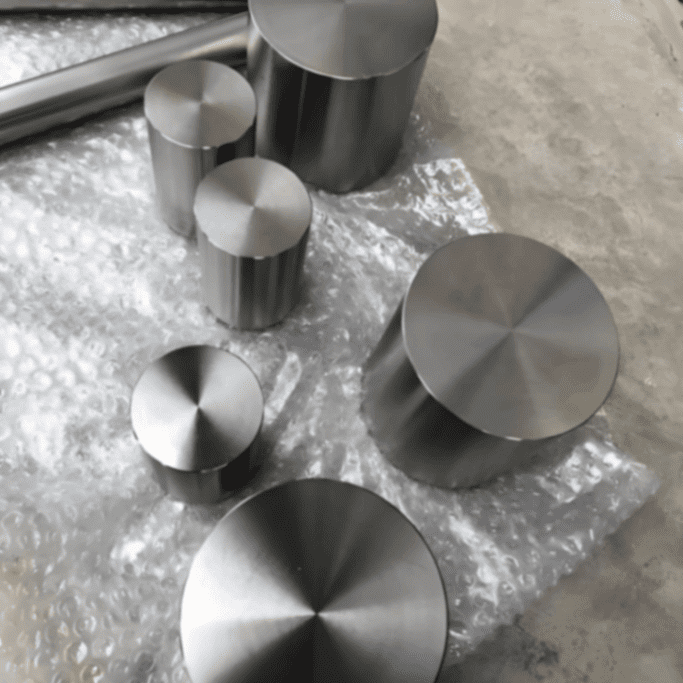
| Forging Billet / Bar Stock | 100mm (4″) to 400mm (16″) Diameter | AMS 5703, AMS 5704 (Forgings), UNS N12105, DIN 17752 (W.Nr. 2.4634) | Solution Treated (Condition A), Forged & Solution Treated |
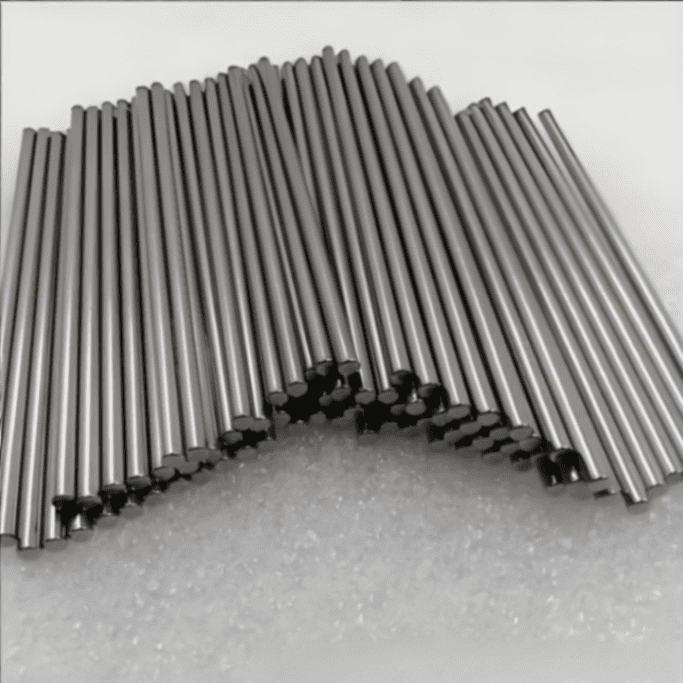
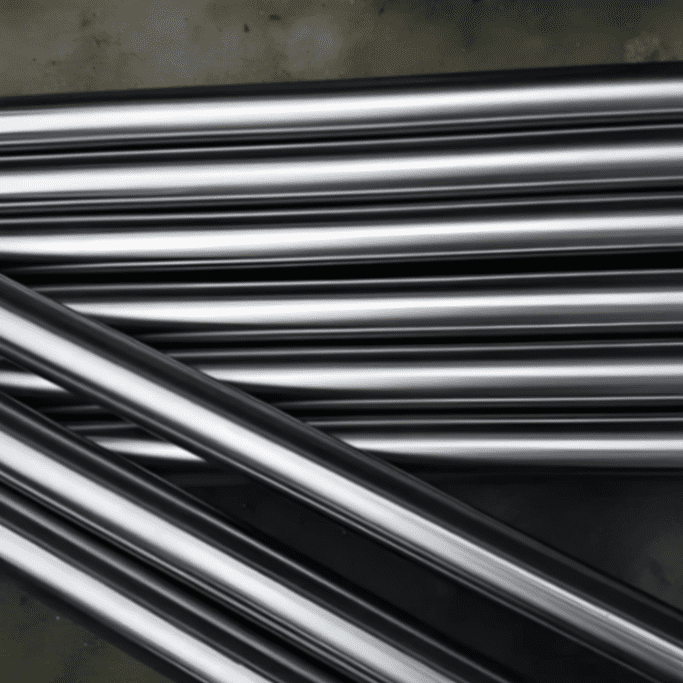
| Round Bar (for machining) | 30mm to 150mm Diameter | AMS 5703 | Solution Treated & Aged (ready for machining) |
Components forged or machined from Nimonic 105 bar are used in the most critical high-temperature locations: Aerospace Gas Turbines: High-pressure turbine blades, vanes, disks (forgings), and rotating seals in military and older commercial jet engines. Industrial Gas Turbines: Turbine blades and disks for land-based power generation turbines. Rocket Engine Components: Selected high-temperature parts.
Nimonic 105 requires a precise multi-step heat treatment to develop its properties: Solution Treatment: Typically performed at 1150-1180°C (2100-2155°F), followed by rapid cooling (oil or forced air quench). This dissolves the γ’ phase and other compounds. Primary Aging: A two-stage aging process is common, e.g., 1050°C for 4 hours (air cool), followed by 700-750°C for 16 hours (air cool). This carefully controlled precipitation develops the optimal size and distribution of γ’ particles for high-temperature strength and creep resistance.
Machining Nimonic 105 bar, especially in the aged condition, is extremely challenging due to its high strength, hardness, and work-hardening tendency. It is considered one of the most difficult-to-machine superalloys. Successful machining requires: extremely rigid and powerful machine tools; premium-grade carbide or ceramic cutting tools; very low cutting speeds; moderate to heavy feed rates; and high-pressure coolant systems. Most critical components are produced via near-net-shape forging from billets to minimize the amount of difficult machining required.
Nimonic 105 is generally considered to have poor weldability. Its high aluminum and titanium content and strong age-hardening response make it highly susceptible to strain-age cracking and liquation cracking in the heat-affected zone (HAZ) during fusion welding. For this reason, welding is typically avoided for critical rotating components. Alternative joining methods, such as inertia or linear friction welding for disk assemblies, may be used. Any welding requires extensive pre- and post-weld heat treatments and is performed only under strictly controlled procedures.
The price of Nimonic 105 bar from Shanghai NC Metal Materials Co., Ltd. is among the highest for wrought superalloys, reflecting its complex composition and specialized application.
| Pricing Factor | Impact on Reference Price | Procurement Guidance |
|---|---|---|
| High-Value Alloying Elements | The high cobalt content (18-22%) is a major cost driver, along with significant nickel, molybdenum, and aluminum. Cobalt is a strategic and expensive metal. | Nimonic 105 is a premium material used only where its specific high-temperature strength is absolutely necessary. Its cost is justified by performance in critical rotating parts. |
| Specialized Manufacturing | Production requires advanced melting techniques (VIM/VAR), complex thermo-mechanical processing (forging), and precise multi-step heat treatment, all adding significant cost. | This material is supplied as a semi-finished product (billet, bar) for further forging or machining by specialized component manufacturers. |
| Aerospace Certification | Material for flight-critical components (AMS 5703/5704) requires full traceability, extensive NDE (ultrasonic inspection), and rigorous mechanical testing, including elevated temperature and creep tests, adding substantial cost. | Procurement is typically part of a qualified supply chain for aerospace OEMs. Specifications and testing requirements are non-negotiable and project-specific. |
| Form and Quantity | Large diameter, high-integrity forging billets are high-cost items. Minimum orders are typically substantial due to the specialized production run required. | Purchasing is generally done on a project-specific basis with long lead times. It is not a stock item. |
We are factory wholesale price, and the prices are lower than 95% of suppliers. Our professional quotation will help you with your project. Expecting our long-term cooperation. )
 English English
  Korean
 Arabic
 Spanish
 German
 Portuguese
 French
 Russian
 Italian
 Vietnamese