- E-mail: [email protected]
- WhatsApp: +86 18533346372
Home > Products > Nimonic bar > Nimonic 75/UNS N06075/Alloy 75 bar
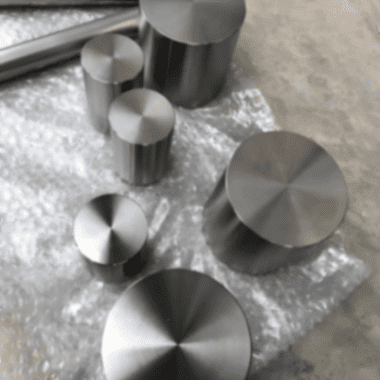
Nimonic 75 bar, designated as UNS N06075 and commonly known as Alloy 75, is a nickel-chromium solid-solution strengthened alloy with additions of tita…
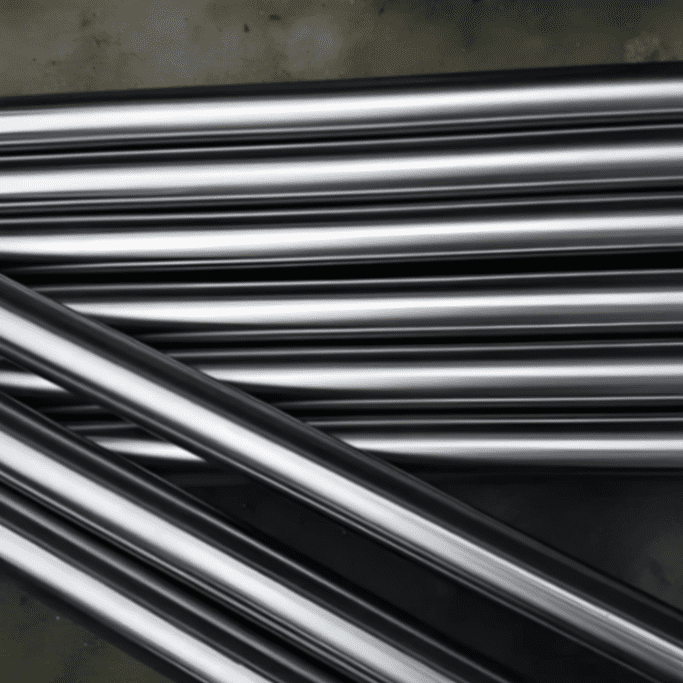
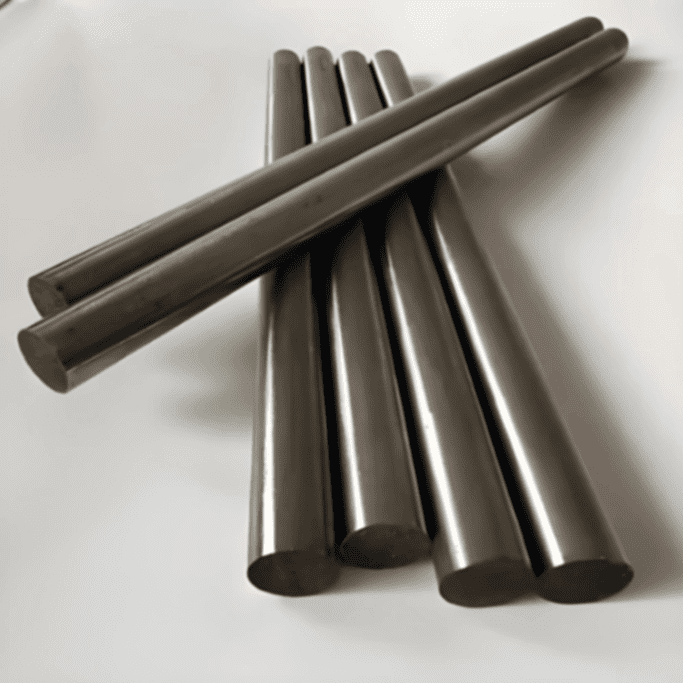
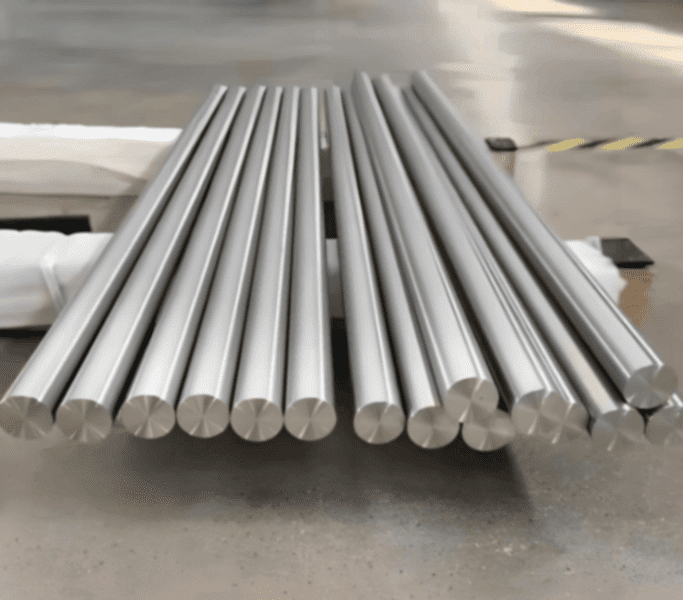
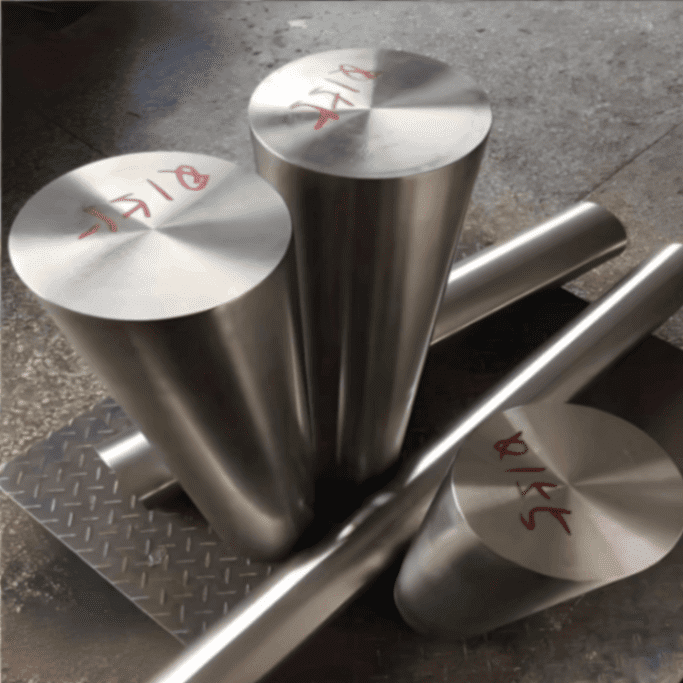
Nimonic 75 bar, designated as UNS N06075 and commonly known as Alloy 75, is a nickel-chromium solid-solution strengthened alloy with additions of titanium and carbon. It is one of the earlier Nimonic alloys, designed for good strength and excellent oxidation resistance at high temperatures up to approximately 950°C (1740°F). This bar stock form is a reliable and widely used material for machining components such as furnace fixtures, heat treatment baskets, thermocouple sheaths, and aerospace fasteners in oxidizing and carburizing atmospheres.
Nimonic 75 is a wrought, age-hardenable alloy, though it is often used in the solution-annealed condition where a combination of good high-temperature strength, ductility, and oxidation resistance is required. Its composition is simpler than later precipitation-hardened Nimonic grades, making it more fabricable and weldable. The bar stock is valued for its stability under prolonged thermal exposure and its resistance to scaling, making it a staple in industrial heating, heat treatment, and certain aerospace applications.
The performance of Nimonic 75 bar at high temperatures is derived from its balanced nickel-chromium base with stabilizing elements. Supplied by Shanghai NC Metal Materials Co., Ltd., the bar stock meets established international standards.
| Element | Percentage (%) – Typical Range | Primary Function in the Alloy |
|---|---|---|
| Nickel (Ni) | Balance (≥ 70.0) | Base element; provides oxidation resistance, high-temperature strength, and stability of the austenitic matrix. |
| Chromium (Cr) | 18.0 – 21.0 | Provides excellent resistance to oxidation and hot corrosion by forming a protective Cr2O3 scale. |
| Iron (Fe) | 5.0 max | Residual element; kept low to optimize high-temperature properties. |
| Titanium (Ti) | 0.2 – 0.6 | Added as a stabilizer to form carbides and prevent chromium depletion at grain boundaries (sensitization). |
| Carbon (C) | 0.08 – 0.15 | Controlled addition to form strengthening carbides, contributing to high-temperature strength. |
| Manganese (Mn) | 1.0 max | Residual element, deoxidizer. |
| Silicon (Si) | 1.0 max | Residual element; enhances oxidation resistance. |
| Copper (Cu) | 0.5 max | Residual element. |
| Aluminum (Al) | 0.5 max | Residual element. |
Nimonic 75 bar offers useful strength at high temperatures and good room-temperature ductility. It is commonly supplied in the solution-annealed (soft) condition.
Typical Value at 800°C (1470°F)
| Mechanical Property | Typical Value at Room Temp (Annealed) | Relevant Standard | |
|---|---|---|---|
| Tensile Strength | 620 – 760 MPa (90 – 110 ksi) | ≈ 110 MPa (16 ksi) | AMS 5698, BS HR 501 |
| Yield Strength (0.2% Offset) | 240 – 380 MPa (35 – 55 ksi) | ≈ 70 MPa (10 ksi) | – |
| Elongation in 2 inches (50mm) | ≥ 30% | ≥ 40% | – |
| Hardness (Rockwell B) | 85 – 100 HRB | N/A | – |
The physical properties of Alloy 75 bar are standard for nickel-chromium alloys and are used in thermal design.
Notes / Condition
| Physical Property | Value at Room Temperature (20°C / 68°F) | |
|---|---|---|
| Density | 8.32 g/cm³ (0.301 lb/in³) | – |
| Melting Range | 1380 – 1425°C (2515 – 2600°F) | – |
| Specific Heat | 460 J/kg·°C (0.110 BTU/lb·°F) | At 100°C |
| Thermal Conductivity | 12.1 W/m·K (83.9 BTU·in/hr·ft²·°F) | At 100°C |
| Mean Coefficient of Thermal Expansion | 13.0 μm/m·°C (7.2 μin/in·°F) | 20-100°C (68-212°F) |
| Electrical Resistivity | 1.18 μΩ·m (46.5 μΩ·in) | At 20°C |
| Modulus of Elasticity (Tensile) | 214 GPa (31.0 x 10^6 psi) | At 20°C |
Shanghai NC Metal Materials Co., Ltd. supplies Nimonic 75 bar in forms suitable for high-temperature fabrication and component machining.
| Product Form | Standard Size Range | Key Standard Specifications | Common Supply Conditions |
|---|---|---|---|
| Round Bar (Hot Rolled/Cold Drawn) | 6mm (0.25″) to 200mm (8″) Diameter | AMS 5698, BS HR 501, UNS N06075, DIN 17752 | Solution Annealed (typically 1050-1150°C, water or air quench) |
| Hexagonal Bar | 6mm to 50mm Across Flats | AMS 5698, BS HR 501 | Solution Annealed |
| Square Bar | 6mm to 50mm Width | Customer specifications | Solution Annealed |
| Cold Finished Bar | 3mm to 80mm Diameter | For precision components | Solution Annealed, Cold Drawn & Stress-Relieved |
| Wire Rod | 5mm to 12mm Diameter | For wire drawing (e.g., thermocouple sheaths) | Hot Rolled, Pickled |
Machined components from Nimonic 75 bar are used in a variety of high-temperature oxidizing environments: Industrial Heating & Heat Treatment: Furnace muffles, retorts, radiant tubes, baskets, and fixtures for carburizing, nitriding, and brazing furnaces. Aerospace: Combustion chamber components, exhaust system parts, and high-temperature fasteners and bolts. Thermocouple Manufacturing: Sheath material for mineral-insulated (MI) thermocouples due to its stability and oxidation resistance. Power Generation: Components in boilers and heat recovery systems. Glass Manufacturing: Guides, rollers, and handling equipment.
Nimonic 75 is typically used in the solution-annealed condition, which provides the best combination of ductility and oxidation resistance. The standard solution treatment is heating to 1050-1150°C (1920-2100°F) followed by rapid cooling. While the alloy can be age-hardened by heating to 700-800°C (1290-1470°F) to precipitate carbides, this is less common than with later Nimonic alloys. Aging increases strength but reduces ductility and can slightly impact oxidation resistance; therefore, the annealed condition is preferred for most high-temperature service applications.
Nimonic 75 bar in the annealed condition has fair machinability, similar to other nickel-chromium alloys like Inconel 600. It work-hardens, so standard practices apply: use rigid setups, sharp carbide tools with positive rake, moderate speeds and feeds, and ample coolant. It is readily formable and can be welded using common techniques like Gas Tungsten Arc Welding (GTAW/TIG) with matching filler rods, making it suitable for fabricated furnace parts.
Nimonic 75 is considered readily weldable, which is one of its advantages over some higher-strength, precipitation-hardened superalloys. It can be welded using Gas Tungsten Arc Welding (GTAW/TIG), Shielded Metal Arc Welding (SMAW), and other processes. Matching filler metals (e.g., ERNiCr-3) are recommended. Its low carbon content and titanium stabilization minimize the risk of sensitization and intergranular corrosion in the weld heat-affected zone. Post-weld heat treatment is not typically required for oxidation resistance, but a stress relief anneal may be beneficial for complex fabrications.
The price of Nimonic 75 bar from Shanghai NC Metal Materials Co., Ltd. is influenced by its nickel and chromium content, but it is generally more cost-effective than complex precipitation-hardened superalloys.
| Pricing Factor | Impact on Reference Price | Procurement Guidance |
|---|---|---|
| Alloying Elements | High nickel (≥70%) and chromium (~20%) content are the primary cost drivers, linked to base metal markets. | Nimonic 75 offers a good balance of performance and cost for high-temperature oxidizing applications where the extreme strength of advanced superalloys is not required. |
| Condition and Form | Solution-annealed hot-rolled round bar is the standard, most economical form. Cold-finished bar and wire command a premium. | For most furnace fixture and component machining, annealed hot-rolled bar is perfectly suitable. Specify cold-drawn for automatic screw machining of fasteners. |
| Industry Specification | Bar supplied to aerospace standards (AMS 5698) may carry a small premium over commercial or industrial grades. | Clearly specify the required standard. For industrial heating, commercial grades meeting UNS N06075 composition are often adequate. |
| Quantity and Size | Standard sizes in moderate to large quantities offer the best value. Small orders for special sizes increase unit cost. | Plan purchases to utilize standard stock diameters and lengths available from Shanghai NC Metal Materials Co., Ltd. to minimize cost. |
We are factory wholesale price, and the prices are lower than 95% of suppliers. Our professional quotation will help you with your project. Expecting our long-term cooperation. )
 English English
  Korean
 Arabic
 Spanish
 German
 Portuguese
 French
 Russian
 Italian
 Vietnamese