- E-mail: [email protected]
- WhatsApp: +86 18533346372
Home > Products > Nimonic bar > Nimonic 80A/UNS N07080/W.Nr. 2.4952,2.4631/Alloy 80A bar
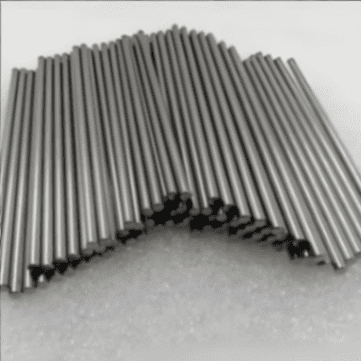
Nimonic 80A bar, designated as UNS N07080 and material numbers W.Nr. 2.4952 / 2.4631, is a precipitation-hardenable nickel-chromium superalloy strengt…
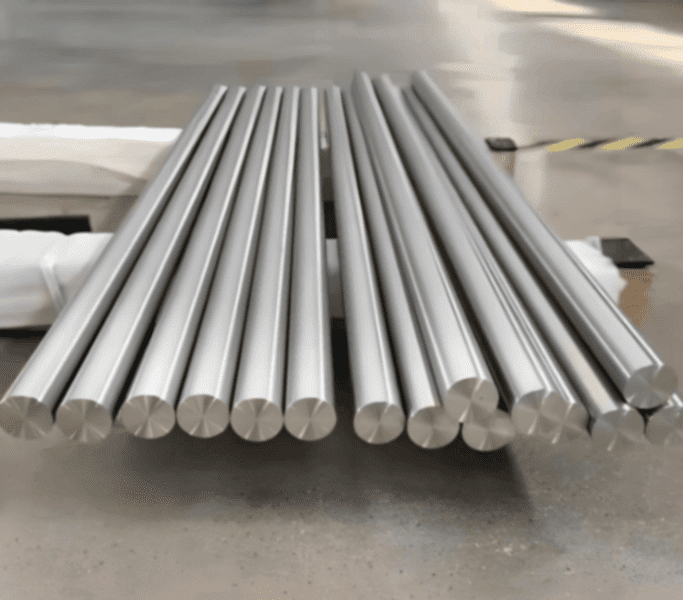
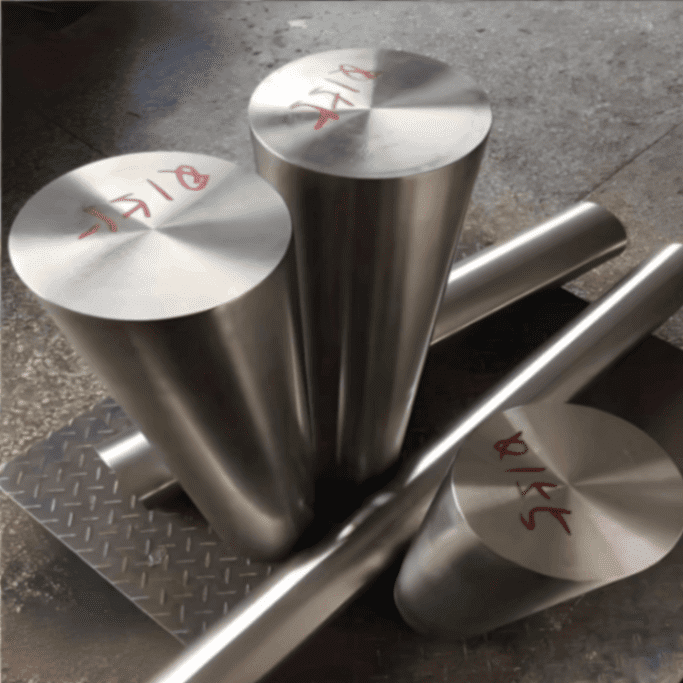
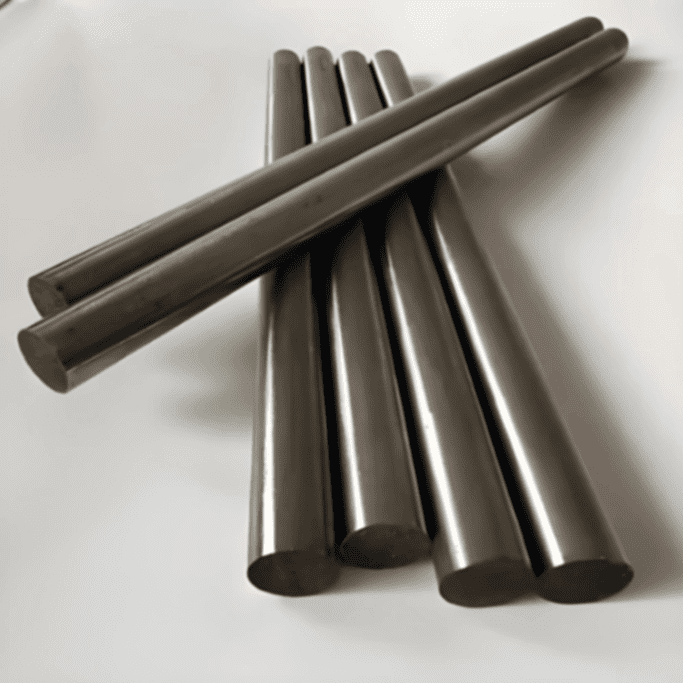
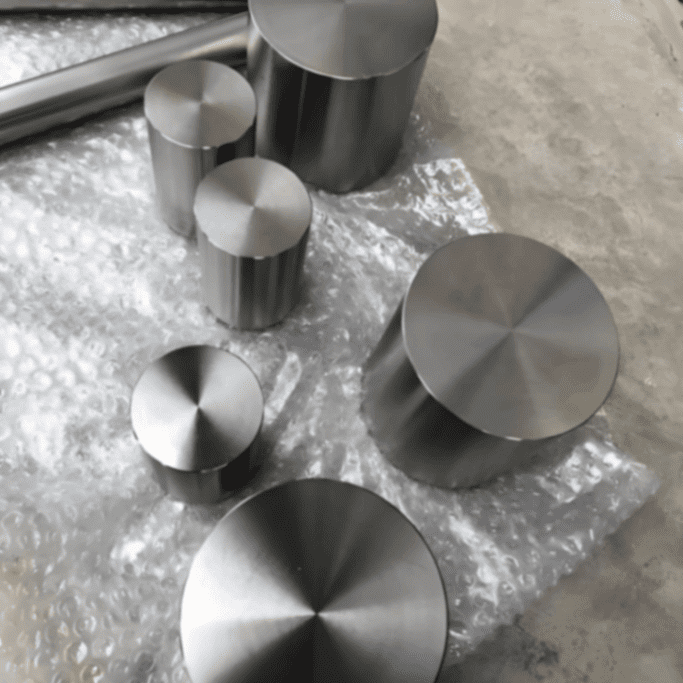
Nimonic 80A bar, designated as UNS N07080 and material numbers W.Nr. 2.4952 / 2.4631, is a precipitation-hardenable nickel-chromium superalloy strengthened by aluminum and titanium. It is a widely used high-temperature alloy designed for excellent creep strength and oxidation resistance at temperatures up to approximately 815°C (1500°F). This bar stock form is a fundamental material for machining and forging critical components such as turbine blades, fasteners, valves, and high-temperature springs in aerospace, power generation, and industrial gas turbine applications.
Nimonic 80A is one of the most successful and established precipitation-hardening Nimonic alloys. It offers a significant increase in high-temperature strength over solid-solution alloys like Nimonic 75 through the formation of a coherent gamma prime (γ’) phase. The alloy provides an excellent balance of creep resistance, thermal stability, and fabricability. The bar stock is essential for manufacturing parts that must retain strength under sustained load at high temperatures, such as turbine blades in both aircraft engines and land-based turbines.
The high-temperature properties of Nimonic 80A bar are derived from its carefully controlled composition, emphasizing gamma prime formers. Supplied by Shanghai NC Metal Materials Co., Ltd., the bar stock meets stringent aerospace and industrial specifications.
| Element | Percentage (%) – Typical Range | Primary Function in the Alloy |
|---|---|---|
| Nickel (Ni) | Balance (≥ 70.0) | Base element; forms the austenitic matrix and supports γ’ precipitation. |
| Chromium (Cr) | 18.0 – 21.0 | Provides excellent resistance to oxidation and hot corrosion. |
| Titanium (Ti) | 1.8 – 2.7 | Primary hardening element; combines with aluminum to form the strengthening gamma prime (γ’) phase Ni3(Al,Ti). |
| Aluminum (Al) | 1.0 – 1.8 | Co-primary hardening element; essential for γ’ formation. |
| Iron (Fe) | 3.0 max | Residual element; kept low to avoid detrimental phase formation. |
| Cobalt (Co) | 2.0 max | Residual element; may be present in some specifications. |
| Carbon (C) | 0.10 max | Controlled to form beneficial grain boundary carbides. |
| Manganese (Mn) | 1.0 max | Residual element. |
| Silicon (Si) | 1.0 max | Residual element. |
| Copper (Cu) | 0.2 max | Residual element. |
| Boron (B) | 0.008 max | Trace addition to strengthen grain boundaries. |
| Zirconium (Zr) | 0.10 max | Trace addition to improve creep rupture ductility. |
The mechanical properties of Nimonic 80A bar are developed through solution treatment and aging. The aged condition provides high strength suitable for rotating and static components.
Typical Value (Aged Condition)
| Mechanical Property | Typical Value (Solution Annealed) | Relevant Specification (e.g., AMS) | |
|---|---|---|---|
| Tensile Strength | ≥ 690 MPa (100 ksi) | ≥ 1000 MPa (145 ksi) | AMS 5666 (Bar), AMS 5702 (Forgings) |
| Yield Strength (0.2% Offset) | ≥ 275 MPa (40 ksi) | ≥ 620 MPa (90 ksi) | – |
| Elongation in 2 inches (50mm) | ≥ 30% | ≥ 15% | – |
| Hardness (Rockwell) | ≤ 100 HRB | 28 – 38 HRC | – |
| Creep Rupture Strength (1000h) | N/A | ≈ 170 MPa (25 ksi) at 750°C (1380°F) | – |
The physical properties of Alloy 80A are consistent with other nickel-chromium superalloys.
Notes / Condition
| Physical Property | Value at Room Temperature (20°C / 68°F) | |
|---|---|---|
| Density | 8.19 g/cm³ (0.296 lb/in³) | – |
| Melting Range | 1320 – 1365°C (2410 – 2490°F) | – |
| Specific Heat | ≈ 460 J/kg·°C (0.110 BTU/lb·°F) | At 100°C |
| Thermal Conductivity | 11.7 W/m·K (81.1 BTU·in/hr·ft²·°F) | At 100°C |
| Mean Coefficient of Thermal Expansion | 13.0 μm/m·°C (7.2 μin/in·°F) | 20-100°C (68-212°F) |
| Electrical Resistivity | 1.25 μΩ·m (49.2 μΩ·in) | At 20°C |
| Modulus of Elasticity (Tensile) | 214 GPa (31.0 x 10^6 psi) | At 20°C |
Shanghai NC Metal Materials Co., Ltd. supplies Nimonic 80A bar in various forms and conditions for high-temperature component manufacturing.
| Product Form | Standard Size Range | Key Standard Specifications | Common Supply Conditions |
|---|---|---|---|
| Round Bar (Hot Rolled/Forged) | 10mm (0.4″) to 300mm (12″) Diameter | AMS 5666 (Bar, UNS N07080), AMS 5702 (Forgings), BS HR 504, DIN 17752 (W.Nr. 2.4952/2.4631) | Solution Annealed (Condition A), Solution Treated & Aged |
| Hexagonal Bar (for fasteners) | 6mm to 50mm Across Flats | AMS 5666, BS HR 504 | Solution Treated & Aged |
| Square Bar | 10mm to 50mm Width | Customer specifications | Solution Annealed |
| Cold Finished Bar | 5mm to 100mm Diameter | For precision machining | Solution Annealed, Cold Drawn, & Stress-Relieved |
| Forging Billet | 100mm to 400mm Diameter | AMS 5702, Customer specs | Solution Treated |
Machined or forged components from Nimonic 80A bar are critical in high-stress, elevated-temperature environments: Aerospace Gas Turbines: Turbine blades, vanes, discs, and rotating seals in both military and commercial jet engines. Industrial Gas Turbines: Blades, discs, and bolting for land-based power generation turbines. High-Temperature Fasteners: Bolts, studs, and nuts for use in turbines, boilers, and petrochemical furnaces. Automotive Turbochargers: Turbine wheels and shafts in high-performance applications. Valve and Spring Applications: Exhaust valves and high-temperature springs.
Nimonic 80A requires a specific heat treatment to achieve its optimal properties: Solution Treatment: Heating to 1080°C (1975°F), holding, followed by rapid cooling (typically air quench). This dissolves the γ’ forming elements into the matrix. Aging Treatment: Heating to 700-750°C (1290-1380°F) for 16 hours, then air cooling. This step precipitates a fine, uniform dispersion of the strengthening gamma prime (γ’) phase throughout the matrix. Bar is often supplied in the solution-annealed condition for fabrication, with aging performed after machining.
Machining Nimonic 80A bar is best performed in the softer, solution-annealed condition prior to final aging. In this state, it machines similarly to other nickel-based alloys but is tough and work-hardens. Recommendations include: rigid machine setups; sharp carbide tools with positive rake; moderate speeds; consistent feeds; and ample coolant. Machining in the fully aged condition is difficult due to high strength and hardness, requiring slower speeds and more rigid setups. The alloy is forgeable in the temperature range of 1050-1150°C (1920-2100°F).
Nimonic 80A is considered weldable, but with significant precautions due to its age-hardening nature. Welding should only be performed in the solution-annealed condition. The alloy is susceptible to strain-age cracking in the heat-affected zone (HAZ). Therefore, welding requires careful control of heat input, pre-heat, and post-weld heat treatment. A full post-weld heat treatment (solution treat + age) is essential to restore corrosion resistance and mechanical properties. Matching filler metals (e.g., ERNiCr-3 or specific NiCr20Nb types) are used. Due to these complexities, welding is often avoided for critical rotating parts.
The price of Nimonic 80A bar from Shanghai NC Metal Materials Co., Ltd. is influenced by its nickel and chromium content, as well as the specialized processing required for a precipitation-hardening alloy.
| Pricing Factor | Impact on Reference Price | Procurement Guidance |
|---|---|---|
| Alloying Elements and Processing | High nickel (≥70%) and chromium (~20%) content are the base cost drivers. The controlled aluminum and titanium additions and mandatory heat treatment add to the manufacturing cost compared to solid-solution alloys. | Nimonic 80A is a cost-effective workhorse among precipitation-hardened superalloys, offering high performance for its price, especially for turbine blade applications. |
| Heat Treatment Condition | Bar supplied in the fully solution-treated and aged condition commands a premium over solution-annealed-only material. | For complex parts, purchase in Condition A, machine, then age. For standard fasteners or blades, pre-aged material is standard. |
| Aerospace Specification | Bar conforming to AMS 5666 or AMS 5702 with full traceability and testing is standard for aerospace and carries associated quality assurance costs. | Specify the exact AMS or customer specification required. This is non-negotiable for flight-critical components. |
| Form, Size, and Testing | Precision bar for machining, large forging billets, and material requiring extensive creep or stress-rupture testing are higher cost items. | Define the required form and testing clearly. For many non-rotating parts, standard bar with room temperature property certification is sufficient. |
We are factory wholesale price, and the prices are lower than 95% of suppliers. Our professional quotation will help you with your project. Expecting our long-term cooperation. )
 English English
  Korean
 Arabic
 Spanish
 German
 Portuguese
 French
 Russian
 Italian
 Vietnamese