
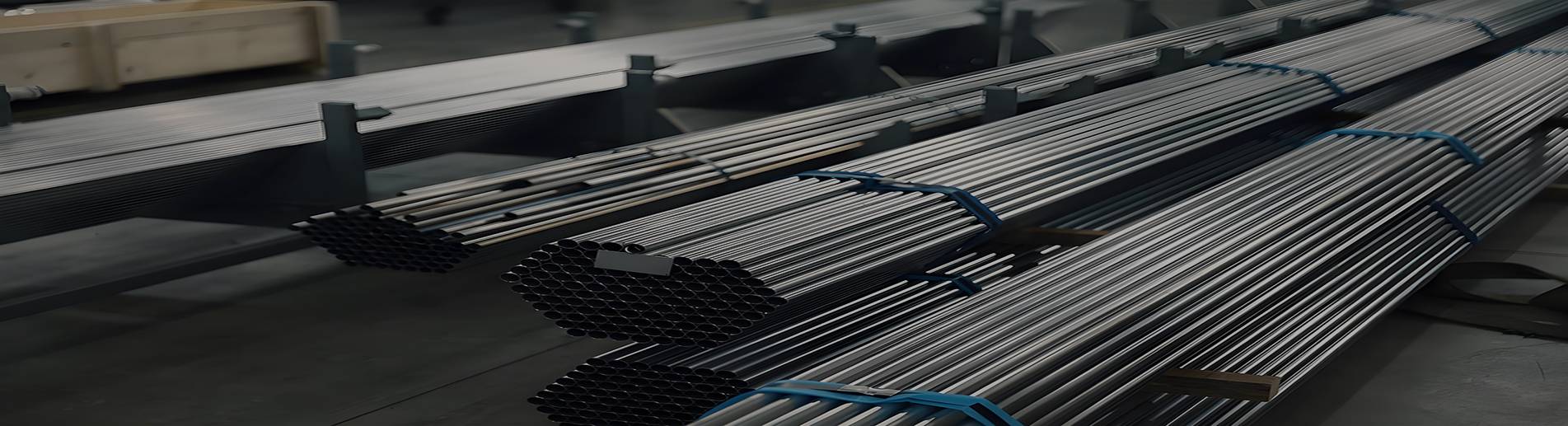
Inconel 617 alloy round bar price per kilogram
Inconel 617 alloy round bar price per kilogram is commonly about USD 45 to 90 per kg for standard industrial stock sizes. Large forged bars, small pre...
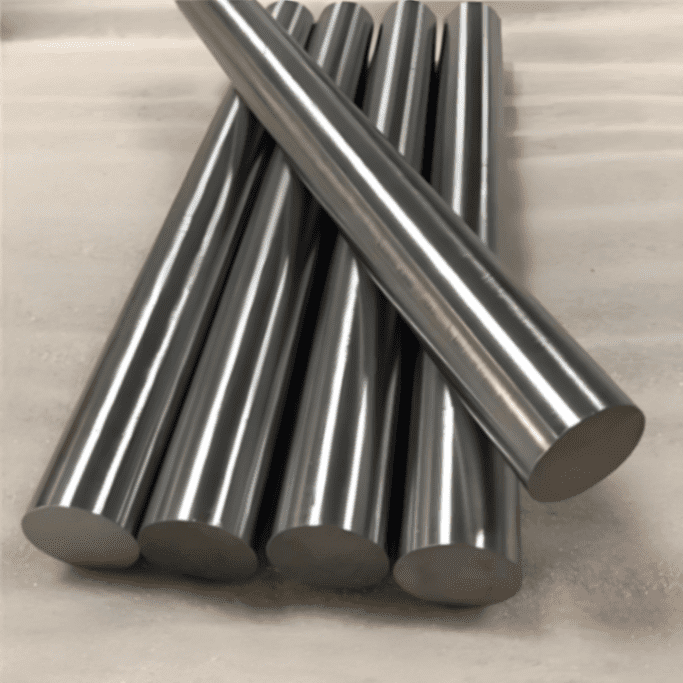
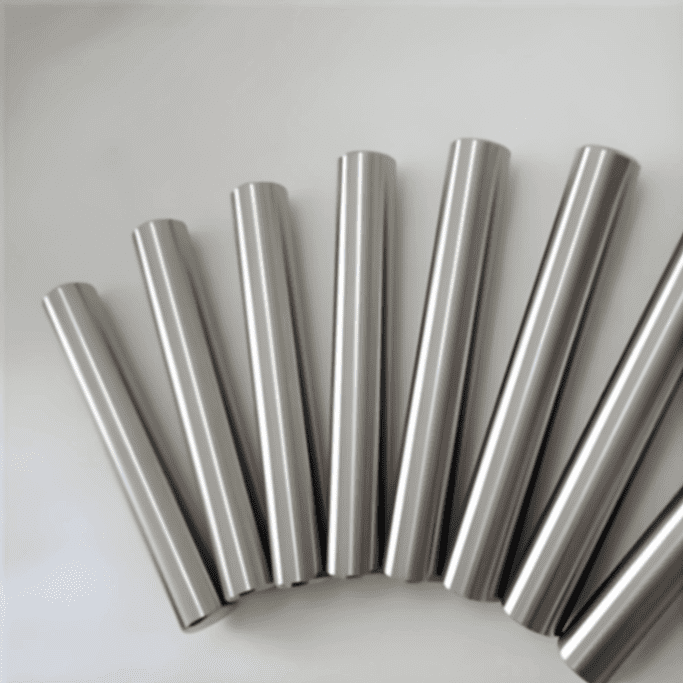
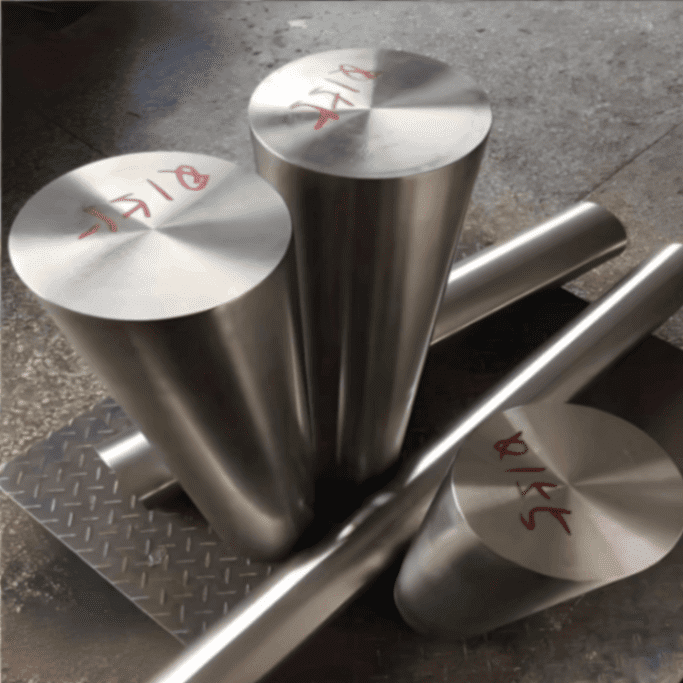
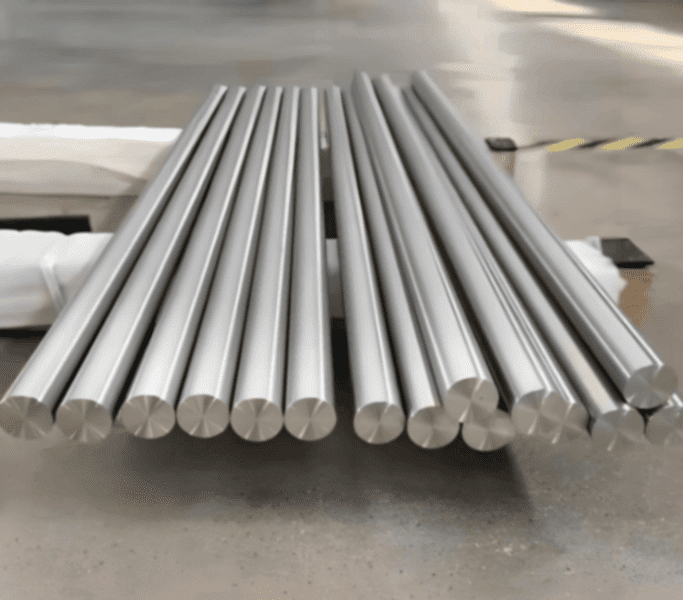
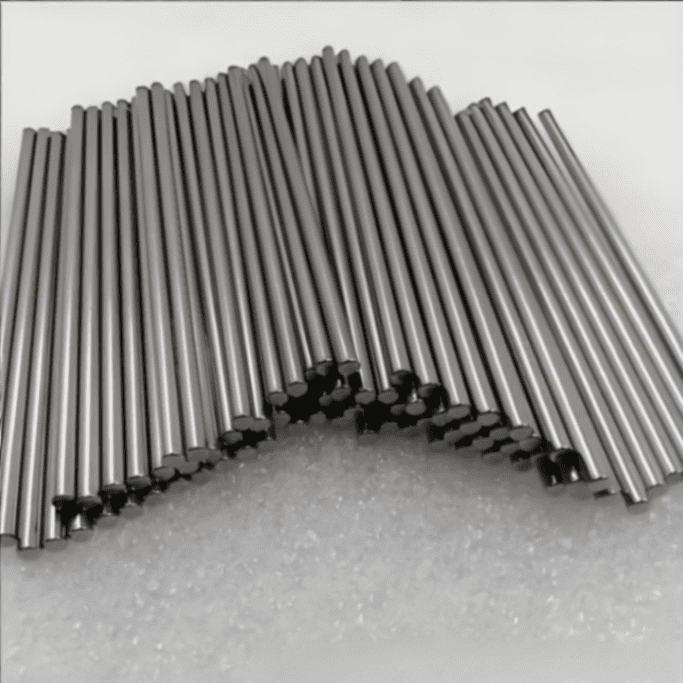
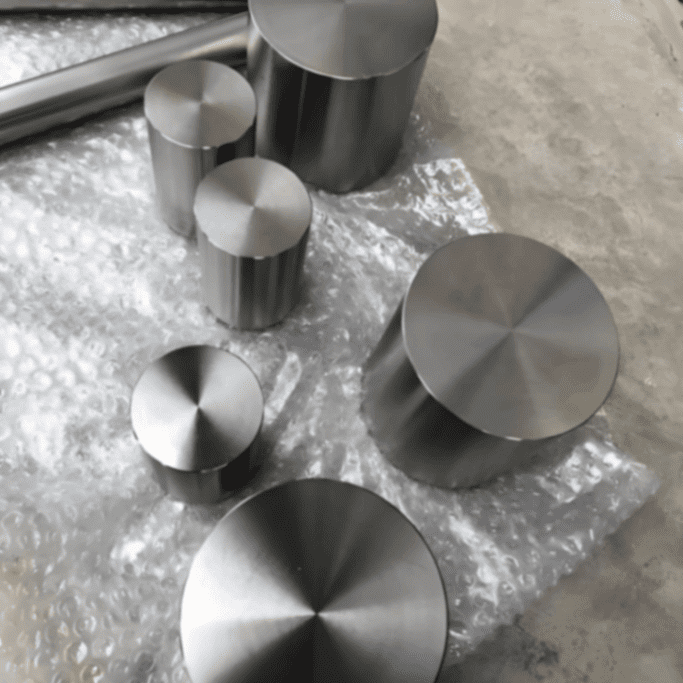
The core chemistry of Inconel 600 round bar is built around three major elements: nickel, chromium, and iron. In practical terms, these three define the alloy family and explain why Inconel 600 is widely selected for chemical processing, heat-treating equipment, furnace parts, and pressure-related service where oxidation and chloride-related issues matter.
Nickel is the dominant element, with a required minimum of 72.0%. This is the single most important part of the composition. In day-to-day engineering language, that high nickel level is what gives Inconel 600 its strong resistance to many reducing environments and good resistance to chloride-ion stress corrosion cracking. It also helps the alloy remain structurally stable across a wide temperature range. For round bar applications, this matters because bars are often machined into shafts, fasteners, fittings, valve parts, and support components that need both corrosion resistance and predictable mechanical behavior.
Chromium is controlled between 14.0% and 17.0%. This range is not arbitrary. Chromium is what gives the alloy its oxidation resistance and supports the formation of a protective oxide film at elevated temperature. In furnace and thermal service, chromium is a major reason Inconel 600 performs better than many standard stainless steels. If chromium is too low, oxidation resistance drops. If it drifts outside the intended balance, the alloy no longer behaves like standard UNS N06600.
Iron is present at 6.0% to 10.0%. Some buyers underestimate the importance of iron in Inconel 600, but it plays a useful role. Iron helps balance cost, contributes to the alloy structure, and supports manufacturing practicality without changing the essential nickel-chromium character of the grade. In supply-chain terms, iron is one reason Inconel 600 sits in a practical middle ground between pure nickel-rich materials and more complex high-alloy grades.
If you are reading a mill test certificate, these three elements should be the first place you look. The heat analysis should confirm nickel at or above 72.0%, chromium within 14.0% to 17.0%, and iron within 6.0% to 10.0%. If one of these numbers is off, the material should not be treated as compliant Inconel 600 round bar.
After the major elements, the next step is to review the controlled minor elements. These are carbon, manganese, silicon, copper, sulfur, and phosphorus. Even though they appear in smaller amounts, they have a direct influence on processability, cleanliness, weldability, and consistency.
Carbon is limited to 0.15% maximum. For Inconel 600 round bar, lower carbon helps preserve ductility and maintain good hot and cold working characteristics. In real production, this is especially important for forged bar, peeled bar, and machined parts where the buyer expects stable forming and machining behavior. Carbon also matters in thermal exposure because it can influence carbide formation, especially if the product sees elevated temperatures for long periods.
Manganese is limited to 1.00% maximum. In nickel-base alloys, manganese is usually not a headline element, but it is still controlled because excessive levels can affect hot workability and cleanliness. A balanced level is acceptable and common in melting practice, but it should stay within specification.
Silicon is limited to 0.50% maximum. Silicon can help deoxidation during melting, but too much can change oxidation behavior and may negatively affect fabrication or surface quality in some applications. Buyers who need round bar for critical machining or pressure-retaining components often pay close attention to silicon for this reason.
Copper is limited to 0.50% maximum. Copper is not a target strengthening element in standard Inconel 600 chemistry, so it is treated more as a controlled residual. Keeping copper low helps maintain the intended alloy identity and service behavior.
Sulfur and phosphorus are both tightly limited to 0.015% maximum. These two are classic control elements in premium alloy production because excess sulfur or phosphorus can hurt hot workability, reduce ductility, and raise concerns in forging or welding. In round bar supply, low sulfur and low phosphorus are often associated with better metallurgical cleanliness and more reliable downstream processing.
For buyers, the practical takeaway is simple: major elements define the grade, but minor elements often explain why one batch machines, forges, or performs more smoothly than another. That is why a serious chemistry review should never stop at nickel, chromium, and iron alone.
The most important material standard for Inconel 600 round bar is ASTM B166. This specification covers nickel-chromium-iron alloys, including UNS N06600, in bar and wire forms. If a purchase order is specifically for round bar, ASTM B166 is usually the main chemistry and product reference to cite. It is the standard that most buyers, inspection teams, and manufacturers use when verifying bar compliance.
ASTM B168 is also relevant, although it is not the primary bar standard. It applies to plate, sheet, and strip. Buyers sometimes refer to it as a chemistry cross-check because UNS N06600 chemistry remains fundamentally consistent across product forms. Still, for round bar acceptance, ASTM B166 should remain the controlling standard unless the contract says otherwise.
ASTM B564 is the key reference for forgings. This matters when the round bar is supplied as forged bar or when the final component will be produced from a forging route. In those cases, ASTM B564 may become important for both chemistry and manufacturing condition, especially in projects where forging traceability is required.
ASME SB-166 is the ASME counterpart to ASTM B166 and is commonly used in boiler, pressure vessel, and power-related procurement. In many EPC, refinery, petrochemical, and pressure equipment projects, the ASME designation is preferred because it aligns better with code-based documentation packages. If a buyer is sourcing round bar for pressure-retaining service, heat exchanger supports, bolting-related machined parts, or vessel internals, ASME SB-166 may appear directly on the purchase specification.
From a practical procurement standpoint, a good material callout often includes the alloy name, UNS number, product form, and standard together. For example, “Inconel 600 round bar, UNS N06600, ASTM B166” is much clearer than ordering by trade name alone. That reduces the chance of substitution, chemistry mismatch, or documentation confusion.
A composition chart should do more than repeat the specification. It should make the chemistry easy to interpret for purchasing, engineering, and inspection teams. For Inconel 600 round bar, the most useful chart formats are a bar chart for major elements, a simple composition table, and a pie chart showing the approximate mass share of the main alloying system.
A bar chart works well for nickel, chromium, and iron because these three are the easiest way to explain alloy balance visually. Nickel will clearly dominate at roughly 72% and above, chromium will appear as the second major element at 14% to 17%, and iron will appear lower at 6% to 10%. This kind of chart is helpful in internal presentations, technical data sheets, and pre-shipment quality summaries.
A composition table is useful when a buyer needs to compare the specified range with actual test values from the heat analysis certificate. The ideal format is element, minimum or maximum requirement, and actual typical value. In real supply situations, this lets the buyer quickly see whether the mill result is comfortably within range or very close to a limit. That matters because values near the edge of the specification may trigger more scrutiny in critical applications.
A pie chart is less precise than a range table, but it can still be useful for non-metallurgists. It visually shows that Inconel 600 is primarily a nickel-based alloy, not a stainless steel with just a little nickel added. A typical pie chart would show nickel at about 72% to 75%, chromium around 14% to 17%, and iron around 6% to 10%, with the remaining small portion made up of controlled minor elements.
If a supplier such as Shanghai NC Metal Materials Co., Ltd. prepares a technical sheet for buyers, these three visual forms together are usually enough: a bar chart for quick understanding, a range-based composition list for specification control, and a pie chart for general alloy identity. For technical approval, however, the actual inspection certificate still carries more weight than any visual chart.
One of the most misunderstood topics in alloy purchasing is the difference between heat analysis and product analysis. Heat analysis is the chemistry measured from the melt, while product analysis checks the final material itself. The numbers should be close, but product analysis is usually allowed a limited tolerance because of normal sampling and testing variation.
For Inconel 600 round bar, the tolerance references you provided are highly practical for acceptance review. Nickel has a tolerance of ±0.50%, but there is one critical point: it cannot fall below the specified minimum in a way that makes the material noncompliant. In plain language, if nickel drops under the acceptable minimum level for UNS N06600, that is not a minor deviation; it is a material identity problem.
Chromium has a product analysis tolerance of ±0.30%. Since chromium is tied directly to oxidation resistance and high-temperature surface protection, even a few tenths matter in critical service. The same applies to iron, which also carries a tolerance of ±0.30%. Iron is not just filler. It is part of the intended metallurgical balance, so inspection teams should not treat it casually.
Carbon is different. The tolerance is +0.01% upward only, and even then it must not exceed the 0.15% maximum limit. This kind of rule matters because carbon is often controlled mainly as a maximum, not a target range. If a buyer sees a carbon result near the ceiling, that may not automatically mean rejection, but it can prompt closer evaluation depending on forming, welding, or service-temperature requirements.
For procurement teams, the safe approach is to review product analysis in the context of both the base specification and the intended application. A chemistry that is technically within tolerance may still deserve attention if the part will operate in aggressive media, high-temperature oxidizing environments, or code-sensitive pressure service.
Inconel 600 is most commonly identified by UNS N06600, but global procurement often requires more than one designation. That is why cross-reference standards are useful. They help buyers in different markets confirm that they are discussing the same alloy family, even when local naming conventions differ.
UNS N06600 is the main North American alloy designation and the most recognized identifier in ASTM and ASME documentation. If a drawing, inquiry, or material requisition says UNS N06600, buyers can immediately connect it to the standard Inconel 600 chemistry system centered on nickel, chromium, and iron.
W.Nr. 2.4816 is the common German and European Werkstoff number associated with this grade. In export business, this number appears frequently in documentation, especially when projects involve European engineering firms or plant equipment originally designed to DIN or EN-linked practices.
ISO 6207 is another useful reference point in international material comparison. While procurement decisions should still rely on the exact purchasing standard, ISO references help align chemistry understanding across different industrial regions.
GB/T 15007 with the Chinese corresponding grade NS312 is important for buyers working with Chinese mills, forging shops, and stockholders. In cross-border sourcing, it is common to see a request that mentions both the international and domestic designation, such as “UNS N06600 / NS312.” That is acceptable as long as the chemistry and product form are checked carefully against the governing specification.
The main lesson here is that equivalent names are helpful, but they are not a substitute for reviewing the actual composition limits. Two materials can sound similar in naming, yet differ in standard scope, product condition, or documentation requirements. The final acceptance basis should still return to the chemistry, the product form, and the specified ASTM or ASME standard.
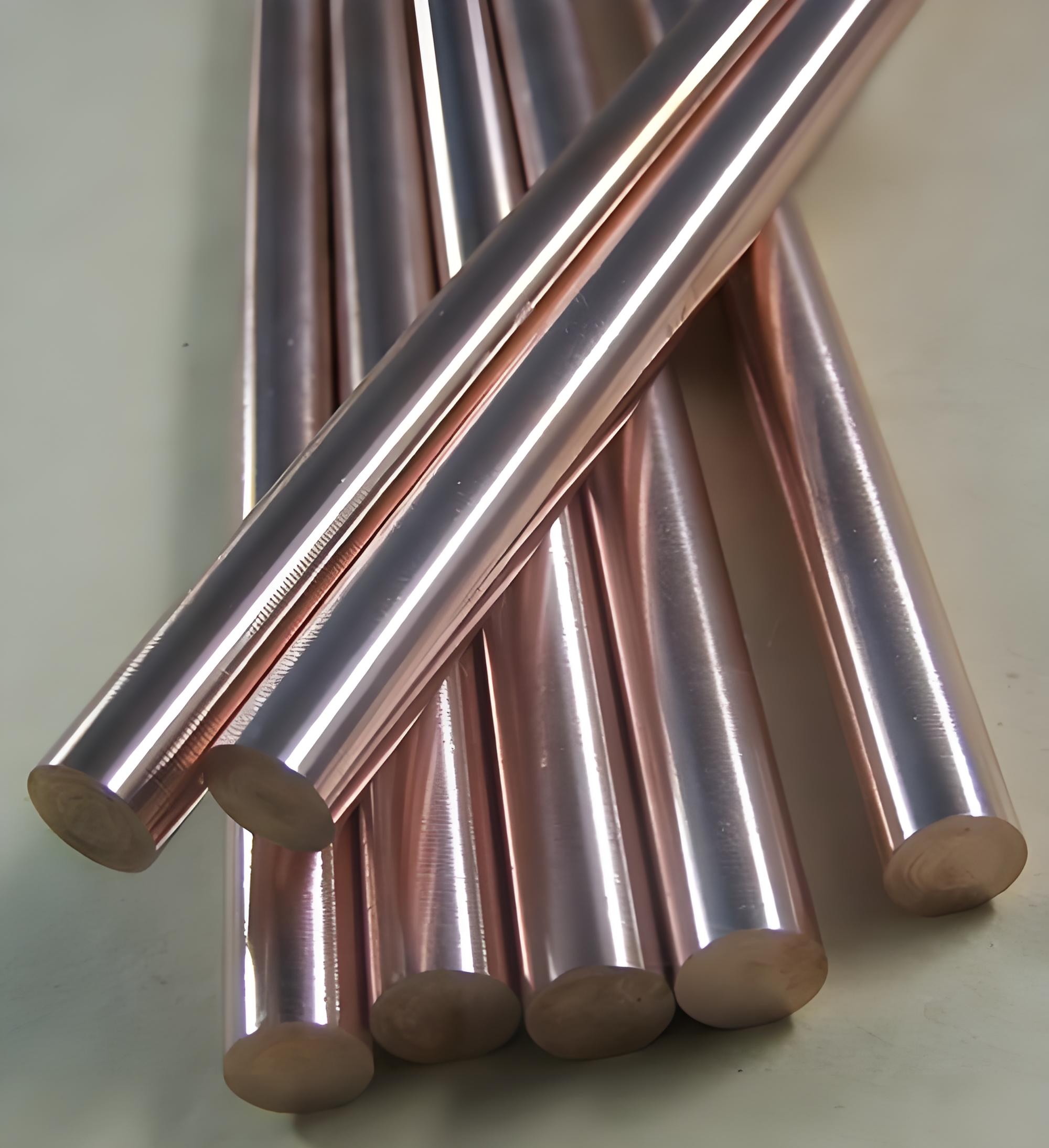
The chemistry of Inconel 600 round bar is not just a paperwork issue. It directly controls how the bar performs in service and how it behaves during fabrication. That is why composition review matters not only to inspectors, but also to design engineers and machinists.
High nickel at 72% minimum is the main reason the alloy offers strong resistance to reducing acids and good resistance to chloride-ion stress corrosion cracking. In practical terms, this means Inconel 600 often performs more reliably than many stainless steels in mixed chemical environments where chloride exposure is a concern. For round bar applications such as pump parts, valve stems, support rods, and fastener-type machined components, this gives buyers a safer margin in aggressive process conditions.
Chromium at 14% to 17% supports oxidation resistance and performance in high-temperature oxidizing atmospheres. This is why Inconel 600 is often selected for furnace hardware, heat-treatment baskets, thermal equipment parts, and components exposed to hot gases. Chromium helps form and maintain a protective oxide layer, which slows further attack. If chromium is lower than expected, that protective behavior can weaken.
Low carbon at 0.15% maximum helps retain good hot and cold workability. For round bar, this is important in upsetting, bending, turning, drilling, and secondary forming. Lower carbon also helps preserve ductility, which buyers value when bars are converted into custom-machined parts or forged subcomponents. In production shops, a stable low-carbon chemistry usually means fewer surprises during processing.
Iron at 6% to 10% helps balance cost and contributes to structural stability within the intended alloy system. Some engineers focus heavily on nickel and chromium, but iron should not be ignored. It supports the alloy’s practical manufacturability and overall metallurgical balance. In commercial supply, that balance is one reason Inconel 600 remains widely available in round bar form for both stock and project-based orders.
When buyers compare chemistry reports from different heats, what they are really comparing is expected service behavior. A chemistry certificate is not just a formality; it is one of the clearest early indicators of how the round bar is likely to perform once it enters real operating conditions.
The first acceptance document for Inconel 600 round bar should be the heat analysis certificate. This report confirms the melt chemistry and shows whether the alloy was produced within the specified composition range. Buyers should verify the nickel minimum first, then chromium and iron, and finally the controlled minor elements. If the heat analysis already shows a deviation, there is no reason to move forward without clarification.
The second layer of review is product analysis. This is where the permitted tolerance becomes important. If the final bar is tested and the numbers remain within acceptable product analysis variation while still respecting the alloy limits, the material can generally be accepted from a chemistry standpoint. For critical industries, buyers often compare both heat and product analysis together rather than relying on one alone.
Third-party verification is also common, especially for export orders, pressure service, or high-value machined parts. Optical Emission Spectroscopy, usually called OES, is widely used for precise composition verification on nickel alloys. XRF can also be used for a fast elemental check, although OES is generally more suitable when tighter chemistry confirmation is needed. If a purchaser wants an extra level of confidence that the bar meets ASTM B166 chemistry requirements, third-party spectrometric verification is a practical option.
What is the standard composition of Inconel 600 round bar?
The standard chemistry is based on UNS N06600. Nickel must be at least 72.0%, chromium must be 14.0% to 17.0%, and iron must be 6.0% to 10.0%. Carbon is limited to 0.15%, manganese to 1.00%, silicon to 0.50%, copper to 0.50%, sulfur to 0.015%, and phosphorus to 0.015%. For round bar orders, ASTM B166 is the main product specification to check.
How can I verify that an Inconel 600 bar really meets ASTM B166?
Start with the mill heat analysis certificate and confirm the chemistry against ASTM B166 for UNS N06600. Then review product analysis if provided, paying attention to allowable tolerances for nickel, chromium, iron, and carbon. If the project is critical, ask for third-party OES or XRF verification. This is a common approach for pressure equipment, export projects, and high-spec industrial procurement.
Why does nickel content matter so much in Inconel 600 round bar?
Nickel is the dominant element and the main reason the alloy resists many reducing media and chloride-ion stress corrosion cracking. If nickel drops too low, the material may no longer perform like true Inconel 600. That is why experienced buyers always check the nickel minimum first when reviewing a composition chart or inspection certificate.
More from this category
Inconel 617 alloy round bar price per kilogram is commonly about USD 45 to 90 per kg for standard industrial stock sizes. Large forged bars, small pre...
The latest Inconel 625 alloy bar price per kg depends on nickel, molybdenum, niobium, and chromium raw material costs, as well as bar diameter, manufa...
Inconel X-750 alloy bar price depends on nickel raw material cost, bar diameter, product condition, heat treatment, specification, surface finish, dim...
Inconel 602CA alloy bar price per kg is usually higher than common Inconel 600 and Inconel 601 bars because Alloy 602CA is a premium high-temperature ...
 English English
  Korean
 Arabic
 Spanish
 German
 Portuguese
 French
 Russian
 Italian
 Vietnamese