
Incoloy 825 Bar Price | UNS N08825 Supplier
Incoloy 825 bar price depends on the nickel-based alloy composition, bar dimensions, manufacturing route, heat-treatment condition, surface finish, in...
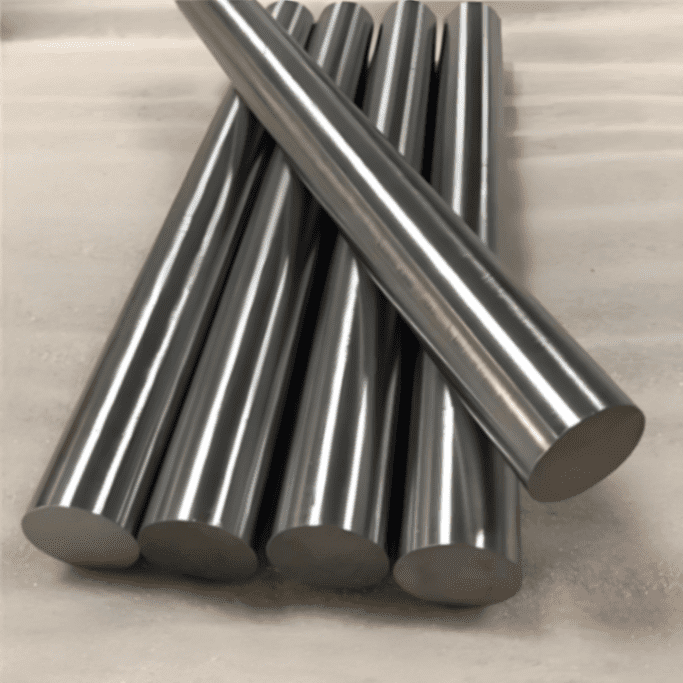
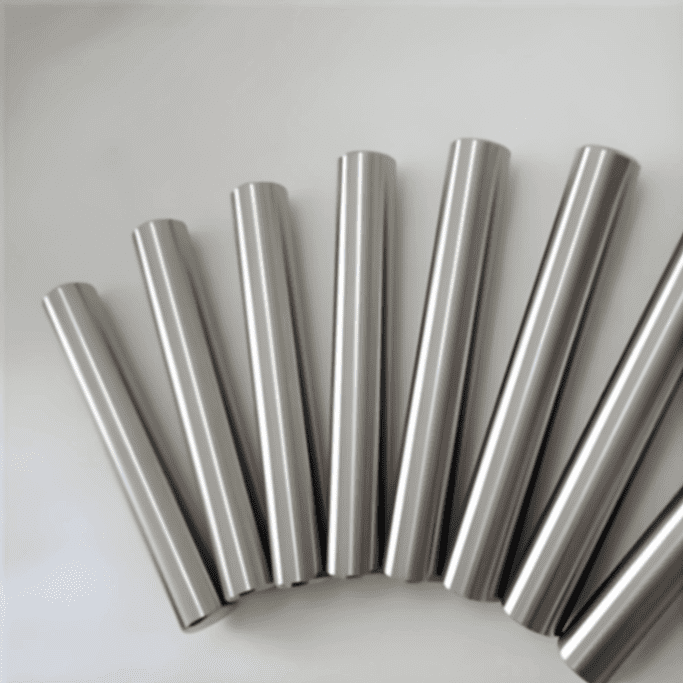
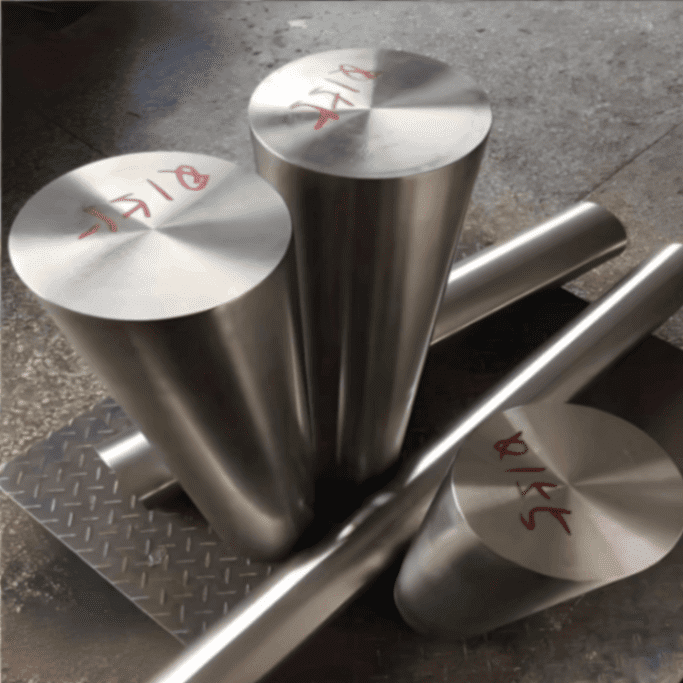
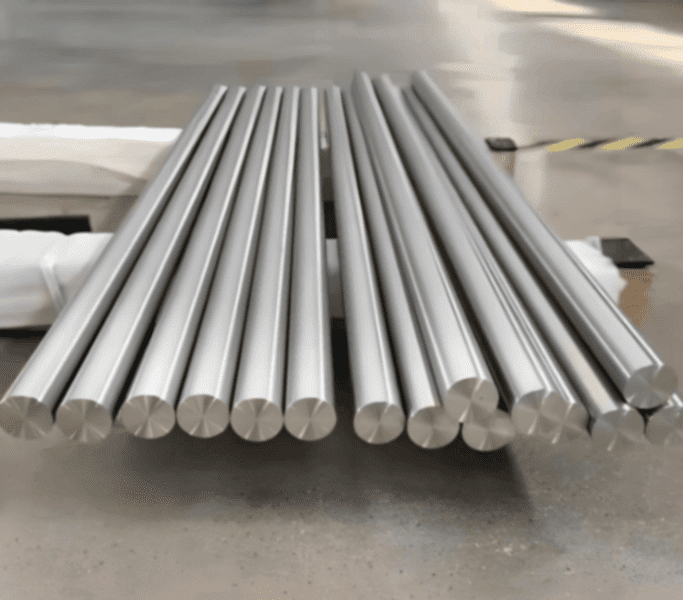
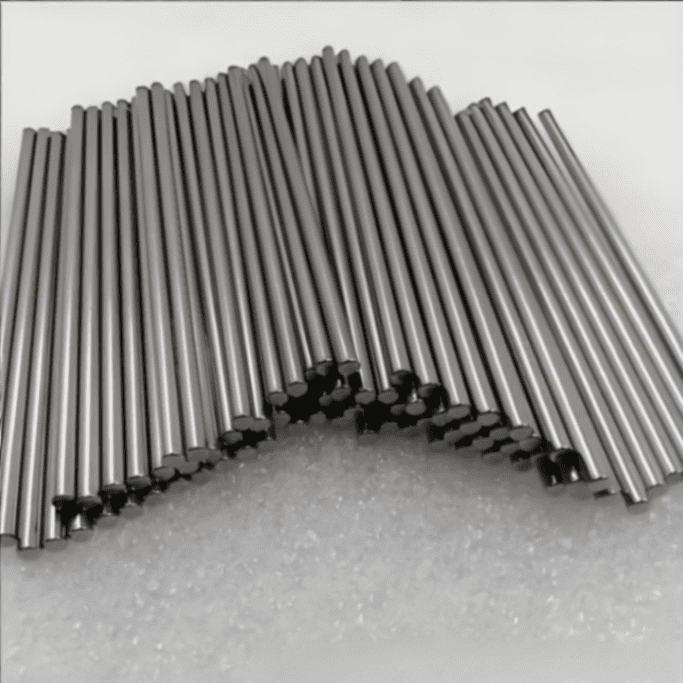
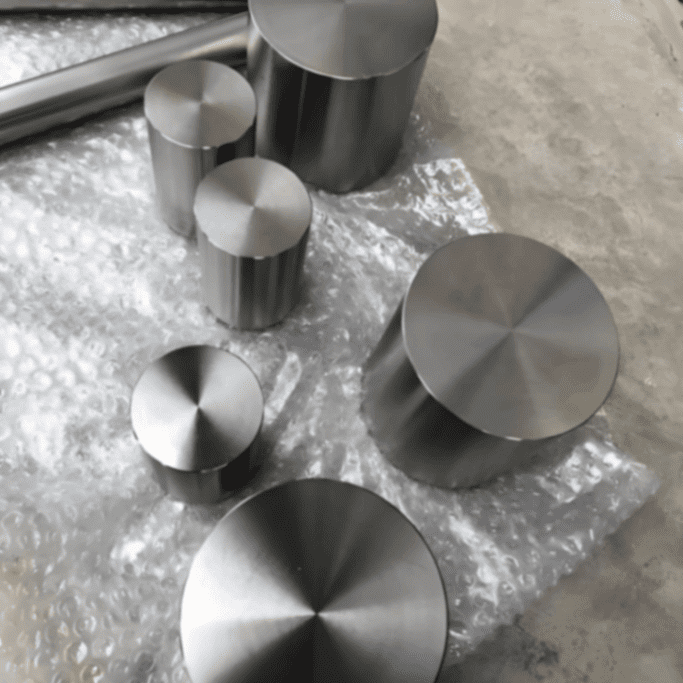
Monel K-500 round bar mechanical properties are defined by a nickel-copper alloy system strengthened through aluminum and titanium precipitation. Compared with Monel 400, K-500 keeps the corrosion resistance profile of the Ni-Cu base alloy while adding much higher yield strength, tensile strength, hardness, and wear resistance after age hardening. At Shanghai NC Metal Materials Co., Ltd., Monel K-500 round bars are normally supplied in solution annealed plus age-hardened condition, with mechanical testing performed by heat number and bar size according to ASTM-based procedures.
Shanghai NC Metal Materials Co., Ltd. supplies Monel K-500 round bars according to ASTM B865, QQ-N-286, and UNS N05500. These standards cover nickel-copper-aluminum-titanium alloy bars and forgings used where high strength, corrosion resistance, and non-magnetic behavior are required. The standard designation UNS N05500 is the most widely used international material identity for Monel K-500.
The available bar forms include hot rolled round bar, cold drawn round bar, forged round bar, and ground precision bar. Hot rolled bar is commonly used for machined pump shafts, valve stems, marine components, and general corrosion-resistant structural parts. Cold drawn bar is used when higher surface quality, tighter tolerance, and stronger mechanical response after aging are required. Forged bar is selected for larger diameters and heavy-section parts where internal soundness and directional working are more important.
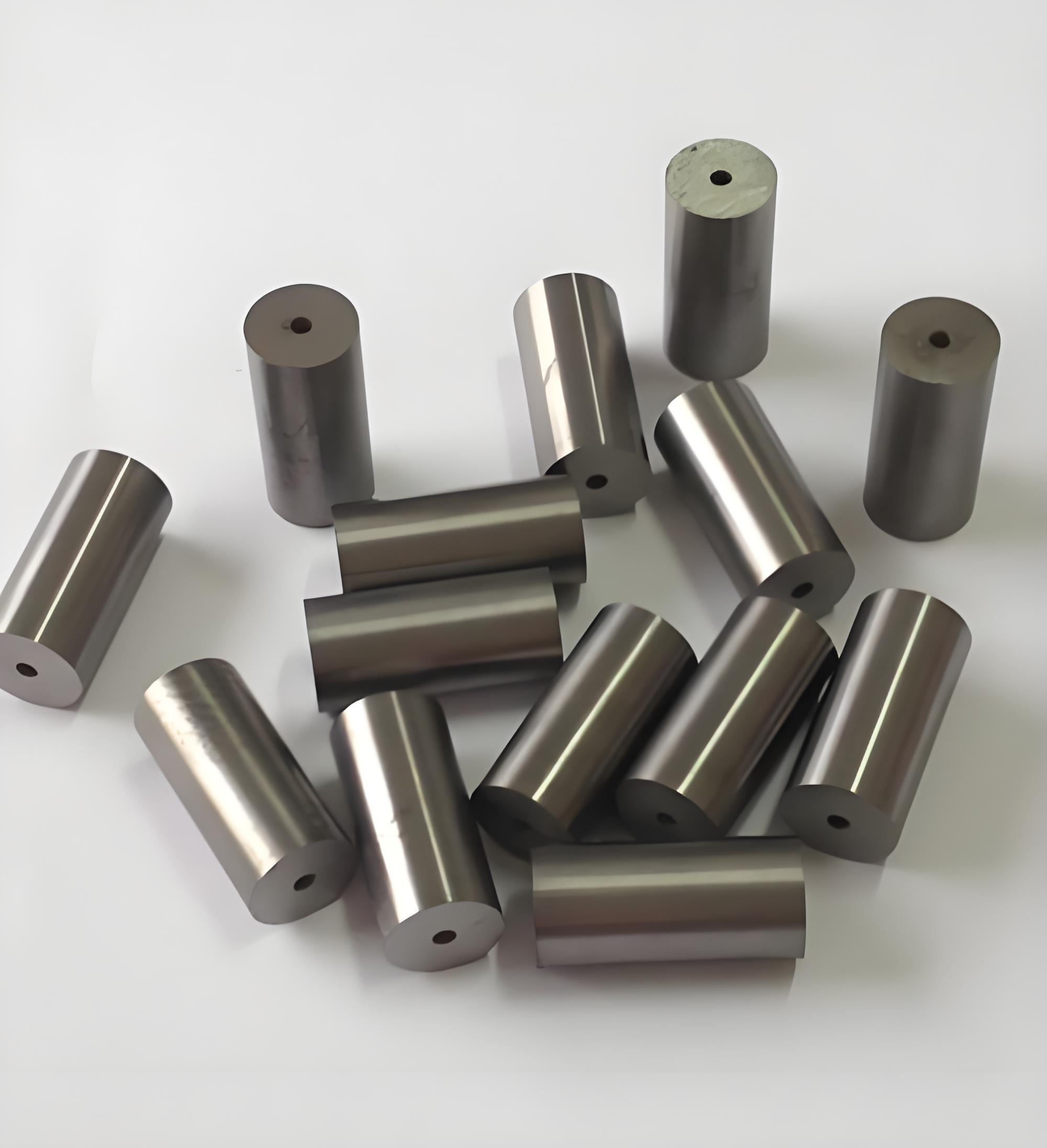
The standard heat treatment supplied by our factory is solution annealing followed by age hardening. Solution treatment dissolves strengthening elements into the nickel-copper matrix, while the aging process produces fine precipitates that raise yield strength and hardness. For Monel K-500, the aging step is not optional if the specified high-strength condition is required. In the annealed condition, the alloy behaves much closer to Monel 400 in strength level and does not represent the full performance of K-500.
The common supply surface states are black surface, turned surface, peeled surface, and precision ground surface. Surface state does not define the alloy’s mechanical grade by itself, but it affects dimensional accuracy, machining allowance, and the ability to detect surface defects before final part manufacturing.
In the age-hardened condition, Monel K-500 round bar shows a major strength increase compared with solid-solution nickel-copper alloys. The strengthening comes mainly from controlled precipitation of gamma-prime type phases containing nickel, aluminum, and titanium. Our typical room-temperature test values are based on production heats supplied in solution annealed plus aged condition.
| Property | Typical Factory Value | Engineering Meaning |
| Tensile strength / yield strength 0.2% | 1100–1250 MPa, 160–181 ksi / 760–900 MPa, 110–131 ksi | High load capacity for shafts, bolts, stems, and marine hardware |
| Elongation / reduction of area / hardness | 18–28% / 35–50% / HRC 27–35, about HB 270–340 | Balanced ductility, toughness, and wear resistance after aging |
The tensile strength of age-hardened Monel K-500 round bar typically falls around 1100–1250 MPa, equal to approximately 160–181 ksi. This is significantly higher than Monel 400 and gives K-500 strong resistance to tensile overload in threaded parts, rotating shafts, and loaded marine components.
The 0.2% yield strength normally reaches 760–900 MPa, or about 110–131 ksi. Yield strength is often the most important property for K-500 shafts and fasteners because it defines the point where permanent deformation begins. For valve stems, pump shafts, and bolting, a high yield level helps maintain alignment, sealing force, and dimensional stability during service.
The elongation commonly remains in the range of 18–28%. This is lower than Monel 400 but still sufficient for many heavy-duty engineering uses. The reduction of area is typically 35–50%, which indicates that the alloy keeps meaningful ductility even after precipitation hardening.
The typical hardness of age-hardened Monel K-500 round bar is around HRC 27–35, roughly equal to HB 270–340. This hardness level improves wear resistance and galling resistance compared with Monel 400, especially in sliding or rotating contact under seawater, brine, sour service, or mildly abrasive environments.
Monel K-500 round bar performance changes with diameter because deformation method, cooling behavior, cold work level, and aging response are not identical across all sections. A small cold drawn bar and a large forged bar may both meet the same standard, but their typical strength distribution and ductility profile are different.
For small diameters below φ50mm, the normal route is cold drawing followed by age hardening. Cold deformation before aging increases dislocation density and creates a stronger response during precipitation treatment. As a result, small cold drawn bars often show the highest tensile strength and hardness within the same alloy grade. These bars are commonly used for precision valve stems, instrument shafts, marine pins, and threaded components.
For medium diameters from φ50mm to φ150mm, hot rolled plus age-hardened supply gives stable and balanced mechanical properties. This diameter range is widely used for pump shafts, sleeve blanks, marine couplings, and machined equipment parts. Strength is slightly lower than heavily cold drawn small bar, but uniformity across the section is usually better than in very large forgings.
For large diameters above φ150mm, forged bar is the practical route. Large forged Monel K-500 bars require close control of forging ratio, reheating temperature, solution treatment, and aging uniformity. The surface region generally receives more deformation than the core, so mechanical properties near the outside may test slightly higher than those at the center. This is a normal size effect in heavy nickel alloy forgings, and it is why test sampling position must be defined clearly for large bars.
| Diameter Category | Typical Processing Route | Mechanical Property Tendency |
| <φ50mm / φ50–150mm | Cold drawn + aged / hot rolled + aged | Higher strength and hardness / stable balanced properties |
| >φ150mm | Forged + aged | Requires core-surface uniformity control and verified sampling |
Monel K-500 keeps useful toughness at low temperature because it remains an austenitic nickel-copper alloy without a ductile-to-brittle transition in the same way as ferritic steels. The alloy does not become suddenly brittle at cryogenic temperatures, which makes it suitable for marine instruments, low-temperature shafts, and equipment exposed to cold seawater or arctic service conditions.
At -100°C, our typical age-hardened Monel K-500 round bar test values show tensile strength around 1180–1320 MPa and yield strength around 820–960 MPa. Strength usually increases as temperature decreases, while elongation drops moderately but remains usable for engineering design.
At -200°C, typical tensile strength may reach 1250–1400 MPa, with yield strength around 880–1050 MPa. The alloy remains tough because the nickel-rich matrix preserves face-centered cubic structure stability. This behavior is important for components that must resist shock loading or vibration in cold environments.
Low-temperature impact energy depends strongly on bar diameter, aging condition, specimen orientation, and notch type. For typical production bars, Charpy V-notch impact values at low temperature commonly remain in a practical range of about 60–120 J, equal to approximately 44–89 ft-lb, when the material is properly heat treated and free from harmful segregation or coarse grain structure.
| Temperature | Typical Tensile / Yield Strength | Low Temperature Behavior |
| -100°C | 1180–1320 MPa / 820–960 MPa | Strength rises while ductility remains usable |
| -200°C | 1250–1400 MPa / 880–1050 MPa | No sharp brittle transition due to austenitic matrix |
The absence of a defined brittle transition temperature is one of the useful mechanical advantages of Monel K-500. This does not remove the need for impact testing in critical service, but it gives the alloy a stable base for low-temperature mechanical design.
Monel K-500 keeps good mechanical strength at moderate elevated temperatures, but its age-hardened structure must be respected. The alloy is strengthened by precipitation, and prolonged exposure at excessive temperature can reduce hardness and yield strength through overaging or precipitate coarsening. For load-bearing use, service at or below about 450°C is the practical range for stable strength retention.
At 300°C, typical tensile strength for age-hardened Monel K-500 round bar remains around 950–1100 MPa, with yield strength around 650–780 MPa. This level supports use in hot seawater equipment, valve parts, and mechanical components exposed to moderate process heat.
At 400°C, tensile strength is commonly around 850–980 MPa, while yield strength is around 560–700 MPa. Stress relaxation resistance becomes more relevant at this temperature, especially for bolting and spring-loaded assemblies. K-500 performs better than Monel 400 in this respect because of its precipitation-hardened structure.
At 500°C, typical tensile strength may fall to about 700–850 MPa, with yield strength around 430–570 MPa. Short-term strength can still be useful, but long-term exposure must be assessed carefully because overaging may reduce mechanical performance. For sustained loaded service, K-500 is normally treated as more reliable below 450°C than above it.
| Test Temperature | Typical Tensile Strength | Typical Yield Strength 0.2% |
| 300°C / 400°C | 950–1100 MPa / 850–980 MPa | 650–780 MPa / 560–700 MPa |
| 500°C | 700–850 MPa | 430–570 MPa |
Creep and stress relaxation behavior must be considered for bolts, valve stems, clamps, and loaded rotating parts. Monel K-500 is not normally selected as a high-temperature creep alloy in the same class as dedicated nickel superalloys, but it performs well in moderately elevated-temperature corrosion environments where Monel 400 does not provide enough strength.
Monel K-500 was developed from the Monel 400 alloy system by adding aluminum and titanium for age hardening. The base corrosion resistance remains close in many seawater and chemical environments, but the mechanical property difference is substantial.
Typical Monel 400 round bar in annealed condition has tensile strength around 480–620 MPa and yield strength around 170–350 MPa. Age-hardened Monel K-500 commonly reaches 1100–1250 MPa tensile strength and 760–900 MPa yield strength. This means K-500 can provide roughly 80–130% higher tensile strength and more than two to four times the yield strength, depending on the exact Monel 400 condition used for comparison.
| Grade | Typical Strength Level | Mechanical Character |
| Monel 400 | UTS 480–620 MPa, YS 170–350 MPa | Higher ductility, lower hardness, easier forming |
| Monel K-500 | UTS 1100–1250 MPa, YS 760–900 MPa | Much higher strength, higher hardness, better wear resistance |
Hardness and wear resistance are also much higher in K-500. Monel 400 is often around HB 120–180 depending on condition, while aged K-500 commonly reaches about HB 270–340. This improvement is useful in shafts, pump sleeves, valve trim, pins, and marine fasteners where surface wear or deformation under load is a problem.
The main trade-off is plasticity. Monel 400 has better elongation and formability, while Monel K-500 sacrifices part of that ductility to gain strength. This is normal for precipitation-hardened alloys. For parts requiring severe forming or bending after supply, Monel 400 may be easier to process. For machined parts requiring high yield strength and hardness, K-500 is the more suitable choice.
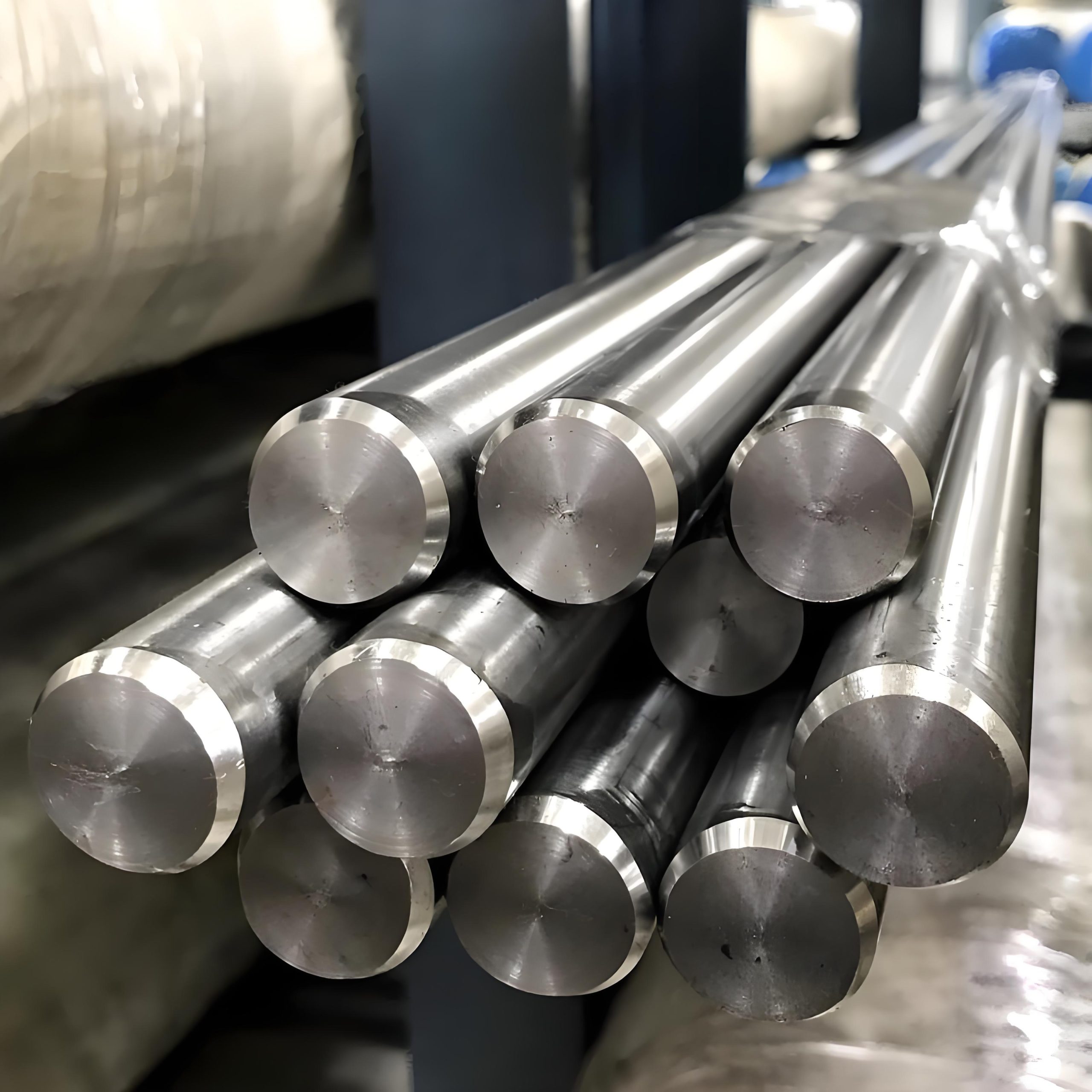
The mechanical properties of Monel K-500 are highly sensitive to heat treatment control. The most critical step is the aging process. Our standard control target is around 585°C ±5°C, with holding time adjusted according to bar size and prior processing route. If aging temperature is too low, precipitation may be incomplete and hardness may not reach the required level. If temperature is too high or holding is excessive, overaging can reduce yield strength and hardness.
Cold work amount is another major factor. Cold drawn bars usually respond more strongly to aging because deformation creates a structure that promotes higher strength. Hot rolled bars have less cold strain, so their final strength is usually slightly lower but more balanced in ductility. Forged bars depend heavily on forging ratio and section size.
Grain size control is important for strength consistency and toughness. Our normal production target is ASTM grain size 5 or finer where applicable. Coarse grains may reduce impact toughness and produce less uniform mechanical behavior, especially in large forged sections. Excessively fine or uneven structure can also create machining and heat-treatment response issues.
The strengthening precipitate in Monel K-500 is commonly described as gamma-prime type precipitation. Uniform precipitation is essential. If the aluminum and titanium-bearing precipitates form unevenly, hardness variation can appear between surface and core or between different bar lengths. This is why heat treatment loading pattern, furnace uniformity, soaking time, and cooling method are controlled as part of production rather than treated as secondary steps.
Surface decarburization is not a primary issue for this nickel-copper alloy in the same way as carbon steels, but surface condition still matters. Excessive scale, over-pickling, grinding burn, or local overheating during straightening can affect surface integrity and should be controlled before final inspection.
Each production batch of Monel K-500 round bar is tested according to the relevant order specification and applicable standard. The standard mechanical inspection package includes room-temperature tensile testing according to ASTM E8 and hardness testing in HRC or equivalent converted scales where required.
The room-temperature tensile test normally reports tensile strength, 0.2% yield strength, elongation, and reduction of area. These values are the basic proof that the alloy has been correctly aged and that the bar meets the required strength class. Hardness testing provides a fast confirmation of aging response and helps identify abnormal soft or overaged regions.
Additional testing can be arranged when the service condition requires more data. Available items include low-temperature impact testing, high-temperature tensile testing, and age-hardening curve evaluation. An age-hardening curve is useful for projects where the final component manufacturer plans additional machining or thermal exposure and needs to understand how hardness changes with time and temperature.
For large forged bars, sampling position should be stated clearly. Surface sample, mid-radius sample, and core sample may produce different results because of section size effect. When a project requires guaranteed core properties, the sampling plan must reflect that requirement before production and heat treatment.
Monel K-500 round bar is selected for applications where corrosion resistance alone is not enough. The alloy is used when the part must carry load, resist deformation, maintain hardness, and operate in seawater, brine, sour environments, or other corrosive media.
For pump shafts and valve stems, the main requirements are high yield strength, corrosion resistance, and dimensional stability under rotating or sliding load. The high yield strength of age-hardened K-500 reduces shaft bending risk and helps valve stems keep sealing alignment during repeated operation.
For fasteners and bolts, the key requirements are high tensile strength, high proof-load capacity, and resistance to stress relaxation. K-500 bolting can maintain clamping force better than Monel 400 in many mechanical assemblies, especially where seawater corrosion and elevated temperature appear together.
For marine instrument components, low-temperature toughness, non-magnetic behavior, and wear resistance are important. K-500 is used for sensor housings, pins, shafts, and precision parts that must keep strength and toughness in cold seawater or offshore environments.
For oil drilling tools, the practical requirements are high hardness, seawater resistance, and resistance to mechanical wear. K-500 bars are commonly machined into parts exposed to brine, sour media, mud flow, and mechanical contact. The combination of hardness and corrosion resistance gives better service reliability than lower-strength nickel-copper grades.
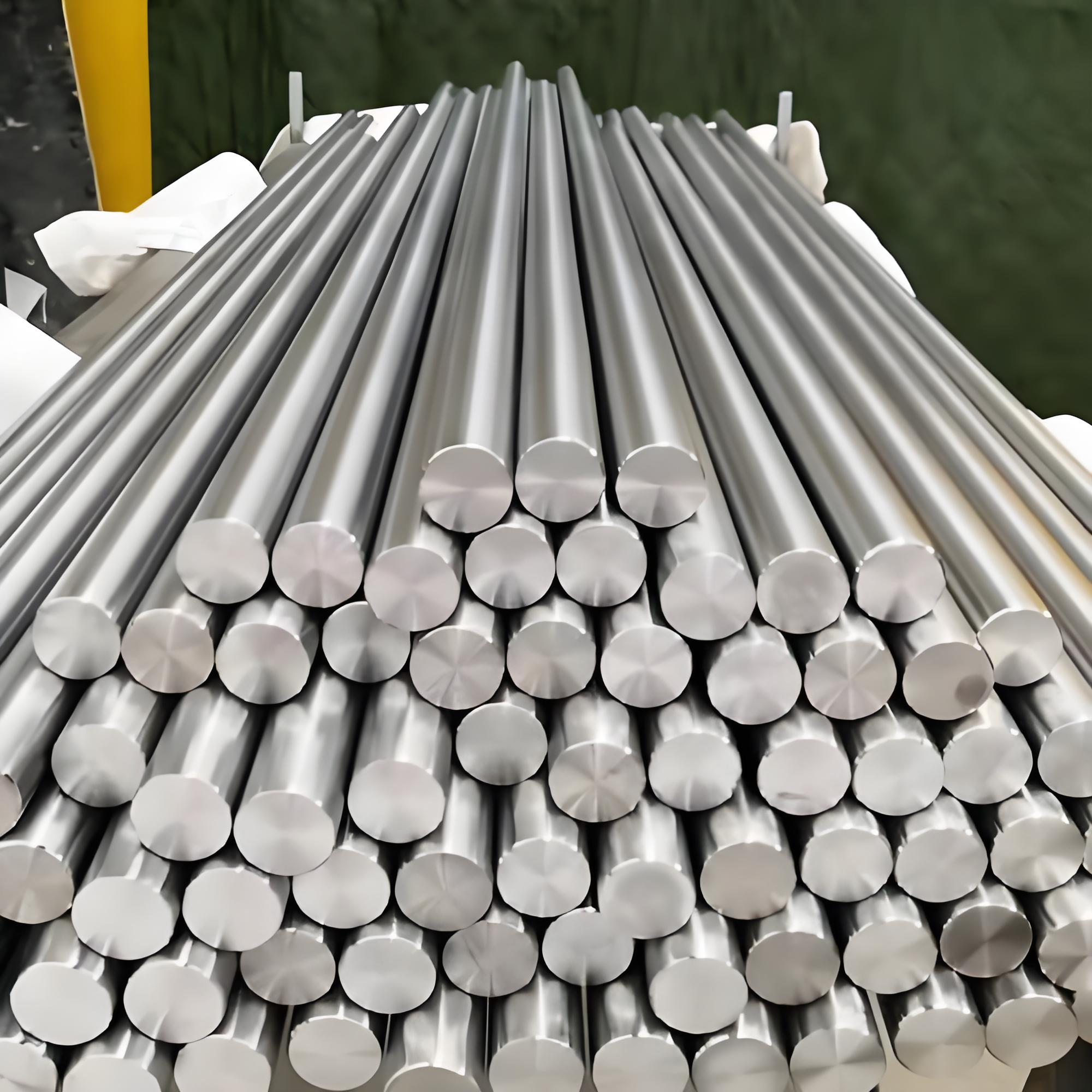
Shanghai NC Metal Materials Co., Ltd. supplies Monel K-500 round bar with a standard EN 10204 3.1 material certificate. The certificate includes chemical composition, room-temperature tensile properties, and hardness values tied to the heat number. This document package is normally sufficient for standard industrial shaft, fastener, valve, and marine component manufacturing.
For projects requiring stricter release control, EN 10204 3.2 certification can be arranged with independent witness inspection. Third-party witnessing can also cover tensile testing, hardness testing, dimensional inspection, visual inspection, and additional low-temperature or high-temperature mechanical testing where specified.
A simulated aging report can be added when the final component will undergo additional thermal exposure after machining. This helps verify whether the material keeps its required strength after a defined simulated production or service cycle.
Our factory quality commitment is based on measurable inspection results. If supplied Monel K-500 round bar fails to meet the agreed chemical composition or mechanical property requirements under verified testing, the material is handled through full replacement or refund according to the confirmed nonconformity record.
What is the main mechanical advantage of Monel K-500 over Monel 400?
The main advantage is much higher strength after age hardening. Monel K-500 can reach about 1100–1250 MPa tensile strength and 760–900 MPa yield strength, while Monel 400 remains far lower in normal annealed or hot worked conditions.
Does Monel K-500 become brittle at low temperature?
No sharp ductile-to-brittle transition is normally observed because Monel K-500 has a stable austenitic nickel-copper matrix. Strength increases at low temperature while toughness remains useful, although critical applications should still specify impact testing.
Why does heat treatment matter so much for Monel K-500?
K-500 obtains its high strength from age-hardening precipitation. If solution annealing or aging is not correctly controlled, the alloy may show low hardness, uneven strength, or overaged mechanical properties.
Which diameter range gives the highest strength?
Small cold drawn bars below about φ50mm usually show the highest strength after aging because cold work enhances the precipitation-hardening response. Medium hot rolled bars provide more balanced performance, while large forged bars require careful core-property verification.
What tests are normally included for Monel K-500 round bar?
Standard testing includes room-temperature tensile testing according to ASTM E8 and hardness testing. Low-temperature impact, high-temperature tensile testing, and age-hardening curve testing can be added for demanding service conditions.
More from this category
Incoloy 825 bar price depends on the nickel-based alloy composition, bar dimensions, manufacturing route, heat-treatment condition, surface finish, in...
Incoloy 800HT bar price is shaped by nickel, chromium, titanium, and aluminum raw-material costs, together with bar dimensions, heat-treatment conditi...
Incoloy 20 round bar price per kg depends on the alloy composition, bar size, manufacturing method, surface finish, tolerance, certificates, inspectio...
Hastelloy G-30 N06030 bar factory price is determined by the alloy’s high nickel, chromium, iron, molybdenum, copper, and tungsten content, together...
 English English
  Korean
 Arabic
 Spanish
 German
 Portuguese
 French
 Russian
 Italian
 Vietnamese