- E-mail: [email protected]
- WhatsApp: +86 18533346372
Home > Products > Incoloy bar > Incoloy 800HT/UNS N08811/W.Nr. 1.4959/Alloy 800HT bar
Incoloy 800HT bar, designated as UNS N08811, material number W.Nr. 1.4959, and commonly known as Alloy 800HT, is a high-temperature nickel-iron-chromi…
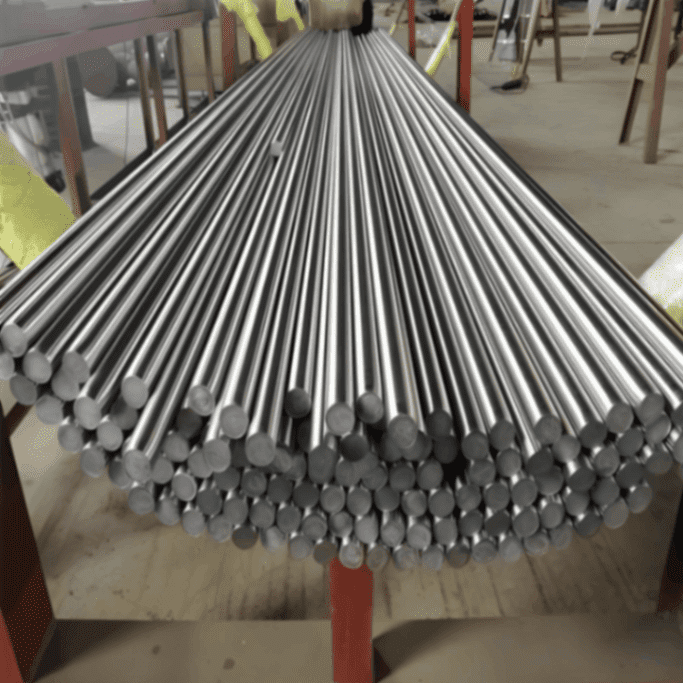
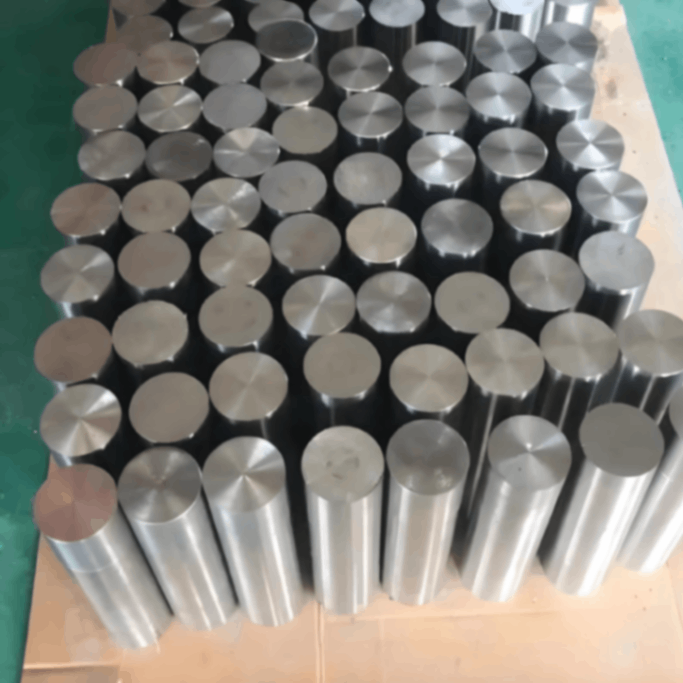
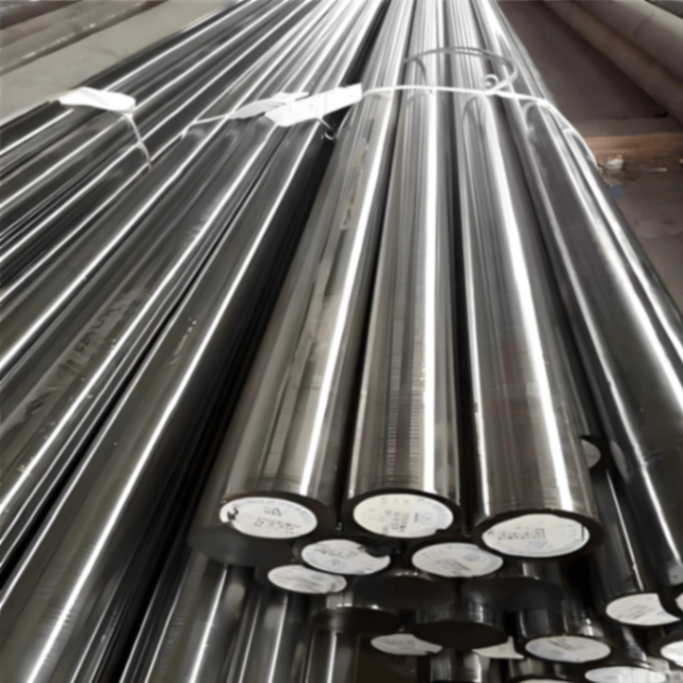
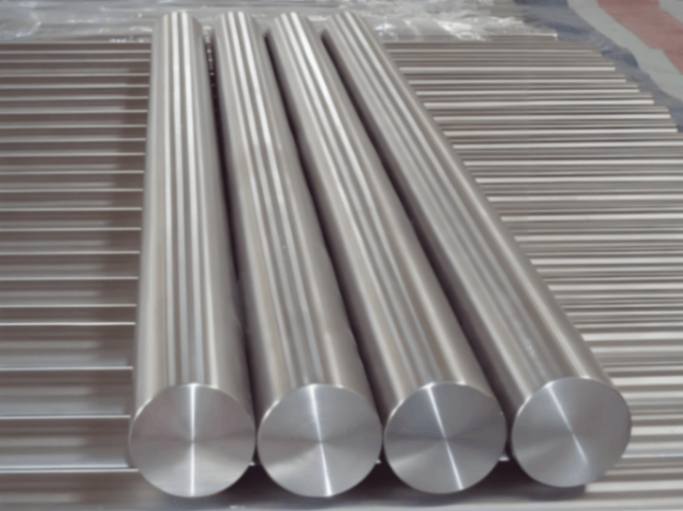
Incoloy 800HT bar, designated as UNS N08811, material number W.Nr. 1.4959, and commonly known as Alloy 800HT, is a high-temperature nickel-iron-chromium alloy with controlled chemistry and mandatory heat treatment to optimize its creep and stress-rupture properties. It represents the highest strength variant within the Alloy 800 family, specifically engineered for long-term service under high stress at temperatures ranging from 600°C to 1150°C (1110°F to 2100°F). This bar stock is essential for machining critical components in reformer furnaces, heat exchangers, and other high-pressure, high-temperature systems in the petrochemical and power industries.
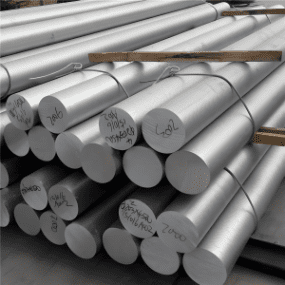
Incoloy 800HT builds upon the specifications of Alloy 800H with even tighter compositional controls, particularly for aluminum, titanium, and carbon, and a mandatory high-temperature solution anneal to produce a coarse grain structure. The “HT” stands for “High Temperature,” reflecting its superior mechanical strength and creep resistance compared to standard 800 and 800H grades. The bar stock is the material of choice for applications where maximum load-bearing capability and microstructural stability over extended periods at extreme temperatures are non-negotiable.
The enhanced high-temperature performance of Incoloy 800HT bar is guaranteed by its precise and narrowly defined chemical composition. Supplied by Shanghai NC Metal Materials Co., Ltd., the bar stock strictly adheres to specifications that include a mandatory minimum for the combined aluminum and titanium content.
| Element | Percentage (%) – Typical Range | Primary Function in the Alloy |
|---|---|---|
| Nickel (Ni) | 30.0 – 35.0 | Provides high-temperature strength, resistance to oxidation and carburization, and stabilizes the austenite phase. |
| Chromium (Cr) | 19.0 – 23.0 | Confers resistance to oxidation, sulfidation, and hot corrosion. |
| Iron (Fe) | Balance (≥ 39.5) | Base element of the alloy matrix. |
| Carbon (C) | 0.06 – 0.10 | Controlled within a specific range to optimize carbide strengthening for creep resistance. |
| Aluminum (Al) | 0.25 – 0.60 | Stabilizing element. The combined (Al + Ti) content is critically controlled to a minimum of 0.85%. |
| Titanium (Ti) | 0.25 – 0.60 | Stabilizing element. The (Al + Ti) ≥ 0.85% requirement is the key differentiator for 800HT, enhancing high-temperature strength and stability. |
| Manganese (Mn) | 1.5 max | Residual element. |
| Silicon (Si) | 1.0 max | Residual element. |
| Copper (Cu) | 0.75 max | Residual element. |
| Sulfur (S) | 0.015 max | Impurity control. |
Incoloy 800HT bar is characterized by its superior high-temperature strength and creep rupture properties, which are validated through specific heat treatment and grain size control. Room temperature properties are similar to 800H, but its elevated temperature performance is enhanced.
Key High-Temperature Property
| Mechanical Property | Typical Value at Room Temperature (Solution Annealed) | Relevant Standard (e.g., ASTM B408) | |
|---|---|---|---|
| Tensile Strength | ≥ 448 MPa (65 ksi) | Superior stress-rupture life compared to 800H | ASTM B408 (Grade 800HT/UNS N08811) |
| Yield Strength (0.2% Offset) | ≥ 172 MPa (25 ksi) | Higher creep strength at temperatures above 650°C | ASTM B408 |
| Elongation in 2 inches (50mm) | ≥ 30% | Good long-term ductility under creep conditions | ASTM B408 |
| Grain Size (ASTM Number) | 5 or Coarser (typically ASTM 2-5) | Mandatory coarse grain structure for optimal creep resistance | Mandatory requirement |
| Stress for 100,000h Rupture Life | N/A | ≈ 14 MPa (2.0 ksi) at 982°C (1800°F) | – |
The physical properties of Alloy 800HT bar are consistent with other grades in the 800 series and are used in thermal and mechanical design.
Notes / Condition
| Physical Property | Value at Room Temperature (20°C / 68°F) | |
|---|---|---|
| Density | 7.94 g/cm³ (0.287 lb/in³) | – |
| Melting Range | 1350 – 1400°C (2460 – 2550°F) | – |
| Specific Heat | 500 J/kg·°C (0.119 BTU/lb·°F) | At 100°C |
| Thermal Conductivity | 11.8 W/m·K (81.8 BTU·in/hr·ft²·°F) | At 100°C |
| Mean Coefficient of Thermal Expansion | 14.0 μm/m·°C (7.8 μin/in·°F) | 20-100°C (68-212°F) |
| Electrical Resistivity | 0.99 μΩ·m (39.0 μΩ·in) | At 20°C |
| Modulus of Elasticity (Tensile) | 196 GPa (28.4 x 10^6 psi) | At 20°C |
Shanghai NC Metal Materials Co., Ltd. supplies Incoloy 800HT bar with the rigorous heat treatment and compositional controls required for the most demanding high-temperature structural applications.
| Product Form | Standard Size Range | Key Standard Specifications | Common Supply Conditions |
|---|---|---|---|
| Round Bar (Hot Rolled/Forged) | 12mm (0.5″) to 300mm (12″) Diameter | ASTM B408 (Grade 800HT, UNS N08811), ASME SB-408, DIN 17742 (W.Nr. 1.4959) | Solution Annealed (min. 1149°C / 2100°F) to achieve coarse grain (ASTM 5 or coarser), then water quenched or rapid air cooled. |
| Hexagonal Bar | 12mm to 80mm Across Flats | ASTM B408, DIN 17742 | Solution Annealed (Coarse Grain) |
| Square Bar | 12mm to 80mm Width | ASTM B408 | Solution Annealed (Coarse Grain) |
| Forging Billet | 150mm to 450mm Diameter | ASTM B564 (Forgings), Customer specifications for critical forgings | Solution Annealed (Coarse Grain) |
Machined or forged components from Incoloy 800HT bar are specified for the most critical high-temperature, high-stress services: Petrochemical & Chemical Processing: Catalytic reformer furnace tubes (especially outlet regions), steam methane reformer (SMR) tubes, pyrolysis furnace tubes, and associated headers and pigtails where maximum creep resistance is paramount. Power Generation: High-temperature bolting, superheater/reheater tube supports, and heat exchanger components in advanced thermal power systems. Industrial Heating: Load-bearing radiant tubes, retorts, and fixtures in high-temperature heat treatment furnaces operating under heavy loads. Nuclear Power: Selected high-temperature components in gas-cooled and advanced reactor designs.
Three factors define Incoloy 800HT and ensure its properties: 1. Minimum Solution Anneal Temperature: The material must be heated to at least 1149°C (2100°F) to dissolve secondary phases and allow grain growth. 2. Coarse Grain Size: A minimum grain size of ASTM No. 5 (coarser) is mandatory. This coarse structure impedes creep deformation. 3. (Al + Ti) ≥ 0.85%: This is the critical compositional control for 800HT. This minimum level of strengthening/stabilizing elements ensures the formation of a stable, fine dispersion of precipitates (gamma prime) during service, which significantly enhances high-temperature strength. Shanghai NC Metal Materials Co., Ltd. ensures all three requirements are met.
Machining Incoloy 800HT bar requires techniques for coarse-grained, high-temperature austenitic alloys. Its coarse grain can lead to a slightly more variable and abrasive machining behavior compared to fine-grained materials. Best practices include: using rigid machine tools; sharp carbide inserts with positive geometry; moderate cutting parameters; and ample coolant. It is machined in the solution-annealed condition. Welding is possible but challenging; the high heat input of welding destroys the coarse grain structure in the heat-affected zone (HAZ), severely degrading creep properties. Post-weld heat treatment to restore the coarse grain is generally not feasible, so welding is often avoided for critical creep-resistant components.
Selecting the correct grade is crucial: Alloy 800: For general corrosion and heat resistance where high creep strength is not the primary design factor. Alloy 800H: For applications requiring good creep resistance, with mandatory coarse grain but without the stringent (Al+Ti) minimum. Alloy 800HT: For the most demanding creep-resistant applications, with mandatory coarse grain AND a guaranteed minimum (Al+Ti) content of 0.85% for maximum high-temperature strength and stability. Bar stock from Shanghai NC Metal Materials Co., Ltd. is clearly identified and certified to the specified grade.
The price of Incoloy 800HT bar from Shanghai NC Metal Materials Co., Ltd. reflects its status as the premium, highest-performance grade within the 800 series, with additional processing and quality controls.
| Pricing Factor | Impact on Reference Price | Procurement Guidance |
|---|---|---|
| Premium Composition & Processing | The tight control of Al, Ti, and C, the mandatory high-temperature anneal, and grain size verification make 800HT more expensive to produce than 800H or standard 800. | Specify 800HT only when its superior creep properties are explicitly required by design codes or service conditions to justify the additional cost over 800H. |
| Mandatory Certification | The Mill Test Report must certify compliance with UNS N08811, including the actual (Al+Ti) content (≥0.85%) and the ASTM grain size number (5 or coarser). This verification adds to quality assurance costs. | Always require and review the MTR to confirm both chemistry (specifically Al+Ti) and grain size meet the ASTM B408 Grade 800HT requirements. This is critical for material acceptance. |
| Application Criticality | Bar for manufacturing critical reformer furnace tubes or nuclear components involves more rigorous testing (e.g., stress-rupture tests on representative samples) and traceability, commanding a significant premium. | For such critical applications, work closely with Shanghai NC Metal Materials Co., Ltd. to ensure all project-specific testing and documentation requirements are included in the quotation and purchase order. |
| Form and Size | Large diameter forged billets for tube headers or special extruded shapes are high-cost items. Standard hot-rolled round bar for machining fittings is more economical. | Define the required form clearly. For standard component machining, hot-rolled bar is standard. The high cost of the alloy makes optimizing part design to minimize waste an important consideration. |
We are factory wholesale price, and the prices are lower than 95% of suppliers. Our professional quotation will help you with your project. Expecting our long-term cooperation. )
 English English
  Korean
 Arabic
 Spanish
 German
 Portuguese
 French
 Russian
 Italian
 Vietnamese