
Incoloy 825 Bar Price | UNS N08825 Supplier
Incoloy 825 bar price depends on the nickel-based alloy composition, bar dimensions, manufacturing route, heat-treatment condition, surface finish, in...
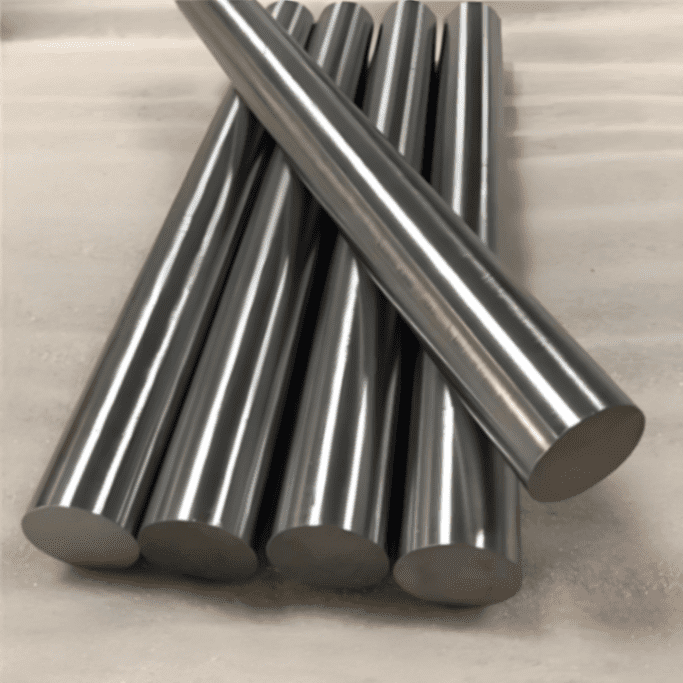
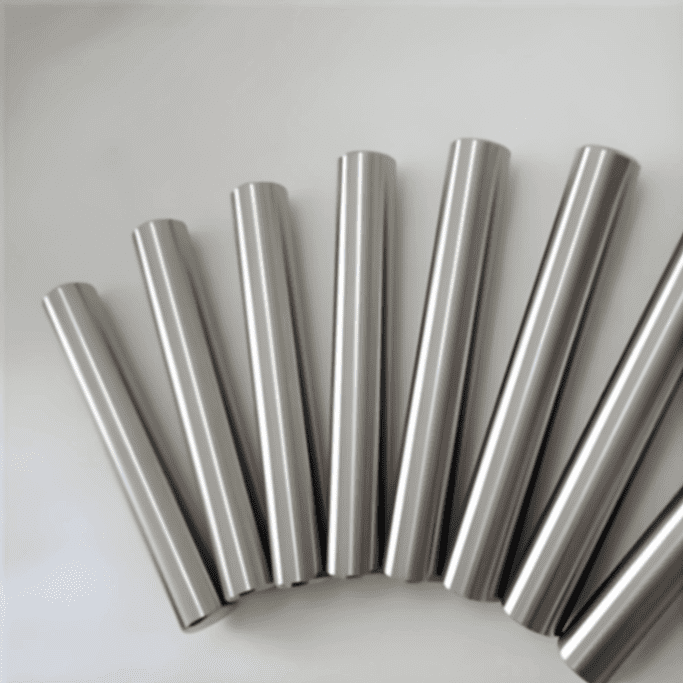
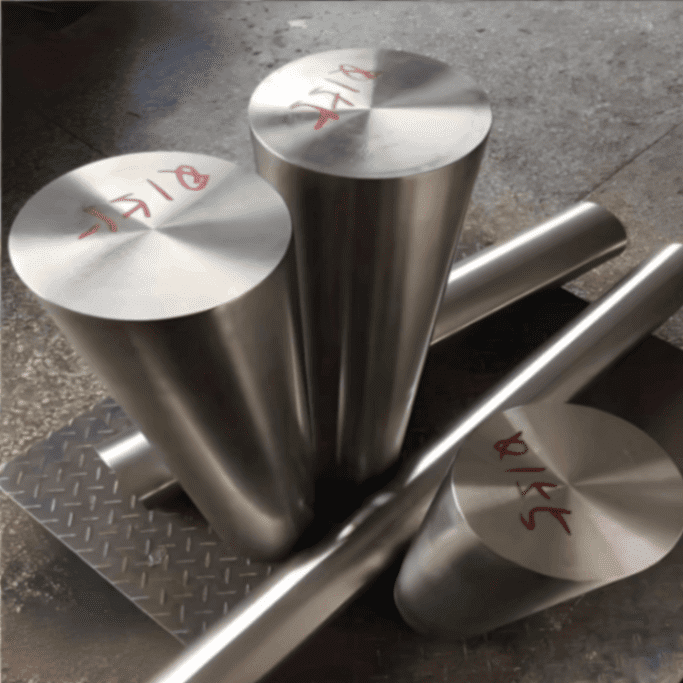
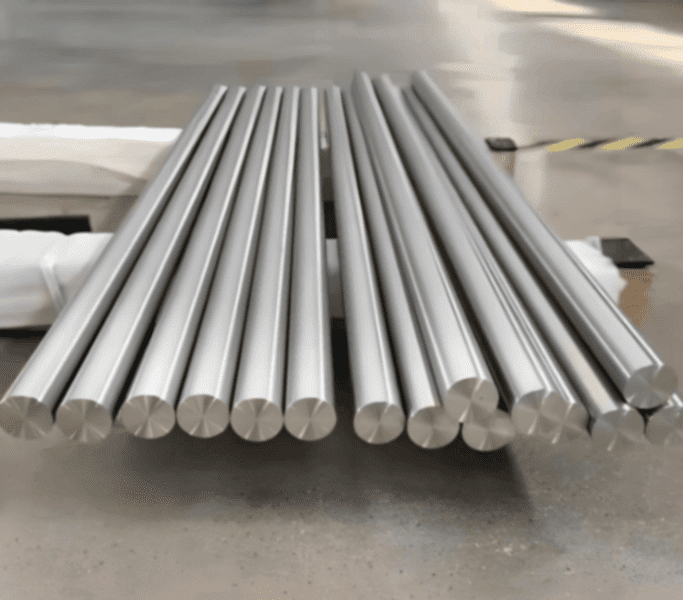
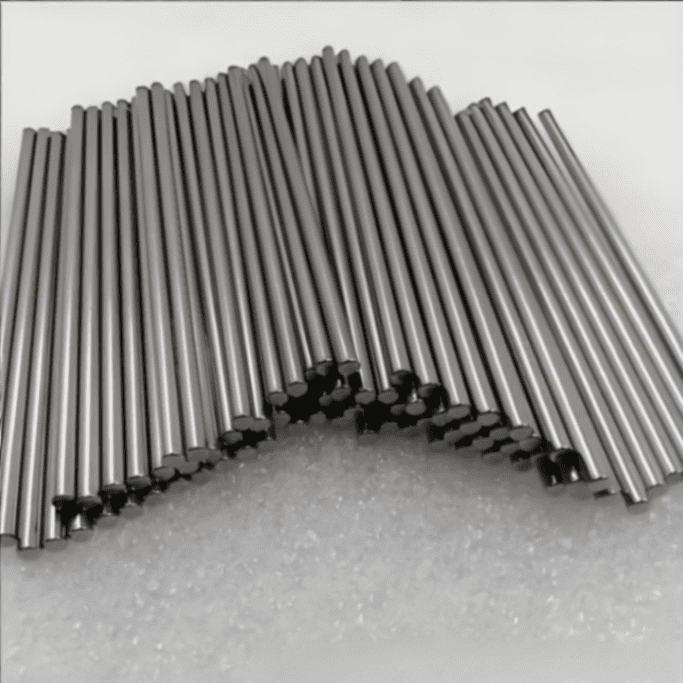
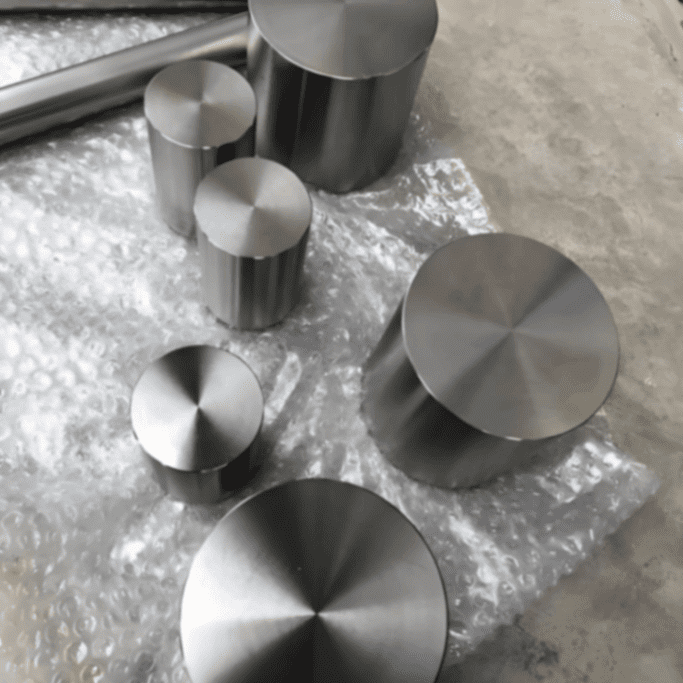
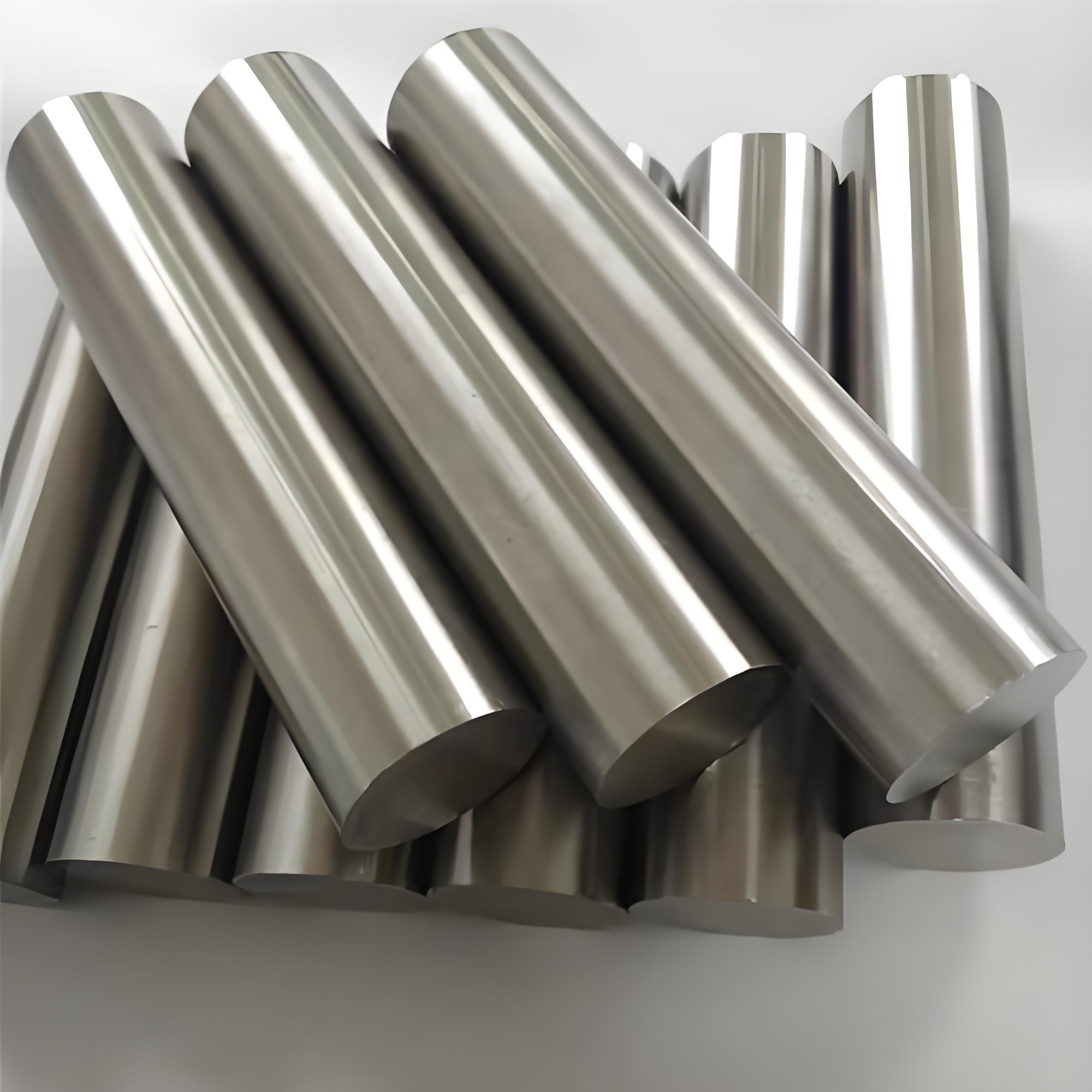
Incoloy 800H rod is a heat-resistant Fe-Ni-Cr alloy product designed for elevated-temperature structural service where oxidation resistance, carburization resistance, and creep strength must be balanced. For rod and bar supply, the defining feature of 800H is not only its nickel and chromium base, but also its controlled carbon level and controlled aluminum plus titanium content, which distinguish it from standard Alloy 800. At Shanghai NC Metal Materials Co., Ltd., 800H rod is supplied mainly in hot rolled, forged, turned, and ground conditions for furnace parts, petrochemical cracking units, heat treatment fixtures, and other components working in the 800–1000°C range.
Our 800H rod production follows the material framework commonly associated with ASTM B408, ASTM B564, and ASTM B425, depending on the form, processing route, and finished condition. The unified numbering designation is UNS N08810. In the German system, the corresponding designation is 1.4958 / X5 NiCrAlTi 31-20.
The common supply forms are hot rolled rod, forged rod, and bright machined or ground rod. For industrial use, the choice of form is tied to diameter tolerance, surface roughness, straightness, and machining allowance. Hot rolled material is often selected for heavy-section structural parts or further machining. Forged rod is preferred for larger diameters or when better internal soundness is needed. Turned and ground rod is usually specified for shafts, fasteners, furnace hardware, and machined assemblies that need tighter size control.
The difference between 800H and 800HT is often misunderstood. Chemically, both belong to the same alloy family, but 800H requires Al+Ti in the range of 0.70–1.20%, while 800HT requires 0.85–1.20%. That higher lower-limit threshold in 800HT is intended to improve creep performance at the top end of the service temperature range. For many rod applications below about 1000°C, 800H remains the more balanced grade from a cost-performance standpoint.
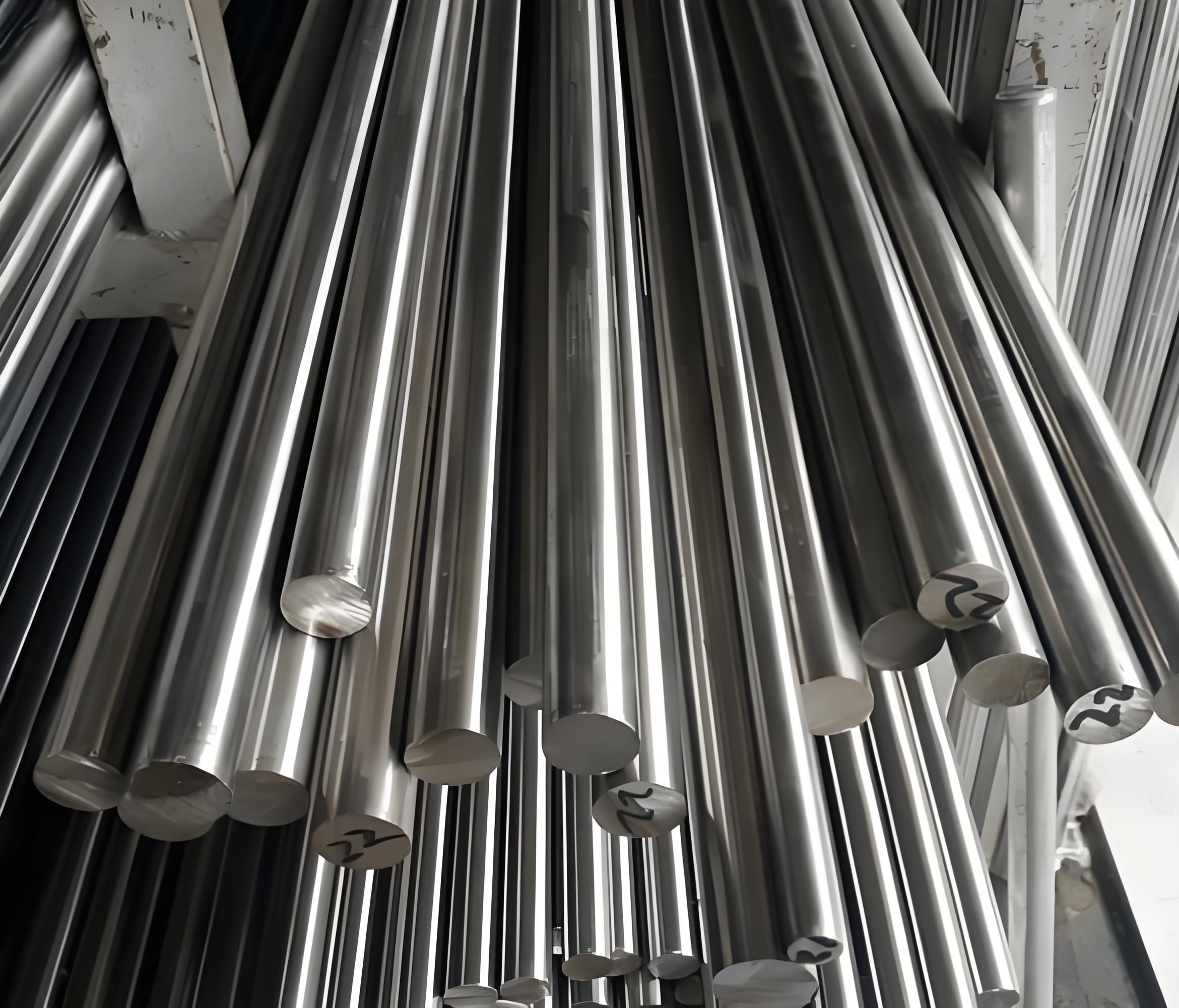
The following composition range reflects our typical measured control for Incoloy 800H rod. These values are aligned with the industrial expectation for UNS N08810 and are especially relevant for high-temperature mechanical stability.
| Element | Content, wt.% | Function |
| Nickel Ni | 30.0–35.0% | Stabilizes austenite and supports corrosion resistance |
| Chromium Cr | 19.0–23.0% | Provides oxidation and corrosion resistance |
| Iron Fe | Balance, typically ≥39.5% | Matrix element and cost control base |
| Element | Content, wt.% | Function |
| Carbon C | 0.05–0.10% | Characteristic 800H control, improves creep strength |
| Aluminum Al | 0.15–0.60% | Supports Al₂O₃ formation and oxidation resistance |
| Titanium Ti | 0.15–0.60% | Forms Ti(C,N) and helps pin grain boundaries |
| Element | Content, wt.% | Function |
| Al + Ti total | 0.70–1.20% | Main differentiator between 800H and standard 800 |
| Manganese Mn | ≤1.50% | Deoxidizer |
| Silicon Si | ≤1.00% | Deoxidizer |
| Element | Content, wt.% | Function |
| Phosphorus P | ≤0.030% | Residual impurity control |
| Sulfur S | ≤0.015% | Residual impurity control |
| Copper Cu | ≤0.75% | Residual element, limited in alloy balance |
The most important composition points are the nickel-chromium base, the controlled carbon range, and the total aluminum plus titanium range. The nickel level keeps the structure fully austenitic and contributes to chloride stress corrosion cracking resistance. Chromium builds the oxide barrier needed for sustained heat exposure. Carbon, aluminum, and titanium together influence creep strength and grain boundary stability much more than they influence room-temperature tensile strength.
| Element | 800H | 800 | Technical meaning |
| Carbon C | 0.05–0.10% | ≤0.10%, often controlled lower | 800H uses mid-to-upper carbon control to improve creep strength |
| Al + Ti | 0.70–1.20% | No combined minimum requirement | Helps form fine carbides and nitrides that pin grain boundaries |
| Nitrogen N | ≤0.05% | ≤0.05% | Can combine with Ti to form TiN |
Compared with standard Alloy 800, 800H is not simply a renamed version with the same performance. The carbon range in 800H is intentionally held toward the middle or upper part of the allowable range rather than at the lowest possible level. This strengthens the alloy in long-duration elevated-temperature service. At the same time, the explicit Al+Ti total requirement provides more stable precipitation control and grain boundary anchoring.
That distinction becomes important in furnace hardware, radiant tube supports, petrochemical coils, and other rod applications exposed for thousands of hours. Standard 800 may retain corrosion resistance, but 800H generally shows better resistance to creep deformation and high-temperature dimensional instability.
The following values are typical measured room-temperature properties for our 800H rod in solution-annealed or equivalent supply condition.
| Property | Typical value | Test standard |
| Tensile strength | 520–700 MPa | ASTM E8 |
| 0.2% yield strength | 210–310 MPa | ASTM E8 |
| Elongation | 30–45% | ASTM E8 |
| Property | Typical value | Test standard |
| Reduction of area | 40–60% | ASTM E8 |
| Hardness | 140–200 HB | ASTM E10 |
| Impact energy at 20°C | ≥120 J | ASTM E23 |
These values show that 800H rod is not a hard alloy in the delivered state. It retains good ductility, moderate yield strength, and strong toughness at room temperature. This combination is useful in fabrication because the material can be machined, cold formed within reasonable limits, and welded without the brittleness seen in some precipitation-hardened or highly strengthened heat-resistant alloys.
The room-temperature strength of 800H is not its primary design advantage. Its value lies in how much of its structure and load-bearing ability remains available after long exposure at elevated temperature. That is why the alloy appears in rod applications for supports, rollers, shafts, anchors, furnace internals, and high-temperature fixtures rather than wear-critical tooling.
The following elevated-temperature data are based on our measured values in the solution-annealed condition. These numbers illustrate how strength declines with temperature and why 800H is favored in sustained service below the point where heavier creep-resistant alloys become necessary.
| Temperature | Tensile strength | Yield strength | 10,000 h creep rupture strength |
| 20°C | 550–680 MPa | 210–310 MPa | — |
| 400°C | 520 MPa | 190 MPa | — |
| 540°C | 510 MPa | 175 MPa | 120 MPa |
| Temperature | Tensile strength | Yield strength | 10,000 h creep rupture strength |
| 650°C | 460 MPa | 165 MPa | 85 MPa |
| 760°C | 330 MPa | 140 MPa | 50 MPa |
| 870°C | 210 MPa | 95 MPa | 25 MPa |
| Temperature | Tensile strength | Yield strength | 10,000 h creep rupture strength |
| 980°C | 110 MPa | 55 MPa | 12 MPa |
The creep data explain the practical service window of 800H rod. At 760°C, the 10,000-hour creep rupture strength around 50 MPa gives the alloy a useful structural margin for many furnace and petrochemical components. By 870°C that margin is much smaller, and by 980°C only low-stress use remains realistic. This is why 800H is widely accepted for high-temperature support and containment roles but is not automatically suitable for very high-load service near its oxidation limit.
Compared with standard 800, 800H holds an advantage in creep-controlled service because its composition is tuned specifically for elevated-temperature stability. Compared with 800HT, it is slightly lower in top-end creep strength, but the gap is not large enough to matter in every project. In many rod applications between 800 and 950°C, 800H already covers the requirement well.
| Property | Value |
| Density | 7.94 g/cm³ |
| Melting range | 1350–1400°C |
| Specific heat at 20°C | 460 J/kg·K |
| Property | Value |
| Thermal conductivity at 20°C | 11.5 W/m·K |
| Thermal conductivity at 1000°C | 25.5 W/m·K |
| Electrical resistivity | 0.98 µΩ·m |
| Property | Value |
| Elastic modulus at 20°C | 196 GPa |
| Elastic modulus at 800°C | 140 GPa |
| Thermal expansion coefficient, 20–1000°C | 16.0 ×10⁻⁶ /K |
These physical values are relevant when designing rod-supported structures, long shafts, furnace internals, and welded assemblies. The thermal expansion coefficient is higher than that of many carbon steels, so sliding support allowance, joint clearance, and thermal distortion control should be considered in service above several hundred degrees Celsius. The drop in elastic modulus with temperature also means that sagging or deflection can become more important than simple tensile failure in long-span rod applications.
The moderate thermal conductivity of 800H is useful in high-temperature service because it avoids very sharp local gradients while still not conducting heat as rapidly as plain steels. This contributes to more stable thermal behavior in cyclic heating equipment.
| Property | Rating | Explanation |
| High-temperature oxidation resistance | ★★★★ | Excellent below 1100°C due to Cr₂O₃ plus Al₂O₃-assisted surface film |
| High-temperature creep strength | ★★★★ | Better than 800, slightly below 800HT |
| Resistance to carburization and nitriding | ★★★★ | Well suited for petrochemical cracking conditions |
| Property | Rating | Explanation |
| Resistance to reducing acid corrosion | ★★★ | Better than ordinary stainless steels, below molybdenum-bearing nickel alloys |
| Resistance to chloride stress corrosion cracking | ★★★★★ | Very strong due to nickel-rich austenitic matrix |
| Hot and cold workability | ★★★★ | Broad hot-working window and practical cold-forming capability |
| Property | Rating | Explanation |
| Weldability | ★★★★★ | Excellent with conventional filler such as ERNiCr-3 |
The oxidation resistance of 800H comes primarily from its chromium-rich protective film, supported by aluminum at the surface. This film is stable enough for prolonged exposure in clean oxidizing environments up to about 1100°C. That makes the alloy suitable for radiant heating parts, trays, muffles, and furnace roller systems.
Its carburization and nitriding resistance are especially relevant in petrochemical and ammonia-related service. In hydrocarbon cracking or mixed nitrogen-bearing atmospheres, 800H performs better than ordinary heat-resistant stainless steels because its nickel-rich structure and stable oxide layer better resist carbon and nitrogen ingress. It is not immune, but it holds up well in the common industrial operating window.
In reducing acid service, 800H is competent but not dominant. It resists many media better than standard stainless grades, yet it is not the first choice where sulfuric or hydrochloric acid attack controls alloy selection. That is where Alloy 825 or other molybdenum-bearing nickel alloys gain an advantage.
| Property / Grade | 800H | 800HT | Incoloy 825 | Inconel 600 |
| Oxidation upper limit | 1100°C | 1150°C | 1000°C | 1100°C |
| Creep strength at 980°C, 10³ h | 12 MPa | 15 MPa | Not applicable | 16 MPa |
| SCC resistance | Excellent | Excellent | Excellent | Excellent |
| Property / Grade | 800H | 800HT | Incoloy 825 | Inconel 600 |
| Reducing acid resistance | Moderate | Moderate | Excellent | Moderate |
| Seawater pitting resistance | Moderate | Moderate | Excellent | Moderate |
| Typical price | $12–18/kg | $15–22/kg | $18–28/kg | $19–26/kg |
| Property / Grade | 800H | 800HT | Incoloy 825 | Inconel 600 |
| Typical uses | Steam cracking tubes, furnace rollers | Ultra-high-temperature chemical parts, rollers | Pickling equipment, marine acid service | High-temperature corrosion-resistant parts |
This comparison shows why 800H remains widely used. It sits in a practical middle position. It handles high heat far better than corrosion-focused grades like 825, and it approaches the high-temperature utility of Inconel 600 at a noticeably lower cost. Compared with 800HT, it gives up some creep strength at the highest temperatures, but not enough to make it unattractive in the broad 800–1000°C service band.
The first advantage is cost-performance balance. In the 800–1000°C range, 800H often delivers performance close to Alloy 600 while remaining at roughly 60–70% of the material cost. That difference becomes significant in long rods, furnace rollers, support members, and machined structural parts where total alloy weight is substantial.
The second advantage is creep optimization through composition control. We normally keep carbon around 0.06–0.08% for many high-temperature rod orders and maintain a controlled grain structure around ASTM No. 5 or finer. This combination supports stable long-term behavior without making the material difficult to process.
The third advantage is good weld usability. Many fabricated 800H components are placed in service after welding without requiring full solution annealing. In practical furnace and petrochemical structures, weld zone property loss often stays below 10% when the procedure is properly controlled and suitable filler metal is used.
The fourth advantage is cross-market interchangeability. The alloy is broadly comparable with Chinese grades such as NS1102 and GH180 in many supply discussions, which simplifies project substitution between domestic and export equipment platforms when specification approval allows it.
The fifth advantage is good resistance to hydrogen embrittlement at elevated temperature. In hot hydrogen service, 800H behaves much more reliably than ferritic steels, making it useful in ammonia reforming and hydrogen-rich furnace sections where ferritic alloys would face a greater risk of embrittlement or rapid degradation.
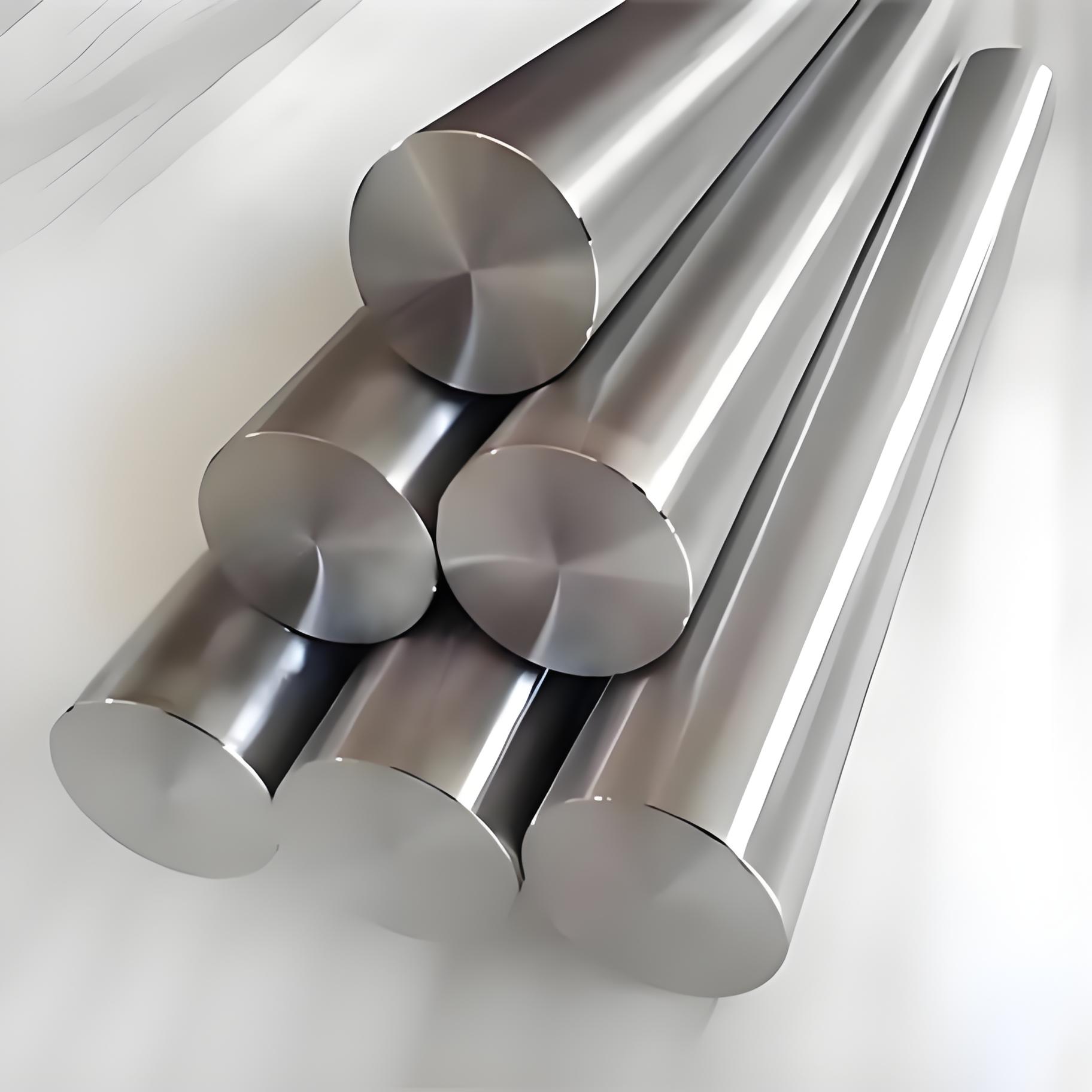
For 800H rod, chemical control is the first checkpoint. Each heat can be backed by an OES spectrometric composition report, with special attention to Al + Ti ≥ 0.70%. This is the key boundary that separates true 800H chemistry from lower-controlled Alloy 800 supply.
Grain size inspection is carried out according to ASTM E112. Our routine target is ASTM No. 5 or finer. A controlled grain size improves consistency in creep response, machining behavior, and section-to-section reliability.
High-temperature tensile testing can be arranged at specified temperatures, most commonly 650°C, 760°C, and 870°C. This is useful for projects involving furnace structures, petrochemical internals, or long-term loaded rods where room-temperature values are not enough for design review.
Intergranular corrosion testing may be conducted according to ASTM A262 Practice E when resistance to sensitization or grain-boundary attack needs confirmation. Although 800H is primarily a heat-resistant alloy rather than a classic anti-acid alloy, this test remains relevant for fabricated parts that may see condensate or transitional corrosion conditions.
Ultrasonic inspection can be supplied in accordance with ASTM E2375, with acceptance level selected according to the end-use requirement. For large forged rod, this is particularly important in checking internal continuity before deep machining or critical rotating use.
Material certification is normally issued as EN 10204 3.1. Additional 3.2 or independent third-party witness documentation can be arranged when project documentation requires it.
One of the most common 800H rod applications is in petrochemical steam cracking furnace components. In the 800–980°C range, the alloy combines carburization resistance with practical creep strength, and field service life of 5–8 years is realistic in many structures when atmosphere control and mechanical design are sound.
In nitric acid production absorption towers, 800H rod is used where hot nitric vapor and elevated temperature demand better stability than standard stainless steels can provide. Its corrosion resistance is not universal against every acid system, but it performs well in oxidizing high-temperature chemical environments.
For heat treatment furnace rollers, radiant tubes, and muffles, 800H remains a standard material because its oxidation resistance up to 1000–1100°C is dependable and its fabricated components maintain usable structural integrity through repeated heat exposure.
In ammonia reformer and converter internals, the alloy resists hot hydrogen, nitrogen, and ammonia atmospheres far better than lower-alloy steels. This gives it a stable role in hydrogen-rich plant sections.
For spring washers, fasteners, and structural hardware below about 800°C, 800H offers a good combination of oxidation resistance and fabrication flexibility. It is not intended as a high-strength precipitation-hardened fastener alloy, but it performs well where corrosion and heat matter more than maximum preload strength.
In waste-to-energy boiler superheater structures, 800H is also used in zones affected by chlorine and sulfur-bearing high-temperature gases. In these environments, alloy life depends strongly on gas chemistry and ash deposits, but 800H remains a recognized option where ordinary stainless steels fail too early.
Shanghai NC Metal Materials Co., Ltd. supplies 800H rod in diameters from φ6 mm to φ300 mm. Available surface conditions include black hot-worked, turned bright with typical roughness around Ra ≤3.2 μm, and ground bright with typical roughness around Ra ≤0.8 μm.
Standard delivery length is available in random lengths of 2–4 m or cut lengths up to 6 m. Smaller diameters for machining stock are commonly supplied in straighter and tighter tolerance condition, while heavy forged rods are usually delivered with machining allowance unless otherwise specified.
For regular sizes between φ10 and φ150 mm, common items can often be shipped from stock within 1–3 days. Custom production generally falls in the range of 5 days to 4 weeks depending on diameter, surface finish, testing scope, and whether forging or centerless grinding is required.
The usual minimum order quantity is 100 kg, although cut remnants or short-length stock can in some cases be supplied below 50 kg when available.
For accurate quotation of 800H rod, the required inputs are diameter, length, quantity, surface condition, certificate level, and where relevant, the service temperature. These details affect both manufacturing route and inspection scope.
Technical documents available with supply can include MTC samples, high-temperature property sheets, and for batch projects, test pieces from the same heat. For applications involving elevated temperature, the most useful engineering input is the three-part operating condition set: temperature, medium, and stress. With those three factors defined, a more realistic material confirmation can be made for 800H, 800HT, 825, or Alloy 600.
For annual demand above 5 tons, quarterly price locking is possible under a long-term supply arrangement, which is often relevant for furnace builders, petrochemical maintenance contractors, and equipment fabricators running repeat dimensions.
What is the main difference between Incoloy 800 and 800H rod?
800H has tighter control of carbon and a defined Al+Ti total requirement. This gives it better creep strength and better long-term structural stability at elevated temperature than standard 800.
Is Incoloy 800H better than 800HT?
Not in every case. 800HT is stronger in creep at the top end of the temperature range, but 800H is often the more economical choice for service below about 1000°C where the added margin of 800HT is not necessary.
Does 800H rod resist chloride stress corrosion cracking?
Yes. Its high nickel austenitic matrix gives it very strong resistance to chloride stress corrosion cracking compared with common stainless steels.
Can 800H rod be welded easily?
Yes. Weldability is one of its strong points. Conventional nickel-chromium filler such as ERNiCr-3 is widely used, and many fabricated parts go directly into service after welding.
What temperature range suits 800H rod best?
Its most effective service window is generally in the 800–1000°C range, where it combines oxidation resistance, carburization resistance, and practical creep strength at a moderate cost level.
More from this category
Incoloy 825 bar price depends on the nickel-based alloy composition, bar dimensions, manufacturing route, heat-treatment condition, surface finish, in...
Incoloy 800HT bar price is shaped by nickel, chromium, titanium, and aluminum raw-material costs, together with bar dimensions, heat-treatment conditi...
Incoloy 20 round bar price per kg depends on the alloy composition, bar size, manufacturing method, surface finish, tolerance, certificates, inspectio...
Hastelloy G-30 N06030 bar factory price is determined by the alloy’s high nickel, chromium, iron, molybdenum, copper, and tungsten content, together...
 English English
  Korean
 Arabic
 Spanish
 German
 Portuguese
 French
 Russian
 Italian
 Vietnamese